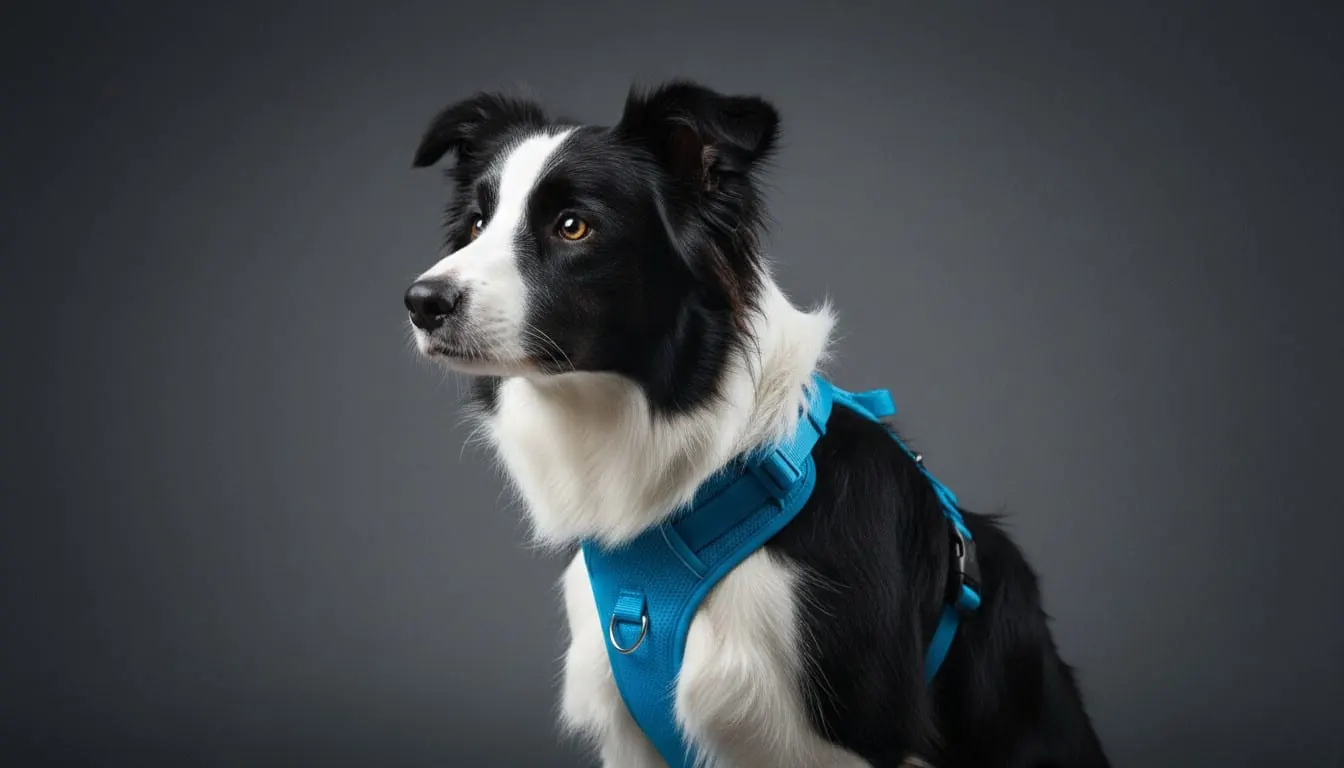
Finding the perfect harness fit is more than just a matter of keeping your dog secure during a walk at the Sea Point Promenade or through the bush. For many South African dog owners, a harness is a daily essential, yet few realize that an ill-fitting piece of gear can permanently alter a dog’s gait. When a harness is too tight or incorrectly shaped, it places undue pressure on the delicate structures of the shoulder and neck. Understanding the biomechanics of how your dog moves is the first step toward ensuring their long-term orthopedic health and comfort.
The Anatomy of Movement: Y-Front vs. T-Bar Designs
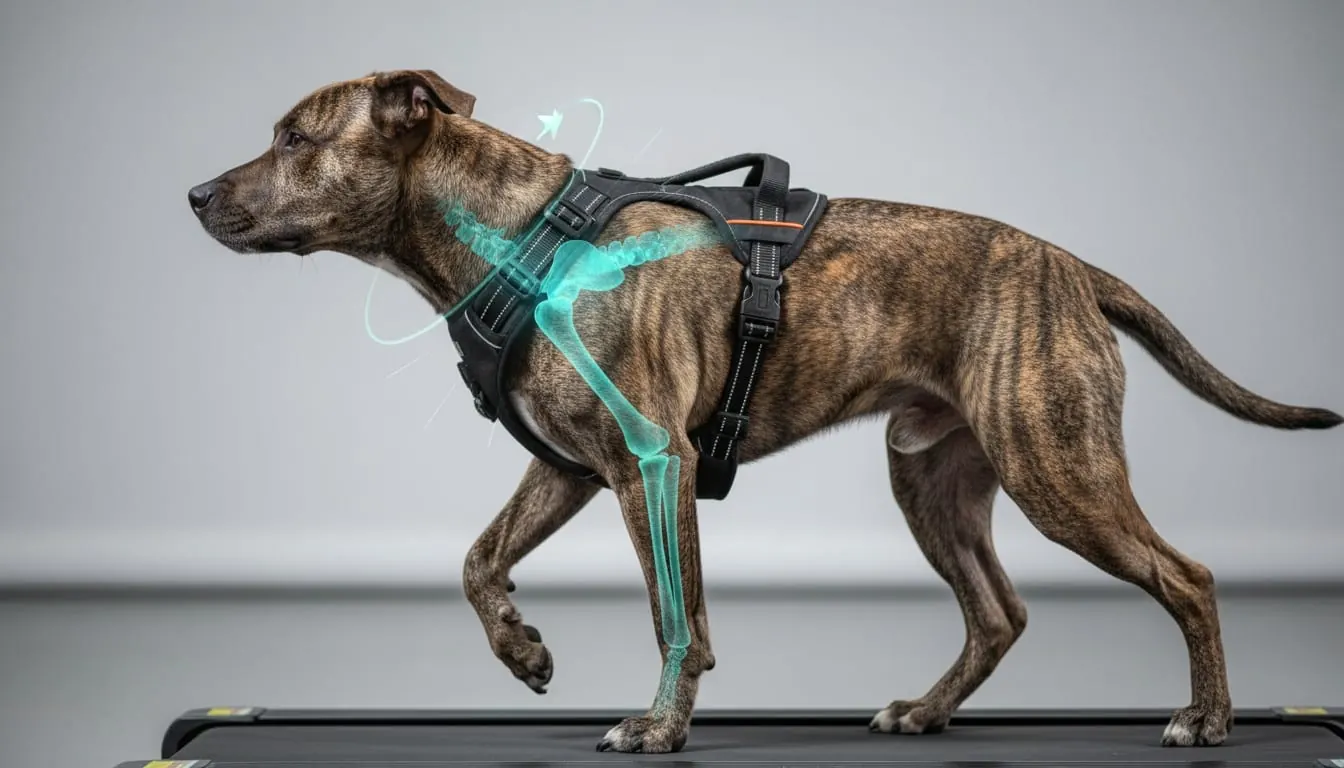
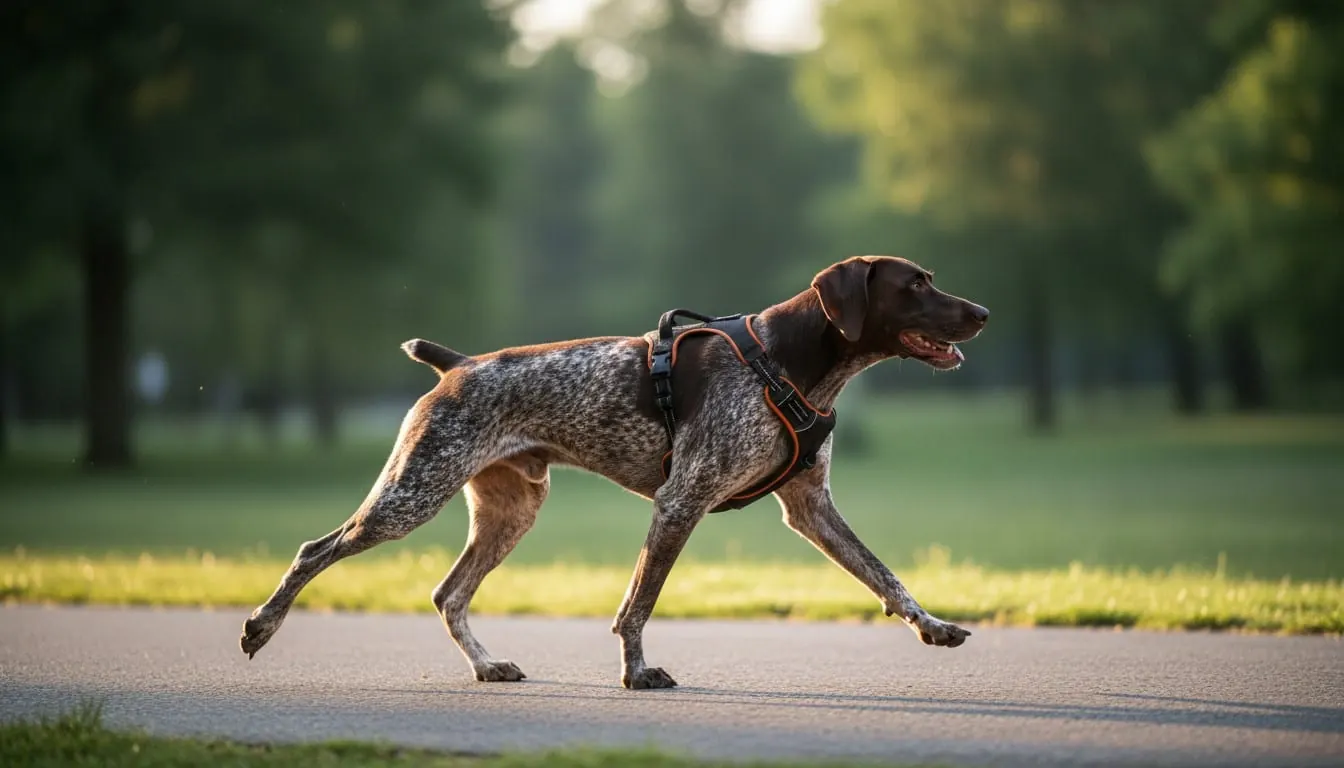
A Y-front harness protects your dog's natural stride because it sits on the breastbone rather than crossing the shoulder. Unlike humans, dogs do not have a collarbone connecting their front limbs to the rest of their skeleton; the shoulder blade (scapula) is held in place entirely by muscle and ligament. This allows for a great range of motion, which is easily restricted by 'T-bar' or 'No-Pull' harnesses that have a horizontal strap across the chest.
Biomechanically, the Y-front harness is superior because it sits on the skeletal structure (the manubrium or breastbone) rather than across the soft tissue and muscle of the shoulders. A Y-shape allows the humerus to swing forward without hitting a restrictive strap. In South Africa, brands like Rogz and Zee.Dog have popularised these ergonomic shapes, which are essential for active dogs that enjoy hiking or running. When the shoulder is allowed to move freely, the dog can maintain a natural stride, reducing the risk of premature arthritis and muscle strain in the front assembly.
Choose a Y-front harness design to ensure your dog's shoulders have a full, unrestricted range of motion.
Harness style
Effect on shoulder movement
Best suited for
Y-front (neck base to breastbone)
Leaves the scapula free to rotate for a full stride
Everyday walks for most breeds
T-bar / no-pull (horizontal chest strap)
Blocks the humerus and scapula, shortening the stride
Best avoided for active or growing dogs
Three-strap escape-proof
Adds a belly band behind the ribcage without crossing the shoulder
Deep-chested breeds like Greyhounds and Africanis crosses
How common harness designs affect your dog's movement
Measuring for Success: The Three Critical Points
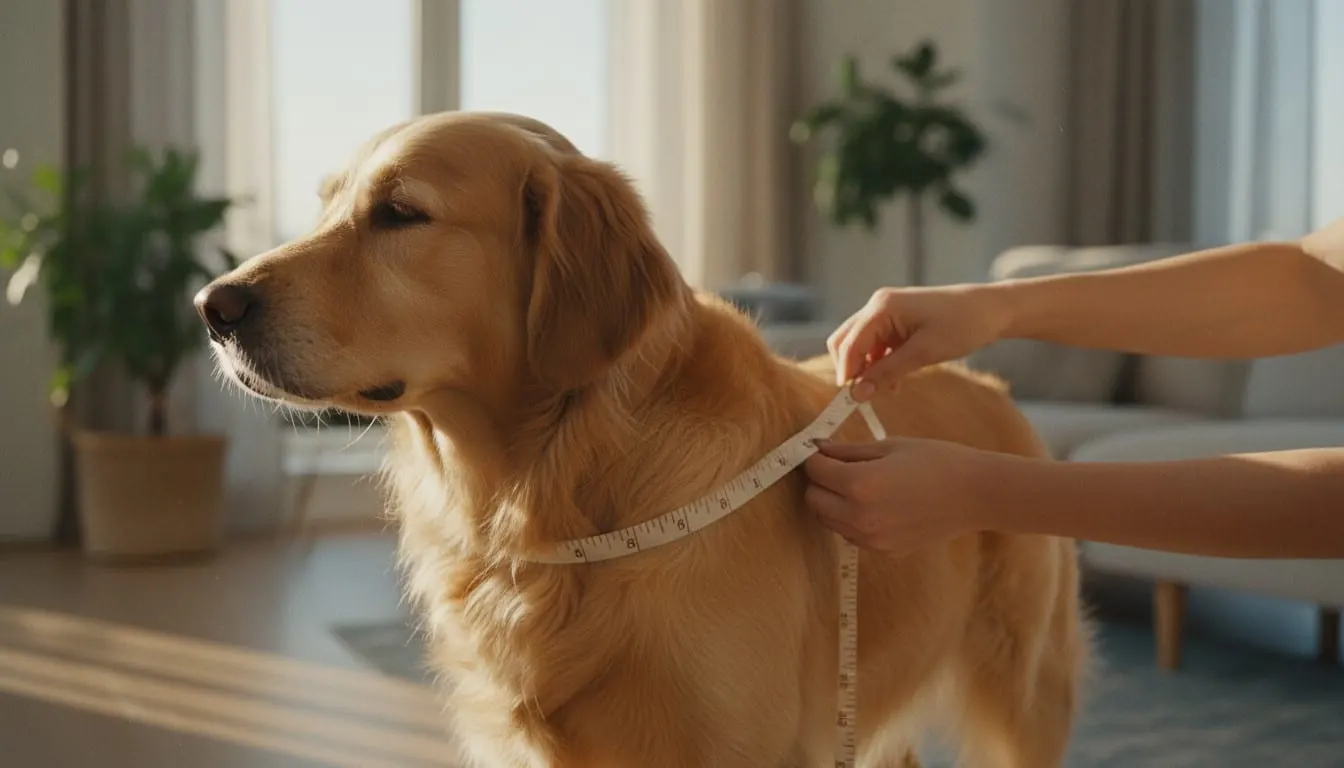
You cannot find the perfect harness fit by guessing based on your dog's weight. A 30kg Boerboel has a vastly different frame than a 30kg English Pointer. To get an accurate measurement, use a flexible tailor's tape measure and record the following in centimetres:
The Lower Neck: Measure from the top of the withers down to the breastbone. This is lower than where a collar sits, so don't simply reuse your dog's collar size. The harness should rest on the 'shoulders' of the neck, not the throat, so it doesn't press on the trachea when your dog pulls.
The Girth: Measure the widest part of the ribcage, usually about 5-10cm behind the front legs. This is the primary anchor point for security, and it should sit snugly without pinching so the harness cannot rotate or slip sideways while your dog is running or jumping.
The Chest Plate: Measure from the breastbone, through the front legs, to the point where the girth strap will sit. If this strap is too short, the harness will rub the 'armpits' (axilla), causing painful chafing, so when in doubt, size up and adjust the excess length rather than risk a strap that sits too close to the leg.
When shopping at local retailers like Absolute Pets or Petworld, bring these measurements with you rather than relying on the size chart printed on the packaging. Most high-quality harnesses allow for adjustment at all four or five points to accommodate the unique proportions of different breeds, so take the time to fasten and tweak every strap in-store before you commit to a purchase.
Always measure the lower neck, the widest part of the girth, and the length of the chest plate in centimetres for an accurate fit.
The Two-Finger Rule and Physical Verification
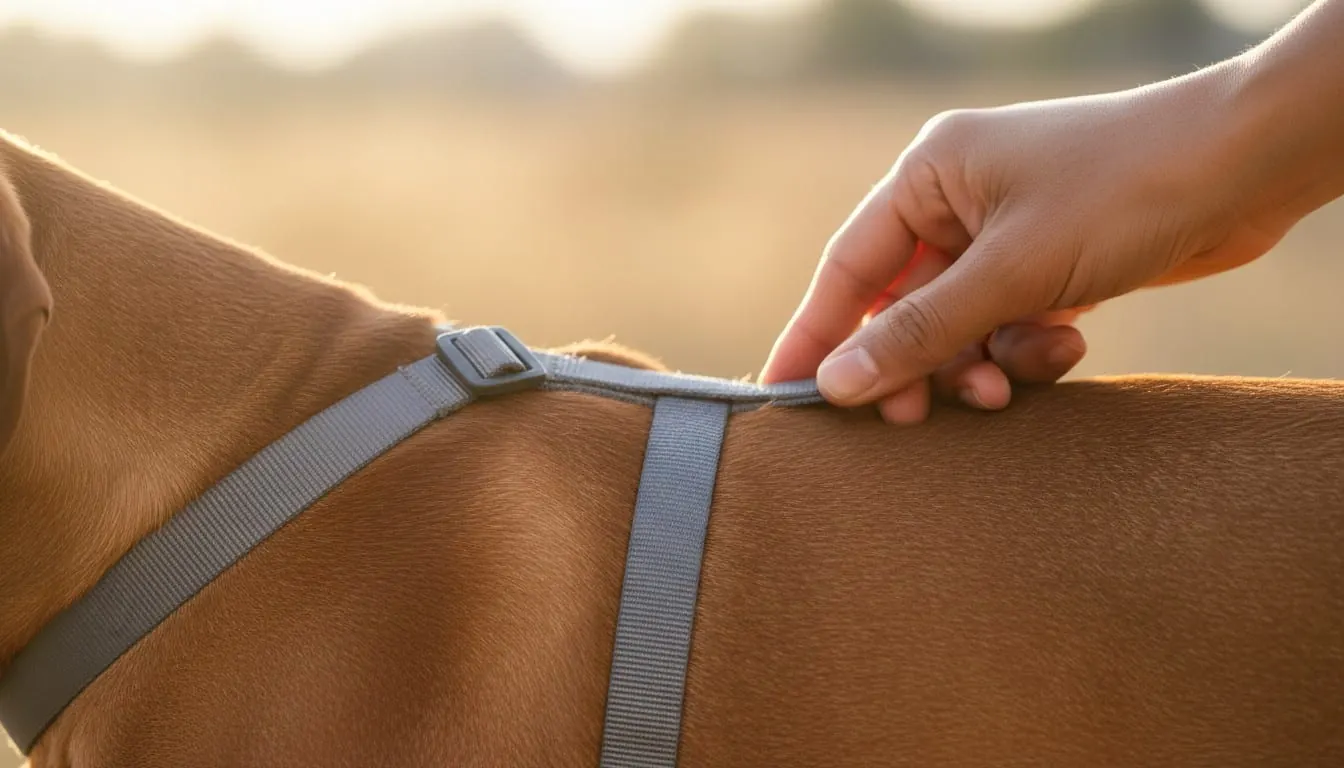
Once the harness is on, you must verify the fit through tactile checks. The most common standard is the 'two-finger rule.' You should be able to fit two fingers flat between the harness straps and your dog's body. If you can fit more, the dog may be able to back out of the harness; if you can fit fewer, it will likely cause skin irritation or restrict breathing.
Beyond the two-finger rule, check for 'lateral stability.' Grab the top handle or D-ring and move it side to side. The harness should shift slightly but should not slide over the shoulder blades or twist so far that the chest plate ends up under the leg. In the South African heat, especially in humid areas like KwaZulu-Natal, a fit that is too snug can lead to rapid overheating as the fabric traps heat against the skin. Conversely, a loose harness causes friction, which leads to 'hot spots' or hair loss in short-coated breeds like the Africanis or Great Dane.
Apply the two-finger rule to all straps and ensure the harness remains stable without sliding across the shoulders during movement.
Troubleshooting: Escaping, Chafing, and Gait Changes
Even with the right measurements, things can go wrong. If your dog is a 'Houdini' who backs out of gear, look for a 'three-strap' harness that includes a third belly strap behind the ribcage—this is physically impossible to slip over the chest. Chafing is the most common complaint among South African owners, often caused by the 'armpit rub.' This happens when the girth strap sits too close to the front legs. Ensure there is at least a four-finger width gap between the front leg and the girth strap.
Watch your dog walk from the side. If they are taking shorter steps than usual or 'crabbing' (walking at an angle), the harness is likely restricting their shoulder extension. If you notice any limping, skin redness, or a sudden reluctance to walk, remove the harness immediately and consult a physiotherapist or vet. For dogs with unique shapes, such as deep-chested Greyhounds or broad-chested Bulldogs, consider a custom-made harness or brands that offer 'long' versions of their standard gear to ensure the straps clear the sensitive axilla area.
Address chafing by ensuring a clear gap behind the front legs and watch for gait changes that signal shoulder restriction.
Conclusion
Achieving the perfect harness fit is a fundamental aspect of responsible pet ownership in South Africa. By prioritising a Y-front design that respects your dog's natural biomechanics and using precise metric measurements, you can prevent long-term joint issues and ensure every walk is a pleasure. Remember that gear should never replace training; a well-fitted harness is a tool for safety and comfort, not a solution for pulling. Regularly inspect your gear for wear and tear, especially after exposure to salt water or muddy trails. If you are ever unsure about your dog's movement or notice persistent skin issues, seek professional guidance from a certified canine biokineticist or your local veterinarian.
Frequently asked questions
Can I leave my dog's harness on all day?
It is not recommended to leave a harness on 24/7. Continuous wear can lead to matting in long-haired breeds, skin irritation, and the risk of the harness getting caught on furniture or fencing, which poses a strangulation hazard. Remove it once you're back home and let the skin and coat recover.
How do I know if the harness is too low on the chest?
The front 'V' or 'Y' of the harness should sit right on the manubrium, the hard bone at the base of the neck. If it sits lower, it will press against the soft tissue of the chest and can interfere with your dog's ability to take full strides.
My puppy is growing fast; how often should I adjust the fit?
Puppies should have their harness fit checked weekly. As they grow, especially during 'leggy' stages, the proportions of their chest and neck change rapidly, so a harness that fit perfectly on a Monday may be restrictive by the following weekend.
Is a Y-front harness better than a T-bar or no-pull design?
Yes, from a biomechanical standpoint a Y-front harness is the safer everyday choice. It leaves the shoulder blade free to rotate for a full stride, while a horizontal T-bar strap crosses the humerus and scapula and can shorten the gait over time.
How do I stop my dog from backing out of its harness?
Deep-chested dogs such as Greyhounds and other sighthounds can tuck their heads and reverse straight out of a standard two-strap harness. Fit a three-strap escape-proof design with an extra band behind the ribcage, and make sure every strap meets the two-finger rule so there's no slack to exploit.
References & Sources
This article was researched using the following sources:
Stop guessing with bag charts. Learn how to calculate RER for pets using veterinary formulas to prevent obesity and ensure optimal health for your dog or cat.
Explore cue selection and discrimination to communicate effectively with your pet. Learn how visual and verbal signals build a clear linguistic architecture for training.
Discover how decompression walks for dogs use olfactory stimulation to reduce stress and improve canine mental health far more effectively than a standard walk.