Dog Car Restraint Physics: Evaluating Safety Beyond Marketing
Understand the dog car restraint physics that protect your pet. This guide examines rotational forces and tensile strength for South African dog owners.
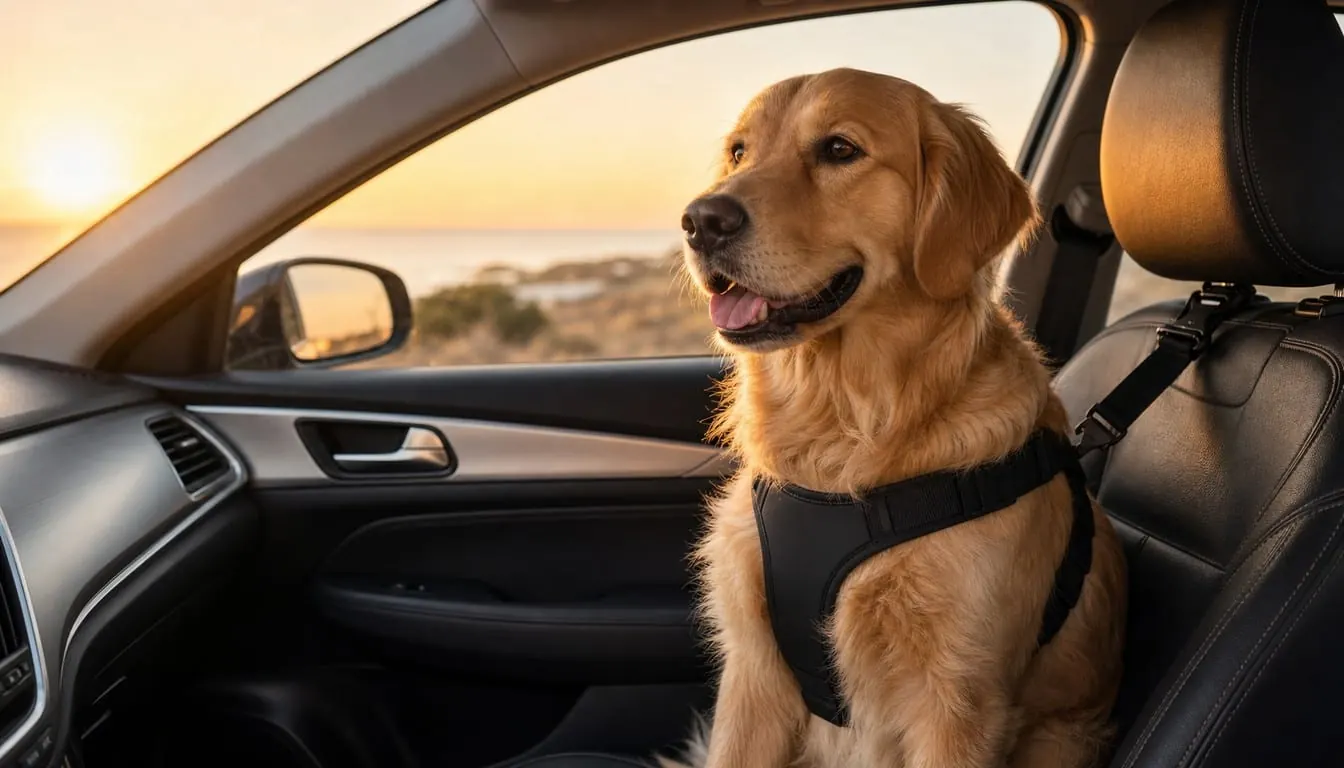
When driving along the N1 or commuting through Sandton, most South African pet owners ensure their dogs are 'restrained'. However, many commercially available products rely on clever marketing rather than robust engineering. To truly protect your canine companion, you must understand dog car restraint physics. In a collision at just 50 km/h, an unrestrained dog can project forward with a force equal to 30 to 60 times its body weight. This transformation from a beloved pet to a high-velocity projectile is a matter of basic Newtonian mechanics. This guide moves beyond 'crash-tested' stickers to evaluate the actual science of impact dynamics, ensuring your choice is based on first principles of safety engineering rather than brand promises.
The Law of Inertia: Why Weight Multiplies in a Collision
Weight multiplies in a collision because inertia keeps your dog moving at the vehicle's original speed even after the car itself has stopped, and the force needed to arrest that motion in a fraction of a second is many times the dog's static weight. This is Newton's First Law in action: if you are travelling at 60 km/h and stop suddenly, your dog continues at 60 km/h until the restraint—or the windscreen—stops them.
In South Africa, many drivers assume a standard R200 harness from a local supermarket is sufficient. However, the 'dynamic weight' during a crash is staggering. A 20kg Border Collie effectively weighs 600kg during a 50 km/h impact. Engineering a restraint to hold 20kg is simple; engineering one to withstand a 600kg instantaneous load requires high-grade tensile strength and reinforced stitching. When evaluating gear, look for 'seatbelt-grade' polyester webbing. Unlike nylon, which can stretch excessively or snap under high heat and friction, polyester webbing maintains its integrity, ensuring the dog is decelerated at the same rate as the vehicle's safety cell.
A dog's effective weight increases by up to 30 times during a 50 km/h crash, requiring restraints with massive tensile strength.
Managing Rotational Forces and Extension
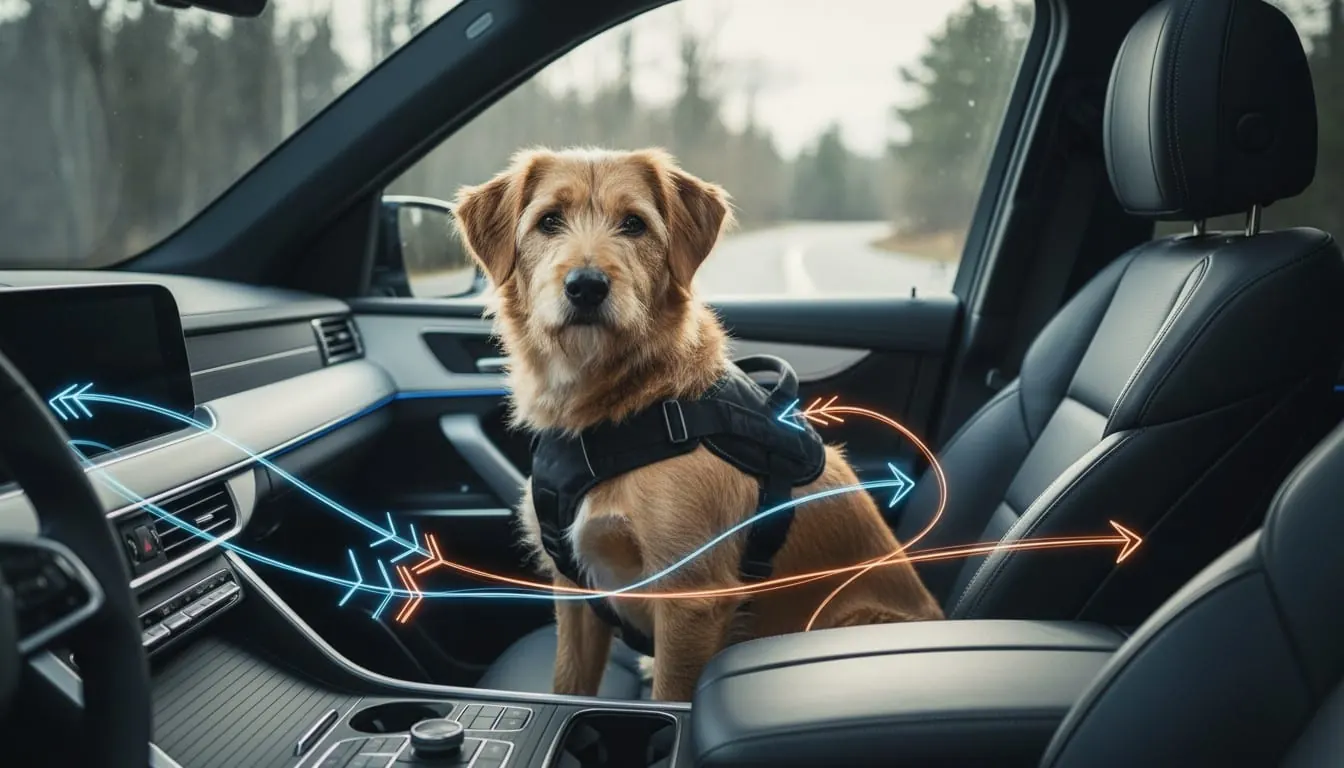
Rotational forces are managed by keeping the tether short and non-elastic, using a broad chest plate, and anchoring the harness at more than one point so the dog cannot swing in an arc. This matters because most accidents are not perfectly head-on: if a harness is attached to a long tether or a single point on the back, the dog may spin or 'launch' into a rotational arc. This 'pogo-stick' effect can cause the dog to strike the back of the front seats or the door pillars even if the restraint technically holds.
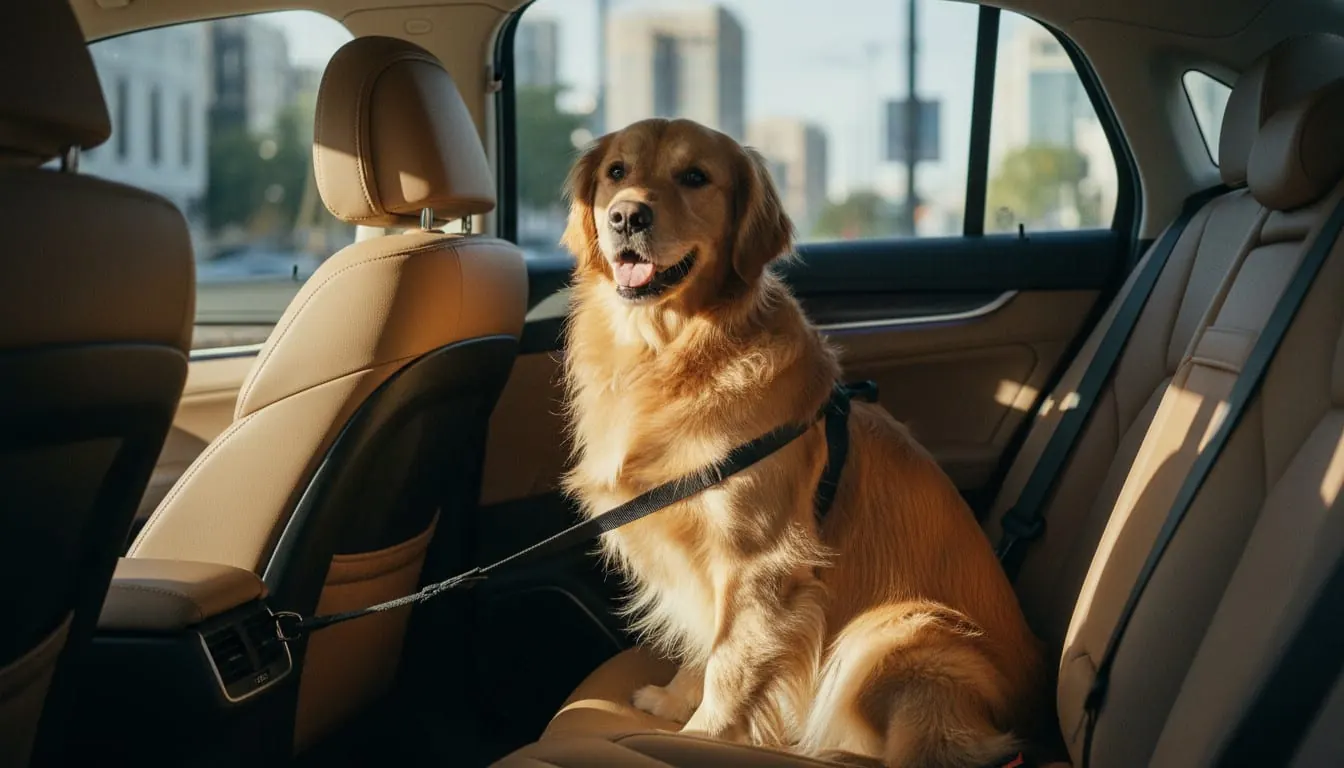
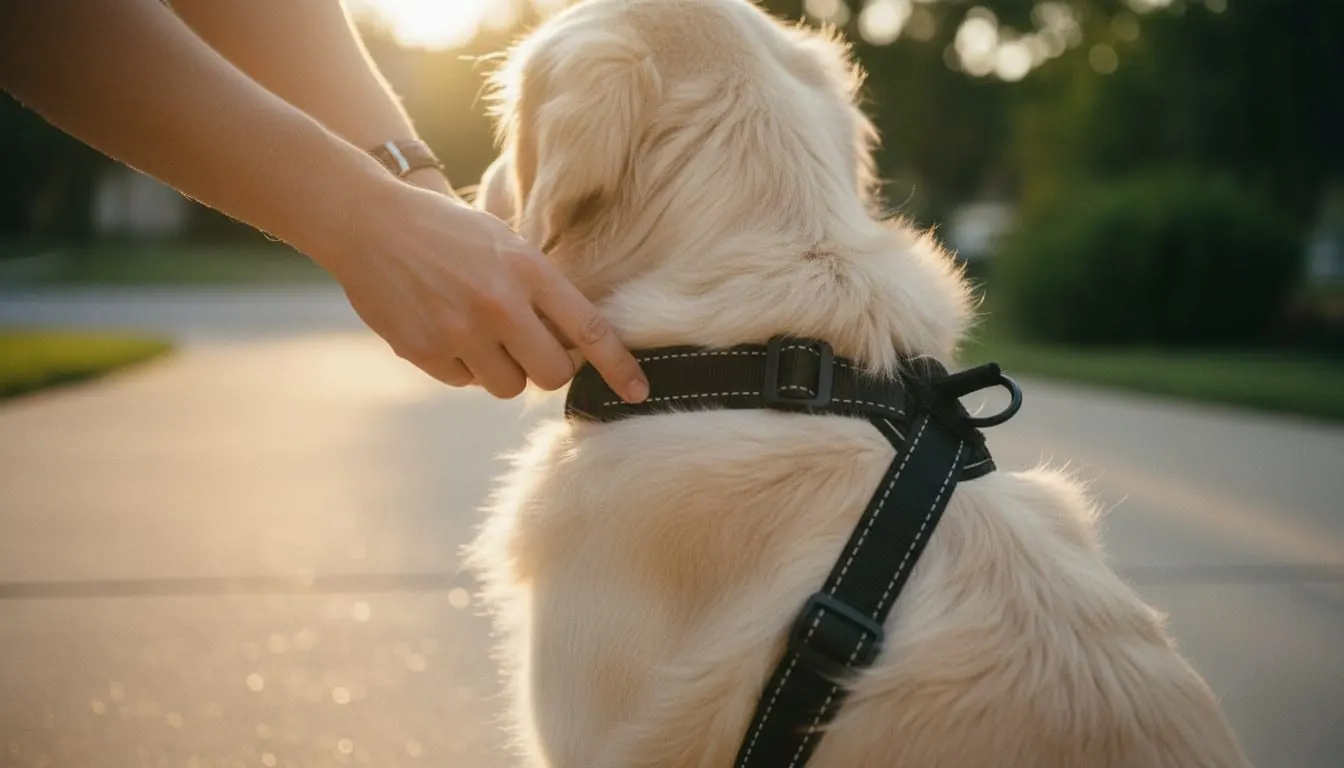
To counter this, look for restraints that minimise 'excursion' (the distance the dog moves forward). High-quality engineering focuses on a broad chest plate that distributes pressure across the ribcage and sternum. In South Africa, where SUV and double-cab bakkies like the Toyota Hilux are popular, the height of the seat relative to the floor increases the risk of the dog falling into the footwell. A restraint that incorporates dual-attachment points or integrates directly with the car's ISOFIX system provides much better stability against these twisting forces than a simple leash-style click-in tether.
Broad chest plates and short, non-elastic tethers are essential to prevent dangerous rotational movement and 'pogo' effects during an impact.
The Role of Energy Dissipation and Crumple Zones
Energy dissipation is the restraint's job of absorbing kinetic energy before it reaches your dog's body, exactly as a car's crumple zones absorb energy before it reaches you. If a harness is too rigid, the sudden stop transfers all the force directly to the dog’s internal organs, potentially causing 'closed-body' trauma or spinal fractures. The best-engineered restraints use energy-absorbing materials in the padding.
This is where 'Impact Physics' differentiates a premium product from a budget one. Look for materials that offer controlled deformation. This doesn't mean the harness should be stretchy; rather, the padding should compress in a way that increases the time over which the deceleration occurs. Even a few milliseconds of extra 'give' can reduce the peak force on the dog's chest by hundreds of Newtons. When shopping at retailers like Absolute Pets or Takealot, ignore the soft 'comfort' foam and look for high-density, closed-cell foam that feels firm to the touch—this is what actually manages energy during a R50,000 car insurance claim scenario.
Effective restraints use high-density padding to absorb energy, reducing the peak force transferred to the dog's internal organs.
Identifying Marketing Myths: The 'Crash-Tested' Label
The 'crash-tested' label is unregulated in South Africa, so on its own it proves nothing: there is currently no government-mandated standard for pet car restraints, unlike the SABS requirements for human seatbelts. This allows brands to use the term loosely. Some claim their product is crash-tested simply because it was put in a car during a test, regardless of whether it actually held or if the 'test dog' survived the simulated impact.
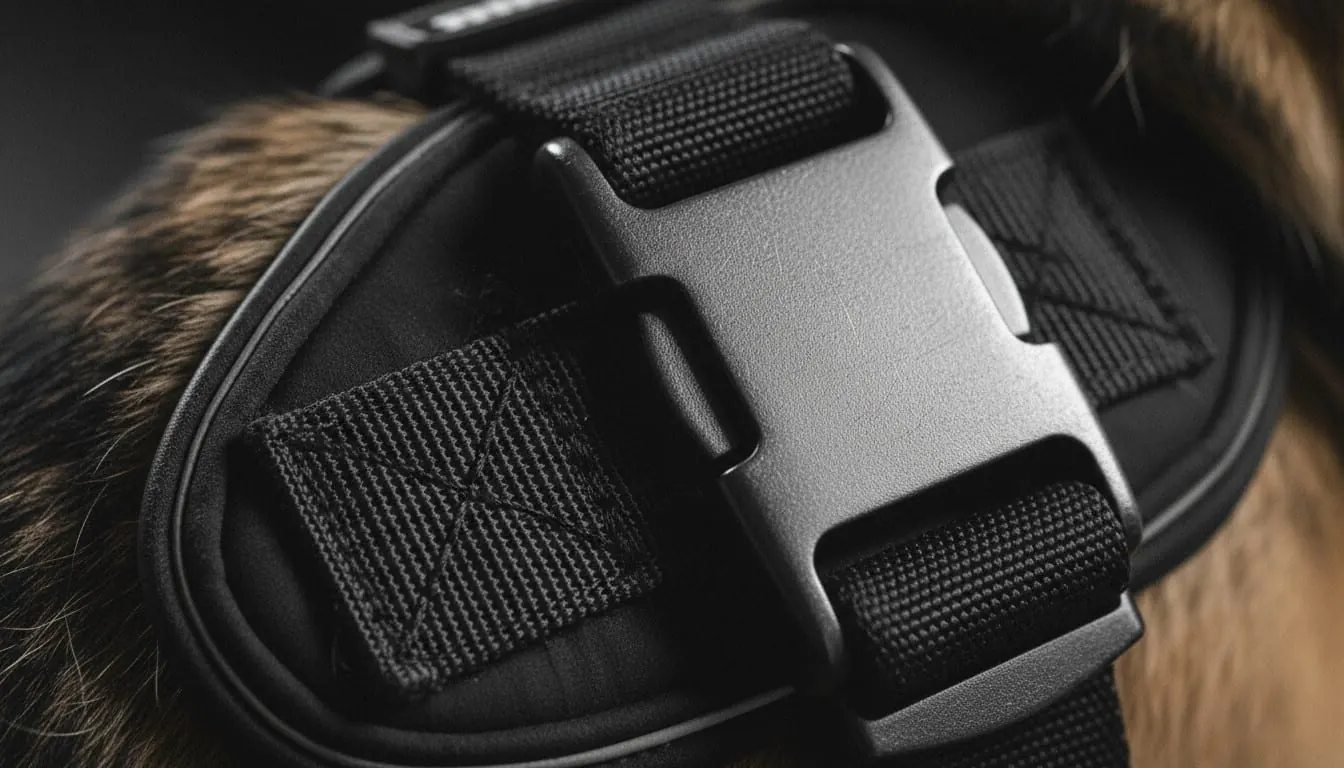
True safety engineering involves testing to standards like the FMVSS 213 (used for child seats) or the Center for Pet Safety (CPS) certification. An engineered restraint will provide a 'test report' that shows the sled speed, the weight of the dummy used, and the pass/fail criteria. If a brand cannot provide a video of the crash test or a technical datasheet showing the tensile strength of the D-rings and buckles, the 'crash-tested' label is likely marketing fluff. Always verify if the hardware is drop-forged steel or cheap zinc-die cast; the latter often shatters under the cold-flow stress of an actual collision.
Always demand actual test data or videos rather than trusting a 'crash-tested' label, and prioritise steel hardware over plastic or zinc.
Restraint option
Crash performance
Best use
Seatbelt-clip tether on a walking harness
Poor; plastic buckles and thin D-rings shatter under crash loads
Stopping the dog from roaming, not crash protection
Zip-line style restraint
Poor; long excursion lets the dog strike the interior
Preventing window-jumping on calm dogs
Certified crash-tested harness with short tether
Good; decelerates the dog with the vehicle's safety cell
Daily commutes and long trips for most dogs
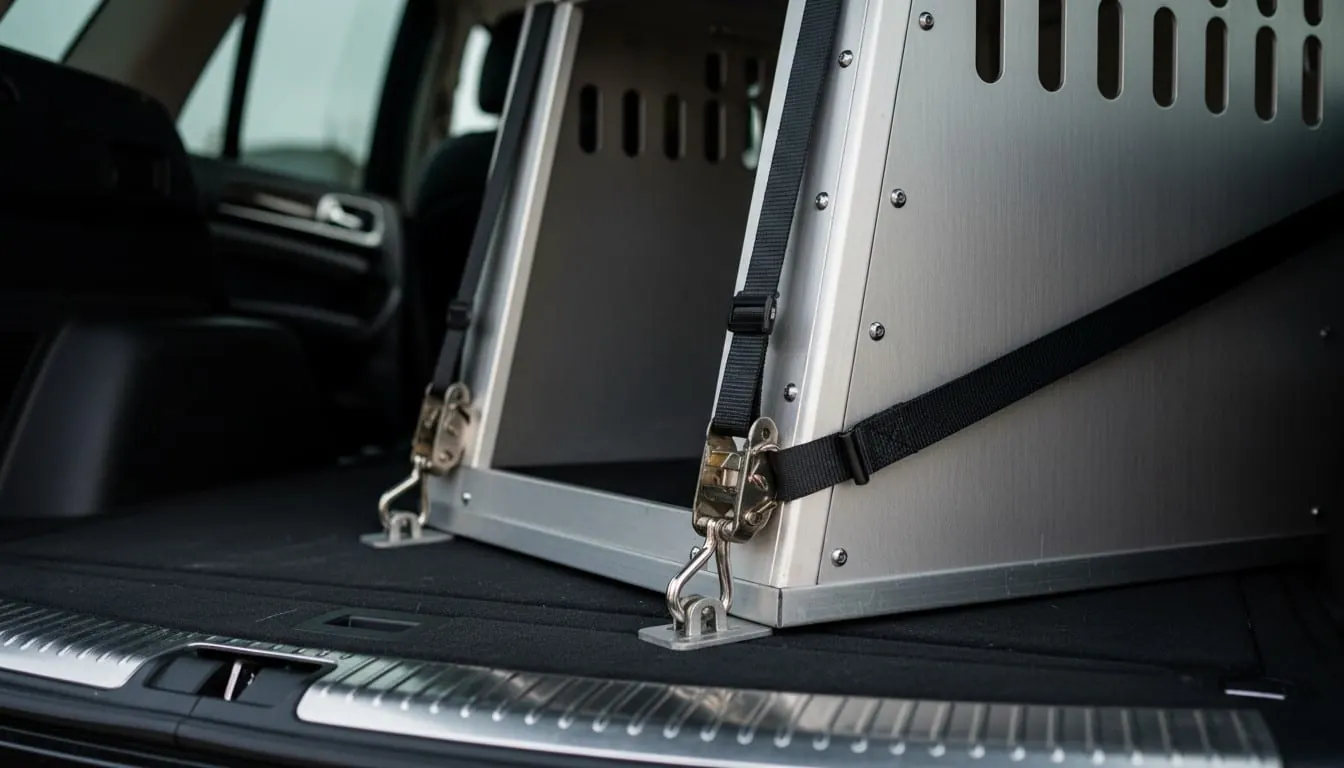
Strapped-down aluminium crate with ISOFIX or frame anchors
Best; anchors to the chassis and contains the dog fully
Bakkies, SUVs, and dogs travelling in the boot area
How common restraint options perform in a real collision
Troubleshooting Fitment and Common Failures
Even the most scientifically advanced harness will fail if fitted incorrectly. A common problem is the 'loose fit' error—owners leave the harness loose for the dog's comfort. However, any gap between the dog and the restraint allows for 'slack-snap,' where the dog gains momentum before the harness engages, significantly increasing the risk of injury. You should only be able to fit two fingers between the strap and the dog's body.
Another frequent issue in South African vehicles is the use of 'seatbelt clips' that plug into the existing buckle. Many of these clips are made of thin metal that can bend or unlatch under tension. If your dog is a 'leaner' or frequently moves around, they may accidentally step on the release button of the seatbelt buckle, effectively unrestraining themselves mid-journey. If you notice your dog can reach the front dashboard or hit the back of your head, the tether is too long. In such cases, consider switching to a direct-to-frame attachment or a shorter, fixed-length webbing strap that limits movement to a 15-20cm radius.
Ensure a snug fit (two-finger rule) and avoid thin metal seatbelt clips that can unlatch or snap under pressure.
Conclusion
Understanding dog car restraint physics is the difference between providing a false sense of security and actually saving your pet's life. By focusing on tensile strength, energy dissipation, and the management of rotational forces, you can look past the marketing 'noise' found in South African pet stores. Remember that a restraint is a technical piece of safety equipment, not just a travel accessory. Regularly inspect your gear for fraying or stress fractures in the metal hardware, especially after long trips or exposure to the harsh SA sun. If you are ever unsure about the fitment or the integrity of your restraint after a minor bumper-bash, consult a professional dog trainer or a vehicle safety expert. Prioritise engineering, and ensure your best friend is truly protected on every journey.
Frequently asked questions
Are 'zip-line' style restraints safe for dogs?
Generally, no. Zip-lines allow for significant 'excursion' distance, meaning the dog can still hit the car's interior during a crash. They are better for preventing the dog from jumping out of the window than for actual crash protection.
Can I use a regular walking harness for car travel?
Most walking harnesses use plastic buckles and thin D-rings designed to withstand a dog's pulling strength of roughly 50-100kg, not crash forces of 600kg or more. They will almost certainly shatter in a high-speed collision, so reserve them for walks and use a crash-rated harness in the car.
Is ISOFIX better than a seatbelt attachment for dogs?
ISOFIX is often superior because it anchors the restraint directly to the vehicle's chassis, reducing the 'give' found in seatbelt retractors. However, the harness or crate itself must still be crash-rated to handle the load, otherwise the anchor point simply outlasts the gear attached to it.
What is the safest place in a car for a dog?
The centre of the rear seat is statistically the safest position, as it is furthest from side-impact zones. It also keeps the dog away from the front airbags, which deploy with enough force to be fatal to a pet.
Is it illegal to drive with an unrestrained dog in South Africa?
The National Road Traffic Act does not name pets directly, but an unrestrained animal that distracts the driver or interferes with vehicle control can put you on the wrong side of the law and of your insurer. Many South African insurers may also repudiate claims where an unrestrained pet contributed to the accident, so restraint is both a safety and a financial decision.
References & Sources
This article was researched using the following sources:
Stop guessing with bag charts. Learn how to calculate RER for pets using veterinary formulas to prevent obesity and ensure optimal health for your dog or cat.
Explore cue selection and discrimination to communicate effectively with your pet. Learn how visual and verbal signals build a clear linguistic architecture for training.
Discover how decompression walks for dogs use olfactory stimulation to reduce stress and improve canine mental health far more effectively than a standard walk.