When New Zealanders pack up the station wagon for a trip to the Coromandel or a run through the Southern Alps, pet safety is often an afterthought. We see a 'crash-tested' sticker on a harness at a local pet store and assume our furry companions are protected. However, truly understanding dog car restraint physics is essential for any owner who wants to move beyond marketing jargon and evaluate the actual engineering that keeps a dog safe during a collision. In a high-speed impact on a Kiwi highway, a dog becomes a heavy projectile; without the right mechanical intervention, even a 'tested' harness can fail due to poor tensile strength or excessive rotational force.
The Kinetic Reality: Understanding Impact Force
The fundamental principle of dog car restraint physics begins with kinetic energy: $KE = 1/2 mv^2$. In simple terms, the energy an object carries increases with the square of its speed. For a New Zealand driver cruising at 100 km/h, a 20kg Border Collie carries an immense amount of momentum. If the vehicle stops suddenly, that dog continues forward with a force equivalent to nearly 600kg of weight.
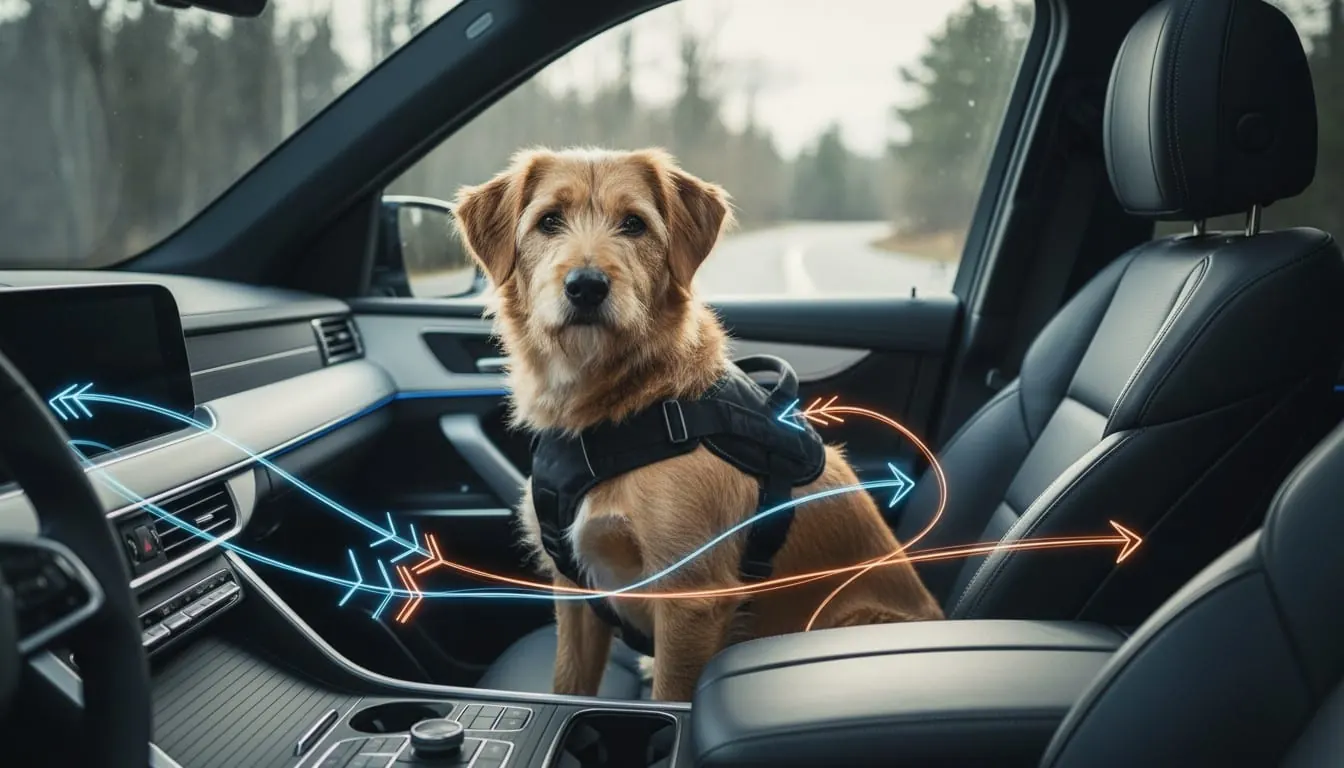
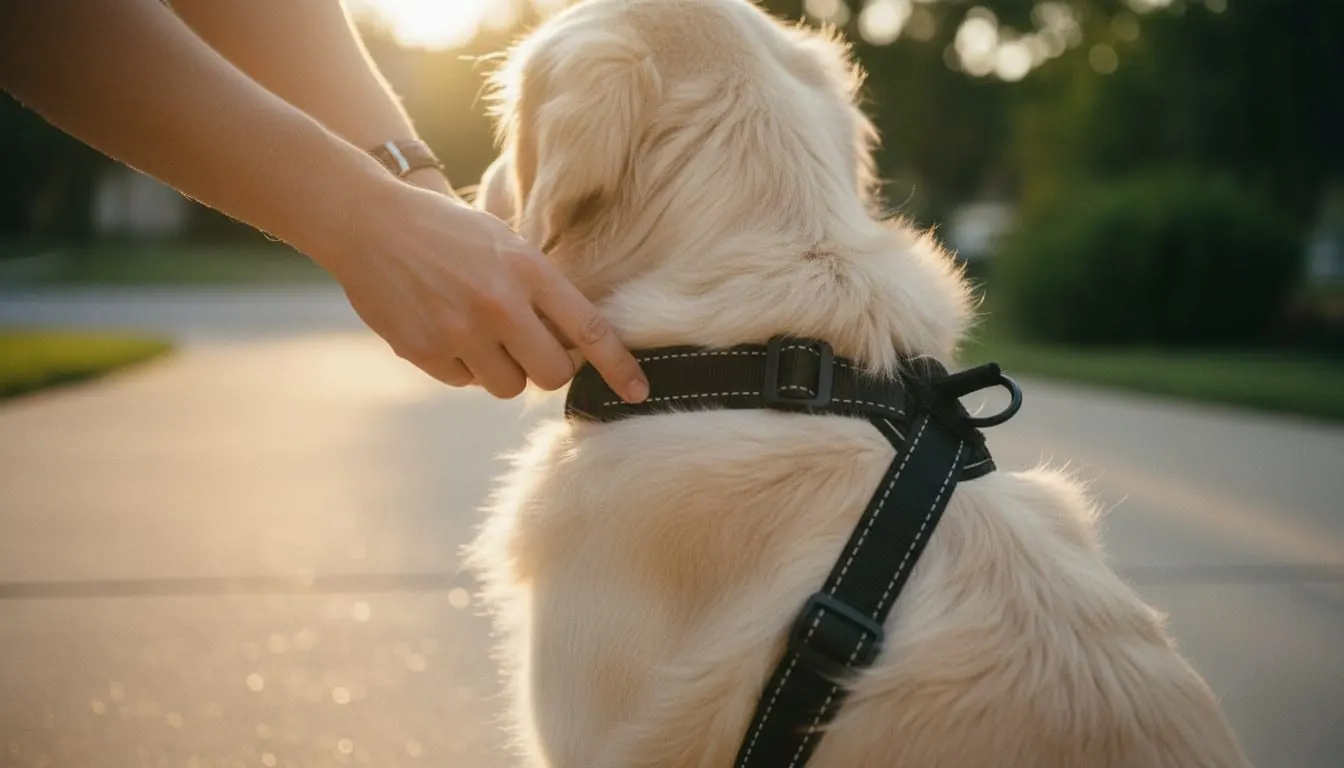
Most commercial restraints fail because they are designed for 'static' weight—the weight of the dog standing still. In a crash, the restraint must withstand 'dynamic' force. When evaluating a harness, you must look for wide, padded chest plates. These plates are designed to distribute that 600kg of force across the strongest part of the dog's skeletal structure—the ribcage—rather than the soft tissue of the neck or the spine. If a harness uses thin straps, the 'pounds per square inch' (PSI) of pressure on the dog’s body during impact can cause internal organ rupture, even if the harness itself remains intact.
Impact force increases exponentially with speed, requiring chest plates that distribute pressure across the dog's ribcage to prevent internal injury.
Tensile Strength and Hardware Failure Points
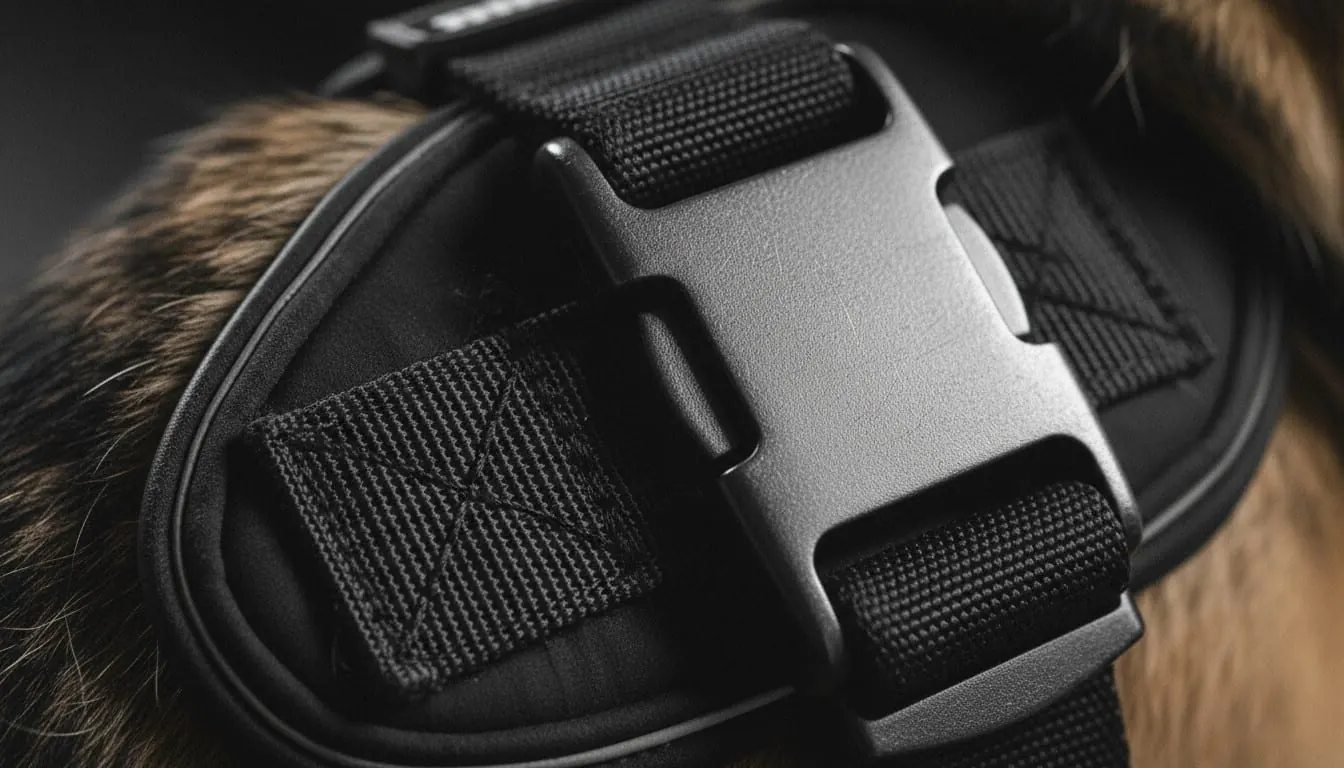
In the world of engineering, tensile strength is the maximum load a material can support without fracturing. Many dog restraints sold in NZ use plastic side-release buckles similar to those found on school bags. These are catastrophic failure points in a collision. High-quality restraints use 'nesting' metal buckles or mountaineering-grade carabiners that are rated for specific kilonewtons (kN).
When inspecting a restraint, look at the stitching. You want to see 'Box-X' stitching patterns, which are commonly used in parachute harnesses and climbing gear. This pattern ensures that if one thread begins to pull, the overall integrity of the join remains. Furthermore, the webbing should be high-tensile seatbelt-grade nylon or polyester. If the webbing is too stretchy, the dog will travel too far forward (excursion) before stopping; if it is too rigid with no 'give' at all, the sudden stop can cause bone fractures. The sweet spot is a material that allows for a micro-degree of controlled elongation to dampen the 'jerk' of the impact.
Prioritise metal 'nesting' buckles and Box-X stitching to ensure the restraint can handle the high tensile loads of a motorway-speed collision.
Managing Rotational Forces and Excursion
One of the most overlooked aspects of dog car restraint physics is rotational force. If a dog is restrained by a long tether attached to a single point on their back, the dog’s body will act as a pendulum during a side-impact or offset collision. This 'fulcrum effect' can cause the dog to swing violently into the car door, the center console, or even other passengers.
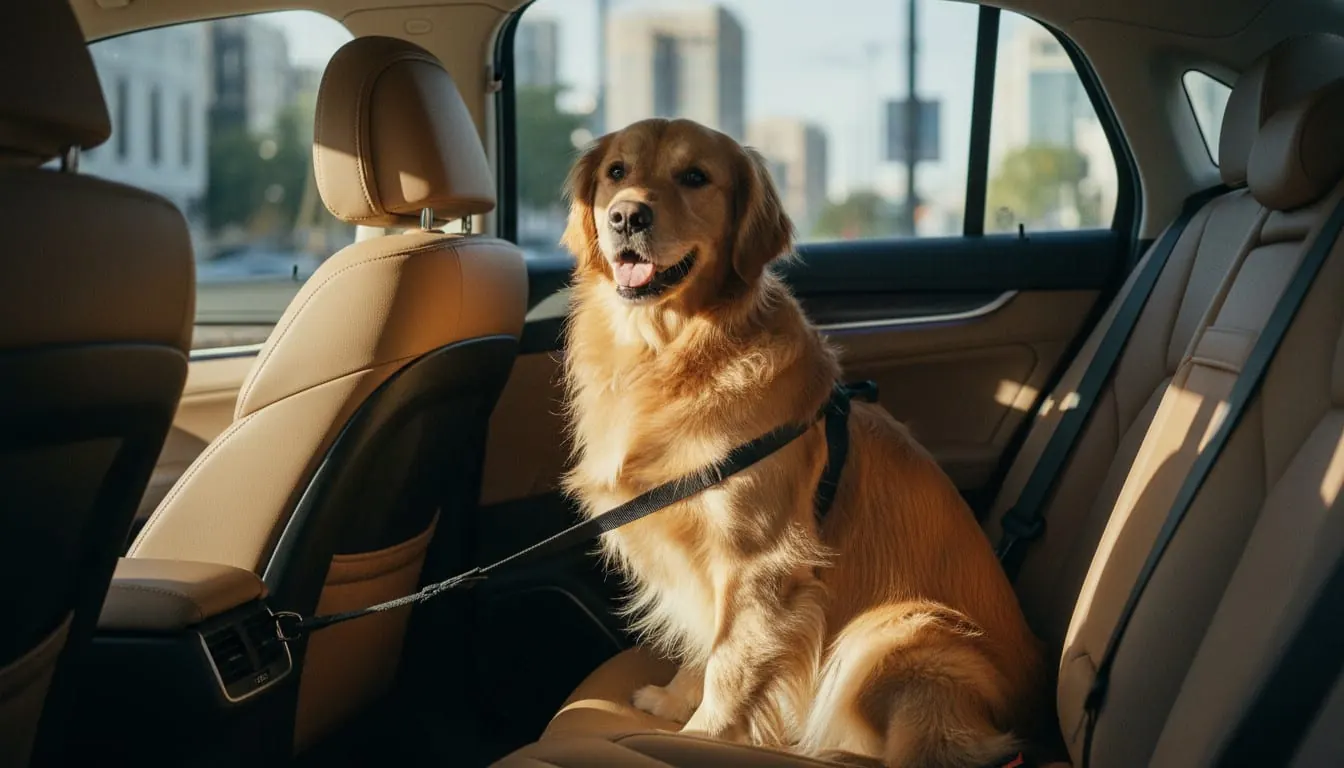
To mitigate this, the most effective restraints are those that interface directly with the vehicle's seatbelt system or ISOFIX points with minimal slack. The 'excursion distance'—how far the dog moves from the seat back during a crash—must be minimised. In New Zealand's diverse vehicle fleet, from utes to hatchbacks, owners often make the mistake of using long 'leash-style' seatbelt attachments to give the dog more room to move. While this makes the dog comfortable during the drive, it mathematically guarantees a high-velocity impact with the interior of the car during a crash. A shorter, more rigid connection to the car's frame is always safer.
Shorten tethers to minimise 'excursion distance' and prevent the dog from becoming a pendulum during side-impact collisions.
Troubleshooting Common Installation Errors
Even the most engineered restraint will fail if installed incorrectly. A common issue in New Zealand vehicles is the 'swivel' effect caused by attaching restraints to the headrest. Most headrests are not structural components designed to hold hundreds of kilogrammes of force; they can easily snap or pull out of the seat entirely.
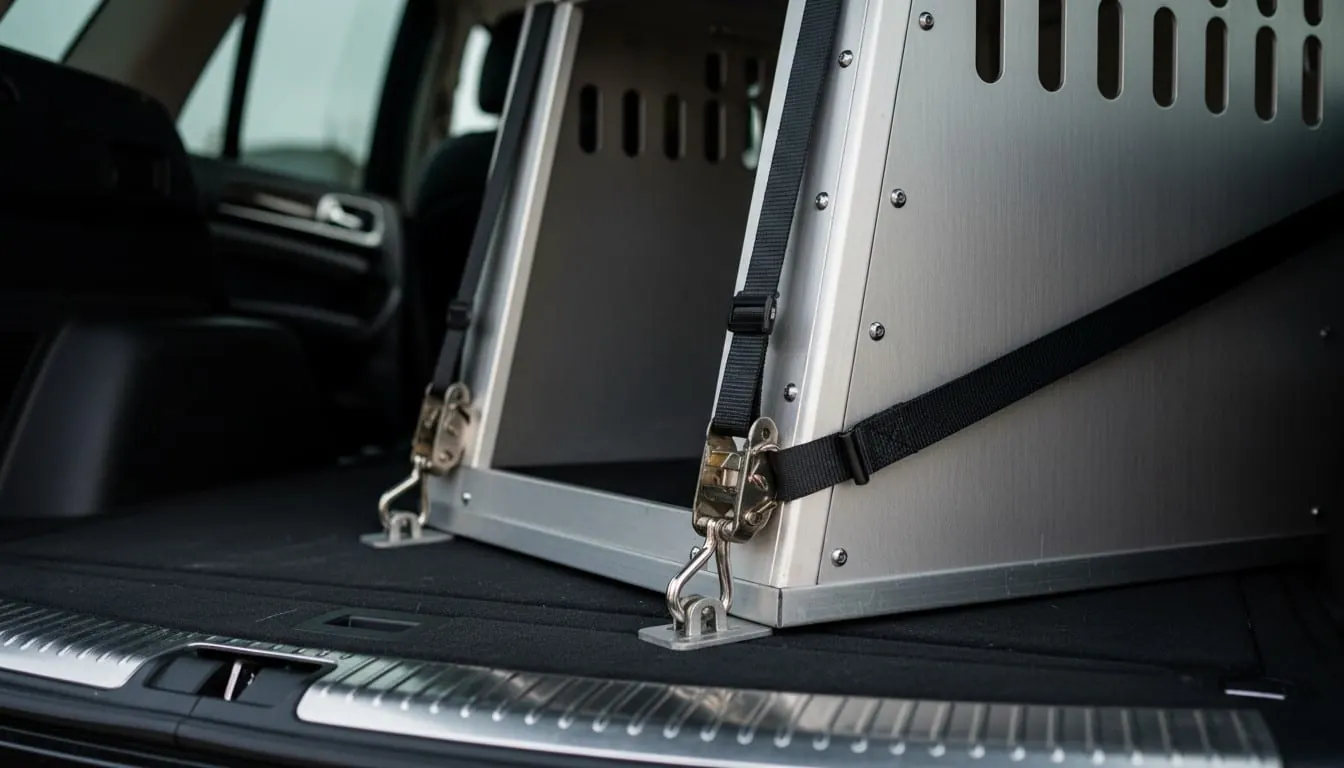
Another sign you need to adjust your approach is 'slack creep'. If the harness loosens as the dog moves, it will not be tight enough to catch them effectively during an impact. You should be able to fit only two fingers between the harness and the dog's body. If the dog is constantly getting tangled in the restraint, do not lengthen the strap; instead, consider a different anchoring point, such as the floor-mounted cargo tie-downs found in many NZ SUVs and wagons. If you are unsure, many professional car seat technicians who install child seats are also knowledgeable about the structural anchor points of your specific vehicle model.
Avoid headrest attachments and check for 'slack creep' to ensure the restraint remains anchored to structural parts of the vehicle.
The 'Crash-Tested' Myth: How to Verify Claims
In New Zealand, there is currently no specific legal standard that dog harnesses must meet to be labelled 'crash-tested'. This leads to 'crash-washing', where a brand may test a harness at low speeds (e.g., 20 km/h) or only test the small size while selling the large size under the same claim. To truly evaluate a product, look for data from independent third-party testing facilities, such as the Center for Pet Safety.
Check if the manufacturer provides 'sled test' videos. A reputable company will show you the physics in action—how the harness performs with a weighted crash-test dog (a 'dummy'). Look for evidence that the harness remained on the seat and that the stitching didn't fail. In the NZ market, brands like Sleepypod or Ruffwear (available at specialty stores like Animates or online) often provide more transparency regarding their engineering than generic supermarket brands. If a brand cannot provide a technical specification sheet for their hardware's break-strength, it is best to treat it as a walking tool rather than a safety device.
Demand independent sled-test data and avoid brands that cannot provide specific technical specifications for their hardware and stitching.
Restraint type
Crash performance
Best suited for
Crash-tested harness, seatbelt-threaded
Strong when independently certified; keeps the dog on the seat and limits forward excursion.
Dogs riding on the back seat who tolerate a fitted harness.
Crash-tested crate or carrier, anchored
Strong when the crate is certified and strapped down; it contains the dog and absorbs impact.
Small to medium dogs, boot and cargo areas, and anxious travellers.
Booster or car seat
Weak; built for visibility and comfort rather than absorbing high-speed impact forces.
Calm, low-speed local trips, never as primary crash protection.
Zip-line or long tether
Poor; the slack lets the dog accelerate before a violent, injury-causing stop.
Brief restraint against distraction, not collision protection.
How common dog car restraint types compare on crash protection
Conclusion
Understanding dog car restraint physics is about more than just buying a product; it’s about acknowledging the violent reality of road physics and preparing for it. By focusing on tensile strength, energy dissipation, and minimising rotational forces, you can provide your pet with the same level of protection we expect for human passengers. Remember that a restraint is a technical safety device, not just an accessory. Before your next NZ road trip, inspect your gear for wear and tear, verify the manufacturer's testing data, and ensure the installation is anchored to the vehicle's frame. If you have a dog with unique physiological needs, such as a brachycephalic breed or a senior dog with spinal issues, consult your veterinarian for specific advice on the safest restraint styles for their body type.
Frequently asked questions
Is it legal to drive with an unrestrained dog in New Zealand?
New Zealand law does not explicitly mandate a seatbelt for dogs, but the Animal Welfare Act requires that animals be transported in a way that does not cause unnecessary distress or injury. Under the Land Transport Act, an unrestrained dog can also be treated as a driver distraction or an insecure load, which can attract a fine if police judge it a safety risk. The safest and simplest way to stay compliant is to restrain the dog properly on every trip.
Can I use a regular walking harness as a car restraint?
No, a standard walking harness should never double as a car restraint. Walking harnesses are built to resist the steady pull of a lead, not the enormous forces a dog generates in a collision, and their plastic buckles can shatter instantly in a 50km/h crash. Use only a harness specifically engineered and sled-tested for vehicle impacts, with reinforced webbing and metal hardware.
What is the safest place in the car for my dog?
The back seat is generally the safest spot, because it keeps the dog away from front-passenger airbags that can be fatal to an animal when they deploy. For larger dogs in wagons or SUVs, a crash-tested crate anchored in the boot is an excellent alternative that contains the animal within a rigid structure. Keeping the dog low and centred against the seat back limits how far it can be thrown in a sudden stop.
References & Sources
This article was researched using the following sources:
Stop relying on vague pet food bag charts. Learn how to calculate Resting Energy Requirements (RER) to manage your pet's weight and health effectively.
Master cue selection and discrimination to communicate clearly with your pet. Learn how distinct verbal and visual signals speed up learning and prevent confusion.
Understand why decompression walks for dogs are vital for mental health. Explore how olfactory stimulation reduces stress and improves canine well-being in NZ.