Decompression Walks for Dogs: The Biological Necessity of Sniffing
Understand why decompression walks for dogs are vital for mental health. Explore how olfactory stimulation reduces stress and improves canine well-being in NZ.
When we think about taking our furry companions out, we often focus on the physical distance covered or how well they walk at heel. However, the biology of decompression walks for dogs suggests that we might be missing the most critical component of canine health: their noses. For the average Kiwi dog owner, a walk often means a brisk trek through the local park or a quick trot around the suburban block. Yet, forcing a dog to maintain a strict 'heel' without allowing them to engage with their environment can actually lead to sensory deprivation. By prioritising olfactory stimulation over sheer distance, we can tap into a dog's natural biological systems to regulate their stress levels, lower their heart rate, and significantly improve their overall mental state.
The Olfactory Powerhouse: Inside the Canine Brain
Decompression walks work because a dog's brain is built around scent rather than sight. While humans possess roughly six million scent receptors, dogs boast between 100 million and 300 million depending on the breed, and the portion of a dog's brain dedicated to analysing these scents is approximately 40 times larger than the equivalent area in a human brain. This isn't just a minor difference in capability; it is a fundamental difference in how they perceive reality. A scent-driven breed like a Beagle or a working Huntaway is walking around with a nose that is, in relative terms, thousands of times more capable than our own, which is exactly why a two-minute pause at a fence line can feel baffling to an owner and utterly absorbing to the dog.
Dogs also possess a specialized structure called the vomeronasal organ (or Jacobson's organ), located in the roof of the mouth. This organ allows them to detect pheromones—chemical signals that communicate the emotional state, health, and recent activities of other animals. When a dog stops to sniff a lamp post or a patch of grass in an Auckland park, they aren't just 'dawdling'; they are reading an intricate 'scent map' that tells a story of everyone who has passed by. Forcing them to move past these points without investigation is the equivalent of someone pulling a book out of your hands every time you try to read a sentence.
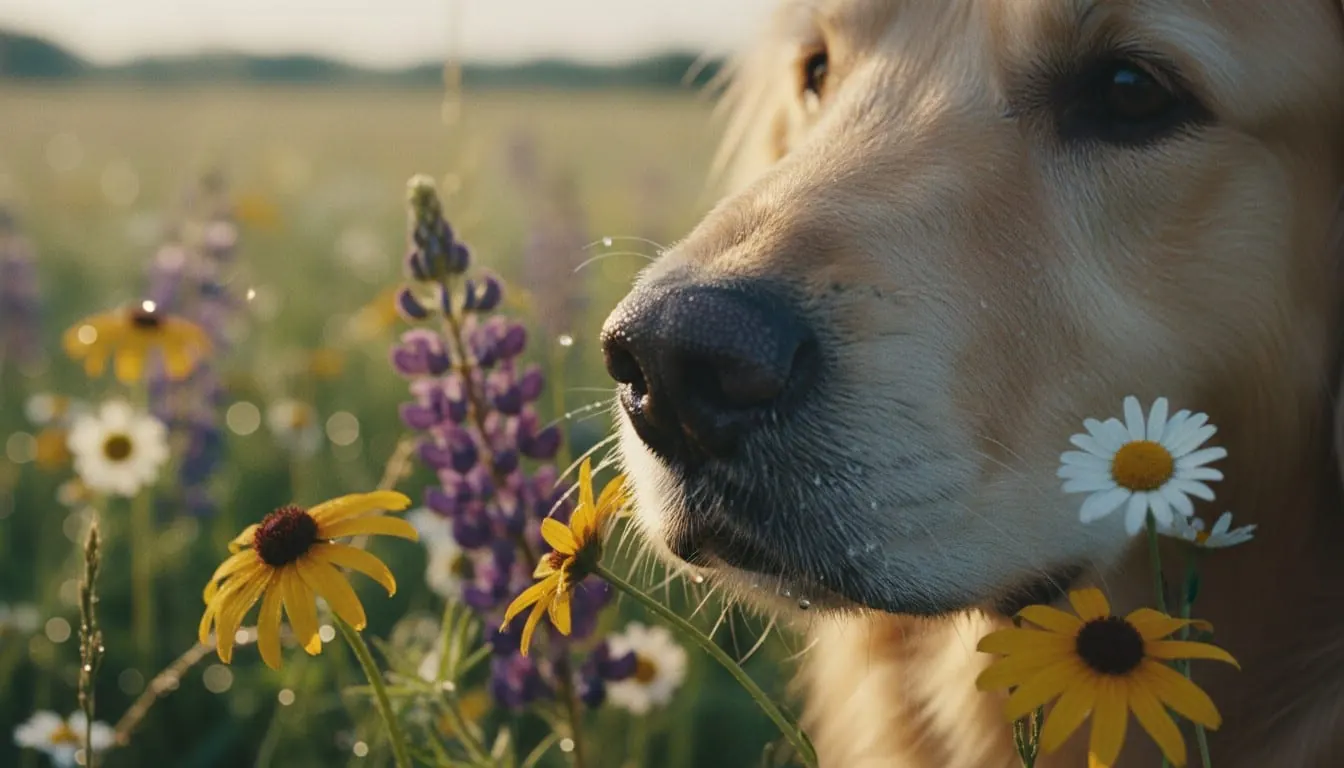
A dog's brain is biologically hardwired to prioritise scent, with a processing power for smells that is 40 times greater than ours.
The Chemistry of Calm: Cortisol vs. Dopamine
Cortisol and dopamine pull a dog's nervous system in opposite directions, and which one dominates depends on the type of walk. Traditional high-intensity exercise, such as a vigorous game of fetch with a ball thrower at the beach, keeps a dog in a state of high arousal, flooding their system with adrenaline and cortisol—the 'stress' hormone. While physically exhausted, the dog may remain mentally 'wired' and struggle to settle once back at home.
In contrast, decompression walks for dogs trigger the 'Seeking System' in the brain, which releases dopamine. This neurotransmitter is associated with pleasure and motivation, but in a way that encourages a 'rest and digest' state rather than a 'fight or flight' response. Research has shown that even 20 minutes of intense sniffing can be as mentally tiring for a dog as an hour of physical walking. Most importantly, studies indicate that a dog's heart rate actually decreases the longer they are allowed to sniff, providing a genuine physiological 'reset' that lowers long-term anxiety levels.
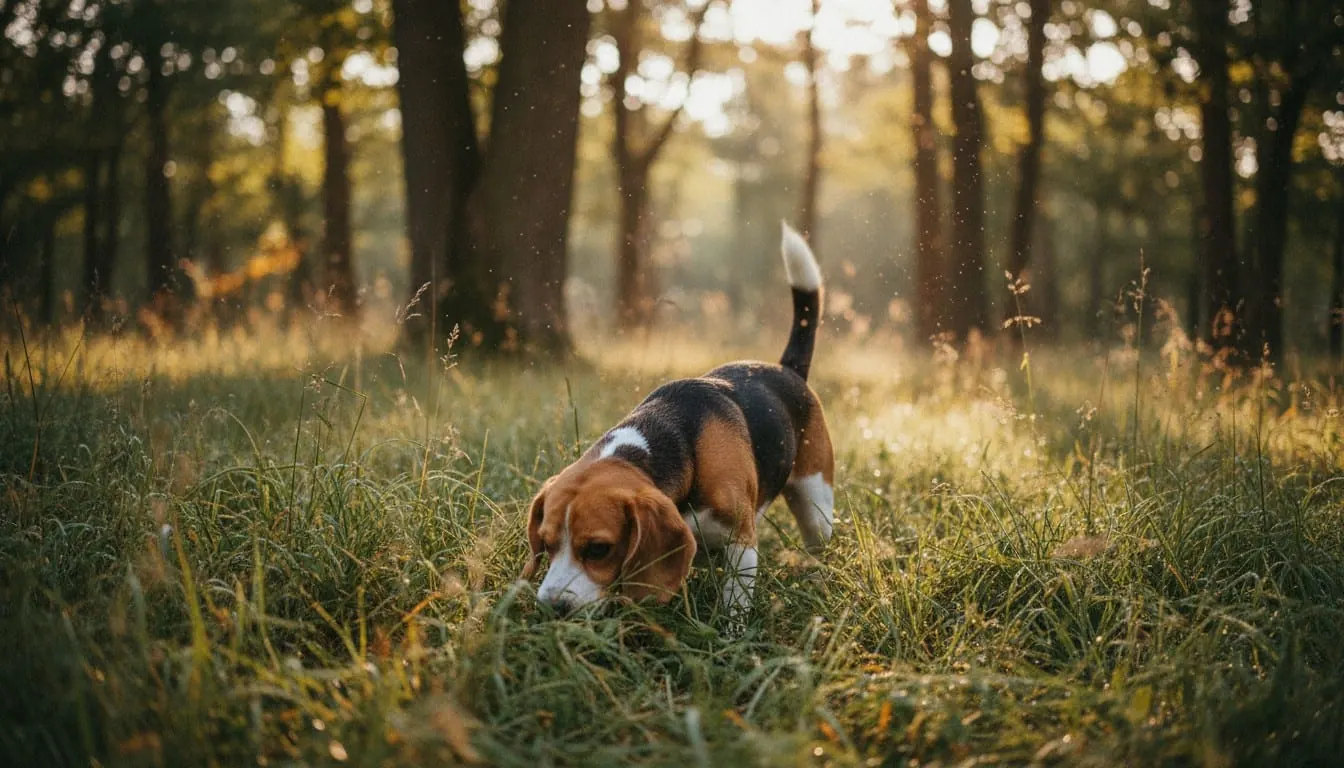
Sniffing activates the brain's seeking system, releasing dopamine and lowering the heart rate to create a true state of relaxation.
Factor
Standard heel-led walk
Decompression walk
Dominant hormone
Adrenaline and cortisol
Dopamine
Effect on heart rate
Stays elevated
Gradually decreases
Who sets the pace
Owner
Dog
Best for
Fitness and leash manners
Stress relief and mental reset
Standard walk versus decompression walk
Structuring the 'Sniffari' in New Zealand
Structuring a 'sniffari' starts with a shift in the owner's mindset: the goal is not to reach a specific landmark, like the top of Mount Victoria or the end of a tramping track, but to allow the dog to dictate the pace and direction. In New Zealand, our varied landscape provides incredible opportunities for this, from quiet regional reserves to the many 'Open Access' areas managed by the Department of Conservation (DOC).
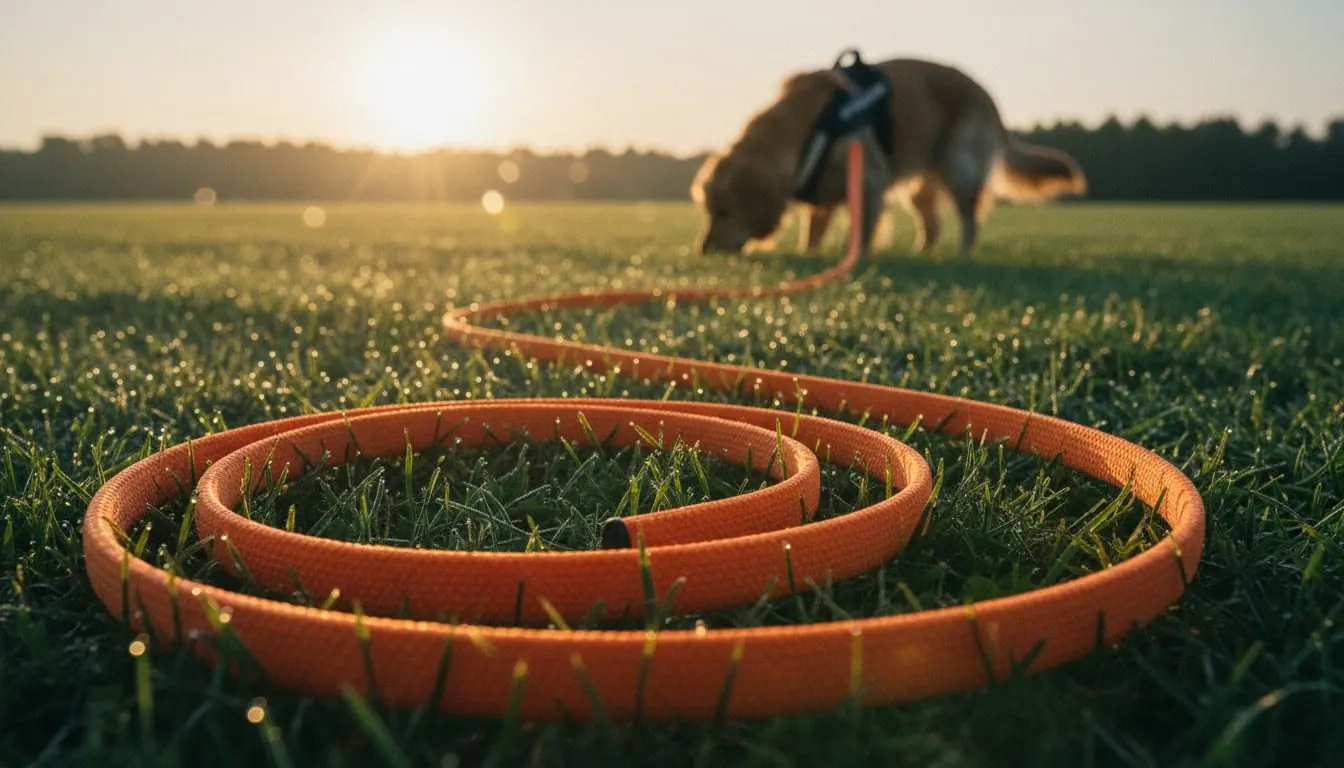
To facilitate this freedom safely, use a fixed-length long line (typically 5 to 10 metres) attached to a Y-shaped harness. This prevents the constant tension of a standard short leash while ensuring you still have control. Avoid retractable leashes, as the constant tension on the collar or harness can actually increase a dog's frustration. Choose 'low-traffic' environments where your dog won't be constantly bombarded by triggers like heavy traffic, large crowds, or off-leash dogs they don't know. The aim is to find a 'bio-rich' environment—somewhere with lots of natural scents like pine needles, sea salt, or local wildlife trails.
Timing matters too, and New Zealand's seasons make a real difference here. Over summer, aim for early morning or evening sniffaris when tar-sealed footpaths have cooled and the midday sun isn't sapping your dog's energy before they've had a chance to properly explore. Over winter, a shorter but unhurried sniffari on a frosty morning reserve still delivers more mental benefit than a longer march in the rain, so don't feel you need to log extra kilometres just because the weather is cold.
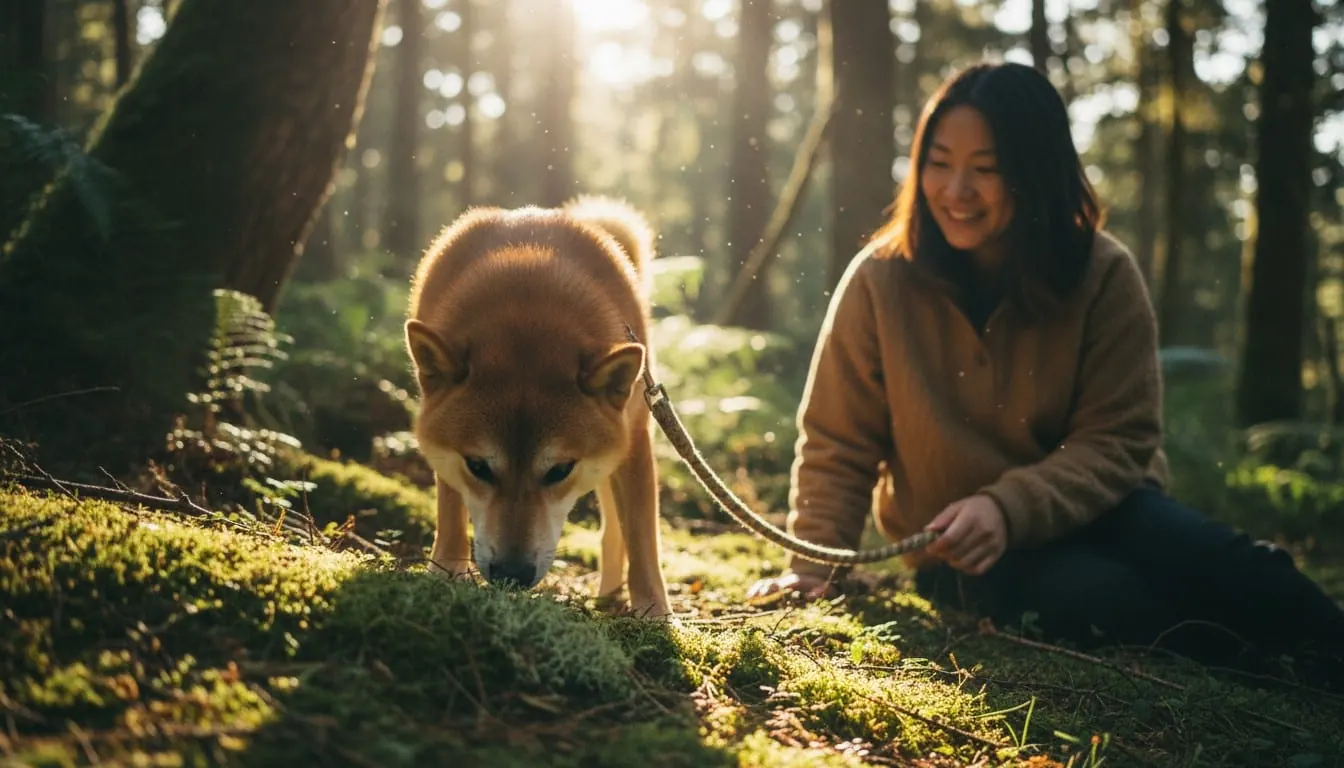
Use a 5-10 metre long line and a harness in quiet, natural areas to allow your dog the freedom to lead the walk.
Troubleshooting Common Challenges
Many owners worry that 'letting the dog lead' will result in them being dragged down the street, but a true decompression walk should never feel like a tug-of-war. It is important to distinguish between a decompression walk and a walk where the dog is simply out of control. If your dog is pulling excessively, it may be a sign of overstimulation rather than decompression, particularly in an environment with too many competing scents and sounds at once. In such cases, start in a smaller, familiar area like your own garden or a quiet cul-de-sac before moving to more complex environments, and build up to busier reserves only once your dog can sniff calmly without lunging on the line.
Another common New Zealand challenge is the presence of livestock. If you are walking near paddocks with sheep or cattle, ensure your dog is on a secure lead and is able to disengage from the stock. If your dog becomes hyper-focused on animals to the point where they stop sniffing the ground, their arousal levels have spiked, and the 'decompression' has ended. In these scenarios, it is best to move to a more secluded area or seek the guidance of a professional force-free behaviourist to help manage their reactivity. Always carry high-value treats to reward your dog when they choose to check in with you voluntarily.
Spring brings its own local hazard: swooping magpies. A sudden dive-bomb can spike a dog's cortisol as fast as any stranger or car, so during swooping season it's worth rerouting away from known nesting trees rather than trying to push through with treats. Possum and hedgehog scent trails are less dangerous but can be just as distracting, and letting your dog investigate one thoroughly, rather than yanking them off it mid-sniff, is usually what keeps the whole walk calm.
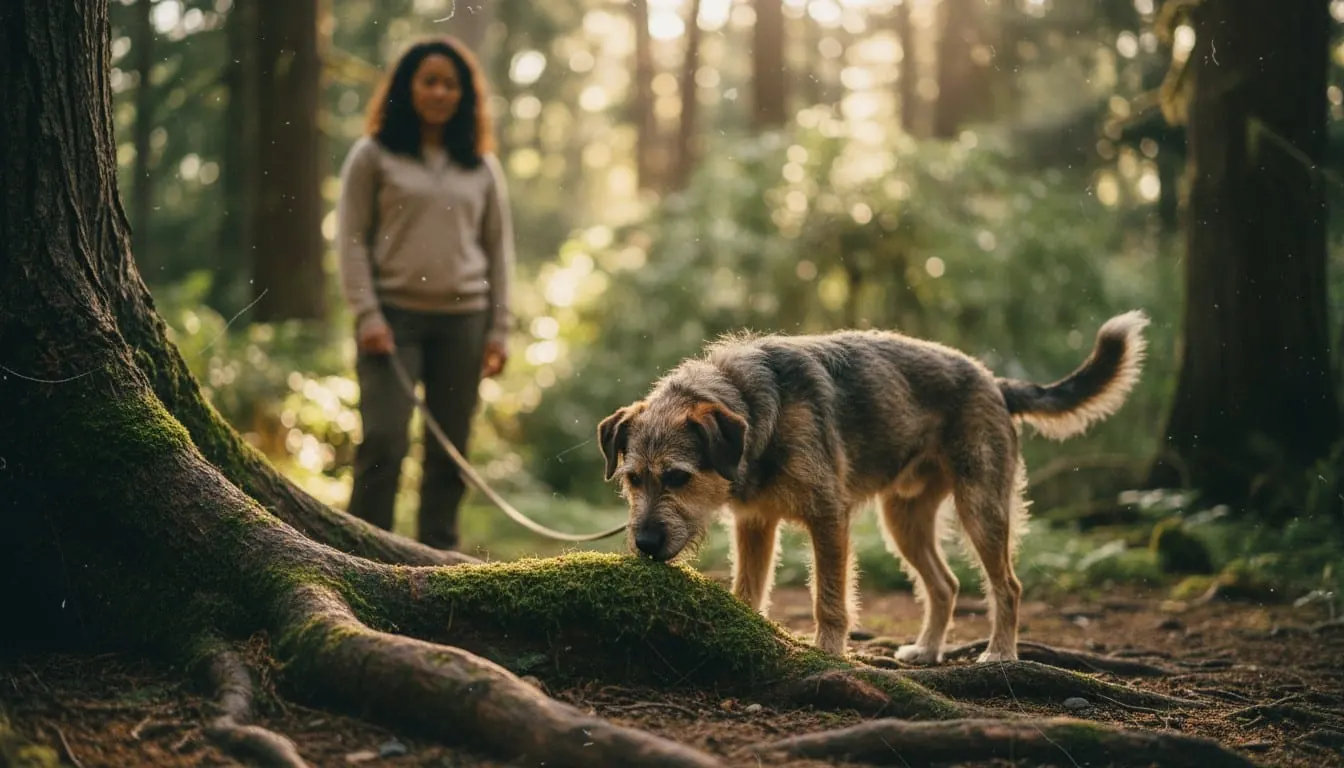
If your dog becomes over-aroused by livestock or traffic, move to a quieter area to maintain the walk's calming benefits.
Conclusion
Prioritising the biology of decompression walks for dogs is one of the most effective ways to support your pet's mental health. By moving away from the 'distance-first' mentality and allowing your dog to engage their incredible olfactory system, you are providing them with the tools they need to self-regulate and de-stress. Whether you are exploring a local reserve in Christchurch or a quiet beach in Northland, remember that for your dog, the nose is the window to the world. If you find that your dog is unable to disengage from distractions or seems perpetually stressed even in quiet areas, it may be time to consult a certified animal behaviourist to ensure your walks remain a source of healing rather than frustration.
Frequently asked questions
How long should a decompression walk last?
There is no set time, but even 15 to 30 minutes of dedicated sniffing can provide more mental exhaustion than an hour of standard walking. Quality of scent is more important than the number of kilometres covered.
Is a decompression walk better than a normal walk?
Both have their place. A structured walk with 'heeling' is great for training and manners, but a decompression walk is a biological necessity for stress regulation. Most experts recommend a balance of both throughout the week.
Where are the best places in New Zealand for these walks?
Look for DOC 'Open Access' areas, quiet regional parks outside of peak hours, or wide beaches during the off-season. Avoid busy urban centres or crowded 'off-leash' dog parks where the social pressure can be too high.
What equipment do I need for a 'sniffari'?
A comfortable Y-shaped harness and a 5-to-10-metre fixed-length long line are ideal. This allows the dog to move naturally without the restrictive feel of a short lead or the inconsistent tension of a retractable one.
Can decompression walks help with reactive or anxious dogs?
Yes, many force-free trainers use sniff-led walks as a core part of managing reactivity, since lowering a dog's baseline arousal makes them less likely to react to triggers like other dogs or traffic. Choosing quiet, low-traffic routes is especially important for a reactive dog.
References & Sources
This article was researched using the following sources:
Stop relying on vague pet food bag charts. Learn how to calculate Resting Energy Requirements (RER) to manage your pet's weight and health effectively.
Master cue selection and discrimination to communicate clearly with your pet. Learn how distinct verbal and visual signals speed up learning and prevent confusion.