Many Indian pet parents are diligent about grooming, yet they are often shocked when a professional groomer suggests a 'zero-cut' due to severe matting. The culprit is usually 'surface brushing'—the act of only tidying the top layer of fur while ignoring the dense undercoat. Line brushing is the professional-grade technique required to ensure your dog’s coat remains healthy, airy, and mat-free from the skin upwards. By systematically parting the hair, you can identify and remove tiny knots before they evolve into 'pelting,' a painful condition where mats tighten against the skin. Whether you own a Shih Tzu in Mumbai or a Golden Retriever in Delhi, mastering line brushing is the most effective way to maintain your pet's comfort and aesthetic appeal.
Why Surface Brushing Leads to Pelting
Surface brushing leads to pelting because it only tidies the top of the coat while dead hair keeps accumulating at the base, where it tangles with live hair into a felt-like mass. Most owners swipe a standard brush over their dog's back and assume the job is done, but the hair closest to the skin never gets touched. Long-haired breeds common in Indian households, like the Lhasa Apso or the Poodle, have a double coat or a continuously growing single coat, so those untouched under-layers begin matting within days.
Pelting is more than just an aesthetic issue; it is a significant welfare concern. These mats trap moisture against the skin—a major problem during the humid Indian monsoon—leading to fungal infections and hot spots. Because the mats are tight, they pull on the skin every time the dog moves, causing constant discomfort. Line brushing solves this by ensuring that the brush bristles actually reach the skin level, clearing out the 'dead' hair that causes these structural tangles.
Factor
Surface brushing
Line brushing
Coat depth reached
Top layer only
Every layer down to the skin
Effect on dead undercoat
Leaves it trapped near the skin
Removes it before it can felt into mats
Time for a full coat
5-10 minutes
30-45 minutes for a Lhasa Apso or Poodle
Long-term outcome
Pelting and eventual shave-downs
An airy, mat-free coat and lower grooming bills
Surface brushing versus line brushing
Surface brushing only cleans the top layer, allowing painful mats called pelting to form undetected against the skin.
Essential Tools for the Indian Pet Parent
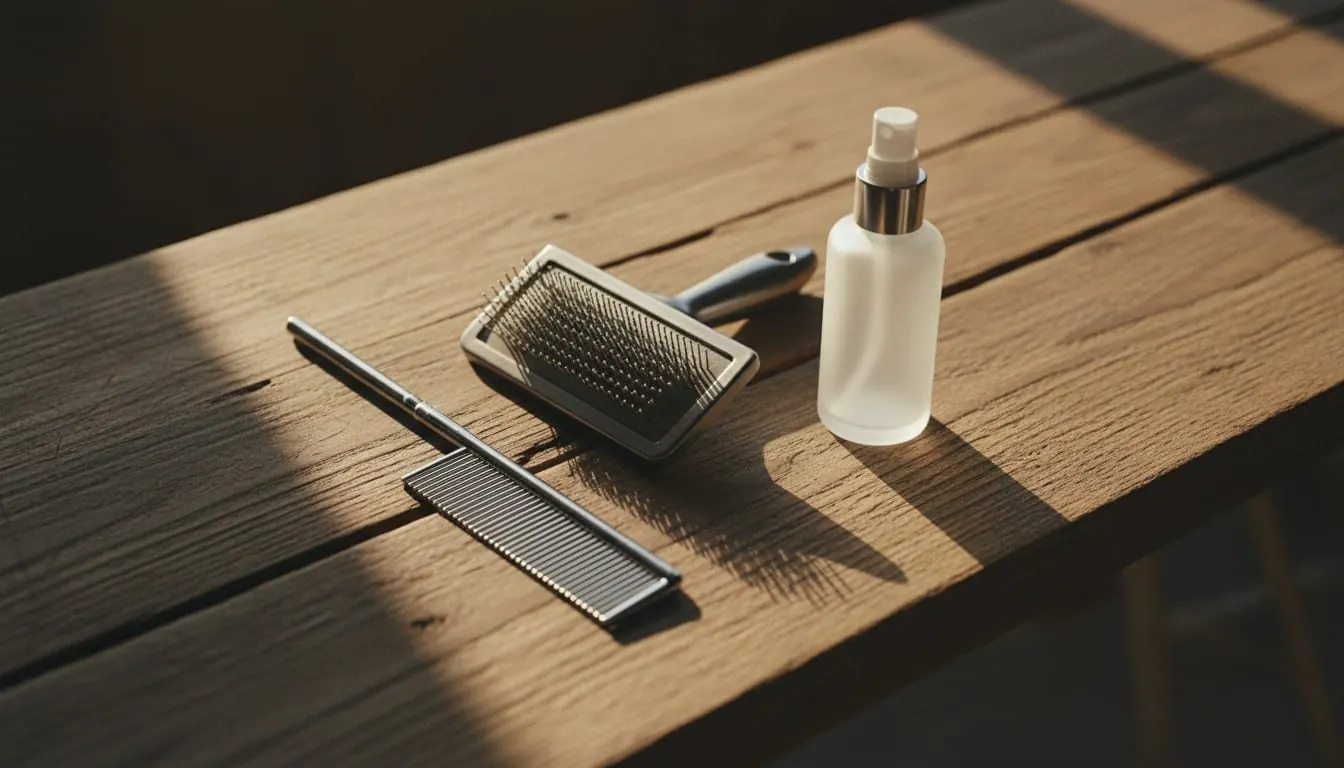
You need exactly three tools for effective line brushing: a firm slicker brush, a metal Greyhound comb, and a detangling spray. Many 'all-purpose' brushes sold in local Indian pet shops are too soft to reach through a thick coat, so it is worth investing in professional-grade options—brands like Wahl India or Andis offer slicker brushes with pins firm enough to penetrate dense fur without bending on contact.
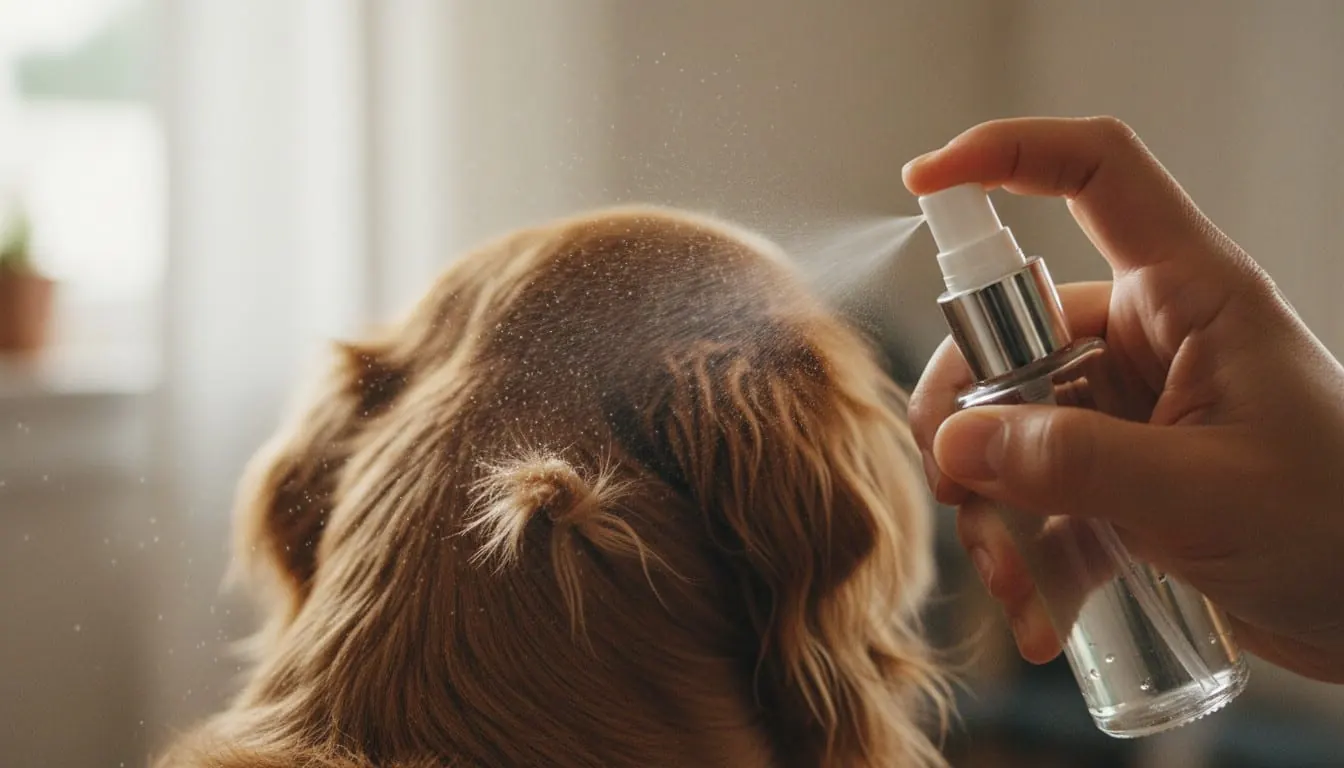
Secondly, you need a 'Greyhound Comb'—a metal comb with fine and coarse teeth. This is your diagnostic tool; if the comb cannot pass through a section of hair from the skin out, a mat is forming. Finally, a detangling spray or a diluted conditioner (mixed with water in a ₹50 spray bottle) is vital. In the dry heat of North India, hair can become brittle and prone to breakage. A light misting provides the 'slip' needed to work through knots without causing the dog pain or snapping the hair shaft.
Invest in a firm slicker brush, a metal greyhound comb, and a detangling spray to properly execute the line brushing technique.
The Line Brushing Technique: A Step-by-Step Guide
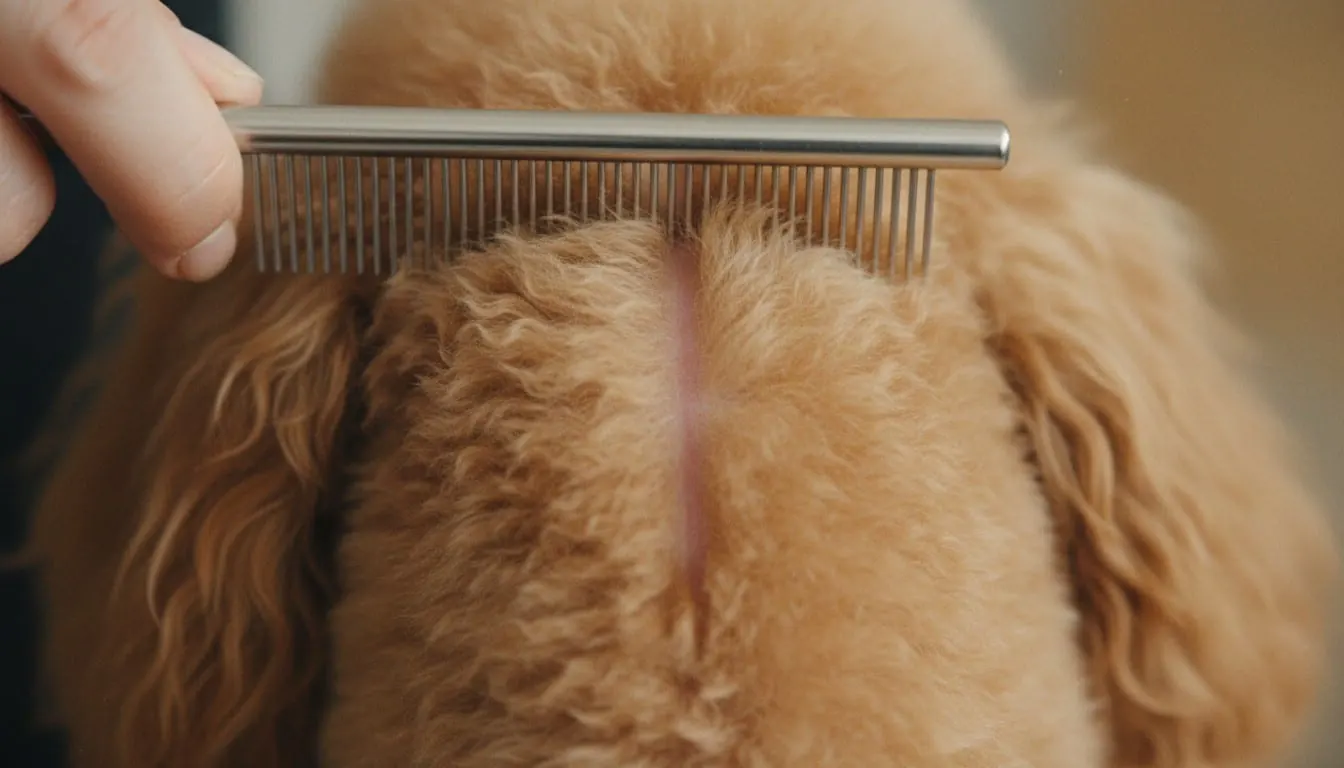
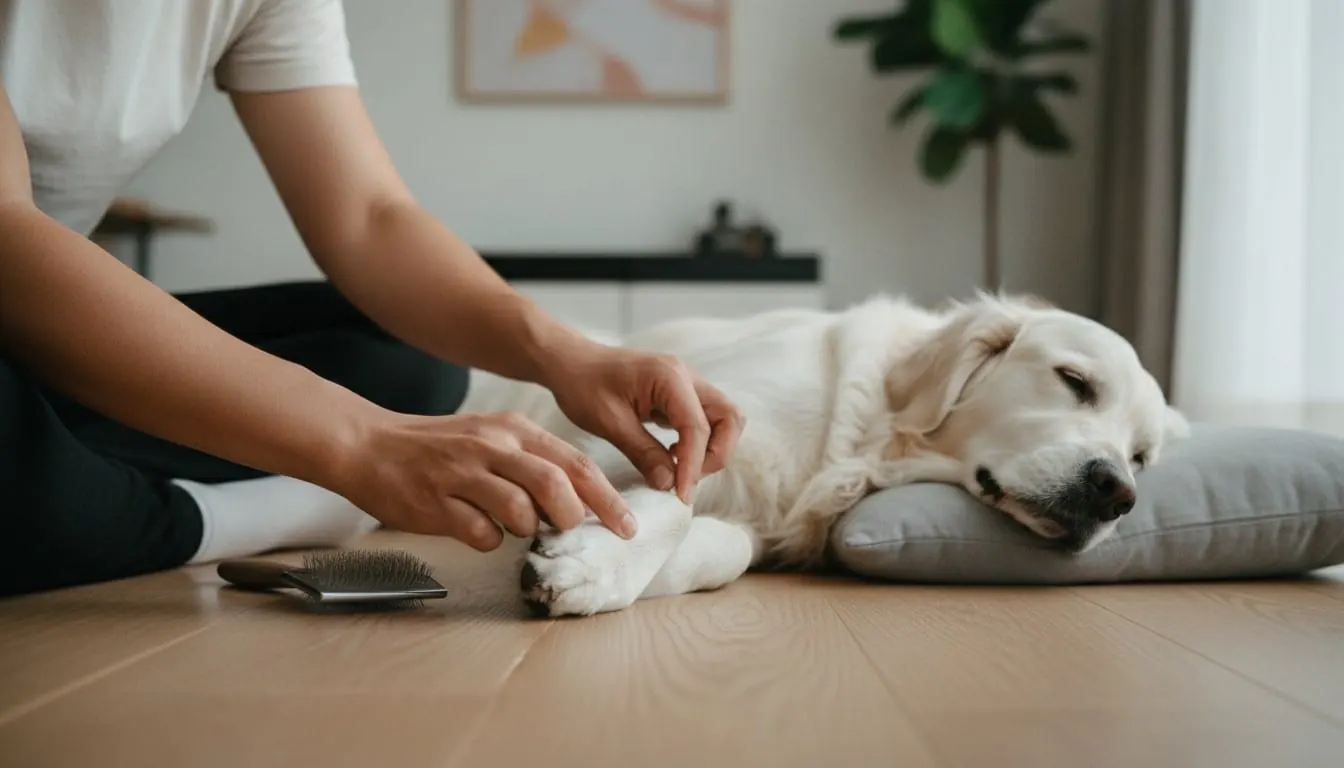
To begin line brushing, start at the bottom of the dog's body, usually the rear legs or the base of the tail. Use your non-dominant hand to push the hair upward, exposing a straight 'line' of skin. Use the slicker brush in your other hand to brush the small section of hair downward, away from the hand holding the hair up. You are effectively brushing small, 2-cm wide sections at a time.
Once that small section feels smooth, take your metal comb and check your work. Insert the comb at the skin and pull it outward. If it snags, the slicker brush hasn't finished its job. Move upward, creating a new 'line' of skin just above the previous one, and repeat. This systematic approach ensures that 100% of the coat is processed. It may take 30-45 minutes for a full-grown Lhasa Apso, but this thoroughness is what prevents the dreaded 'shave-down' at the groomer.
Work in small 2-cm sections from the bottom up, always parting the hair to see the skin before brushing downward.
Managing the Monsoon: Humidity and Coat Health
Monsoon humidity accelerates matting dramatically, so the practical answer is to increase your brushing frequency and never work on a damp coat. During the season, humidity levels in coastal cities like Chennai and Kolkata can exceed 80%, causing the hair shaft to swell and the coat to turn 'tacky.' This environmental moisture acts like glue for dust and loose hair, speeding up the matting process ten-fold compared to the dry winter months.
During these months, line brushing frequency should increase. If you usually line brush twice a week, move to a daily schedule. Ensure your dog is completely dry after walks in the rain before you begin brushing; brushing wet, matted hair is nearly impossible and very painful for the dog. If your pet gets wet, use a high-velocity dryer or a powerful hair dryer on a 'cool' setting to lift the hair from the skin before attempting to line brush. This prevents 'steam-trapping' moisture against the skin which leads to bacterial dermatitis.
Increase line brushing frequency during high-humidity seasons to prevent moisture from 'gluing' loose hair into mats.
Troubleshooting Common Brushing Mistakes
The most common mistake is 'brush burn.' This occurs when a pet parent is too aggressive with the slicker brush, scraping the metal pins against the dog's sensitive skin. To avoid this, always keep your wrist flicking in a 'C' motion rather than dragging the brush flat. If the skin looks red or pink, you are applying too much pressure.
Another issue is the 'sensitive areas' like the armpits, behind the ears, and the friction points where the collar sits. These areas mat the fastest but are the most sensitive to touch. For these spots, use smaller 'point' movements with the edge of the slicker brush and plenty of detangling spray. If you encounter a mat that is already tight, do not pull it. Use the end tooth of your metal comb to gently pick at the mat from the outside-in, or use a specialized 'mat-breaker' tool if the knot is stubborn.
Avoid brush burn by using a 'C' motion with your wrist and be extra gentle with high-friction areas like armpits and ears.
Professional Intervention: Knowing Your Limits
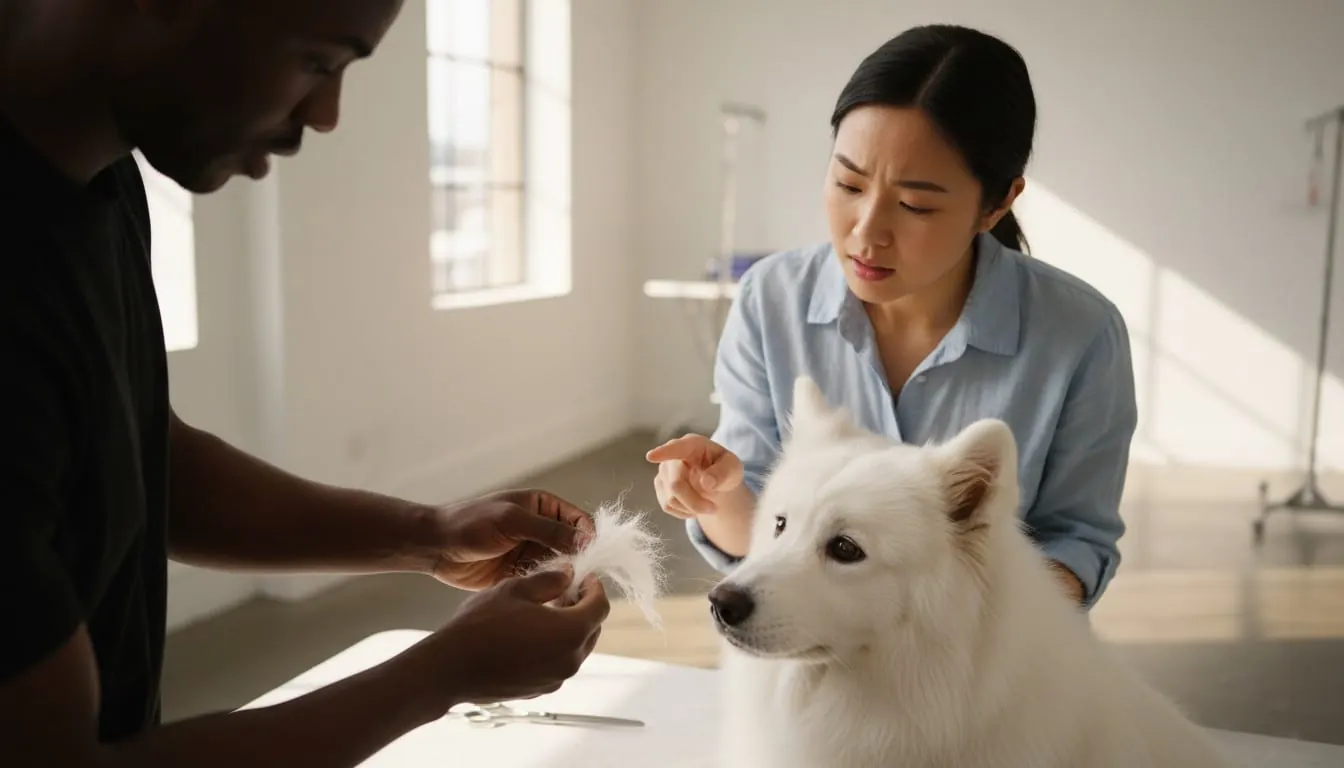
Put the brush down the moment you find a mat that is hard, feels like felt, and sits flush against the skin with no visible skin between the mat and the body—that is a 'pelt,' and it belongs to a professional. Attempting to de-mat it at home can cause skin tears or extreme pain, leading to 'grooming aggression' where your dog learns to fear the brush, undoing months of patient conditioning in a single session.
In such cases, visit a professional groomer. In India, professional grooming costs for a full session typically range from ₹1,500 to ₹4,000 depending on the breed and city. A professional can safely 'clip under' the mat with specialized blades. Remember, hair grows back, but a dog's trust is harder to repair. Once the dog is shaved and the skin is healthy again, you can start your line brushing routine on the new growth to ensure it never gets that bad again.
Never attempt to brush out a pelt that is flush against the skin; seek a professional groomer to safely shave the area.
Conclusion
Line brushing is the single most important skill a long-haired pet owner can learn. By moving away from superficial surface brushing and adopting a systematic, skin-out approach, you ensure your dog remains free from the pain of mats and the health risks of pelting. While the technique requires more time and patience, the reward is a healthy, fluffy coat and a significantly lower grooming bill. Start by investing in the right tools—a slicker brush and a metal comb—and commit to a regular schedule. If you ever find yourself overwhelmed by existing mats, consult a professional groomer immediately. Your dog's comfort should always be the priority, and with consistent line brushing, a 'shave-down' will never be a necessity again.
Frequently asked questions
How often should I perform line brushing on my dog?
For long-haired breeds like Poodles or Shih Tzus, line brushing should be done at least 2-3 times per week. During the monsoon or shedding seasons, daily sessions are recommended to prevent dead hair from forming deep mats, since humidity dramatically speeds up the felting process.
Can I use a regular human brush for line brushing?
No, human brushes are designed for human hair and do not have the pin density or strength to penetrate a dog's undercoat. You need a dedicated slicker brush and a metal Greyhound comb to reach the skin level effectively, both of which are easily available online or at good pet shops in India.
My dog hates being brushed; what should I do?
Start with very short sessions of 2-3 minutes and use high-value treats like pieces of chicken or paneer. Focus on easy areas like the back and sides first, and always use a detangling spray so you aren't pulling the skin, which is what creates a negative association in the first place.
What is the difference between a mat and a pelt?
A mat is a localised tangle of hair, while a pelt is a solid mass of tangled fur that covers a large area of the body and sits tight against the skin. Mats can often be brushed out with patient line brushing, but pelts usually require professional shaving for the dog's safety and comfort.
Should I bathe my dog before or after line brushing?
Always brush before bathing. Water tightens existing knots and turns loose tangles into solid mats, which is why groomers insist on a full brush-out first. Bathe only once the comb passes cleanly from skin to tip, then dry the coat completely—ideally with a dryer on a cool setting—before a final light brush.
References & Sources
This article was researched using the following sources:
Master the science of cue selection and discrimination. Learn why pets prioritise visual signals and how to choose distinct verbal commands for faster learning.
Discover the science of decompression walks for dogs. Learn why olfactory stimulation is more vital for your pet's mental health than traditional high-speed walking.