Line Brushing: The Expert Technique for Preventing Deep Dog Mats
Stop surface brushing and start line brushing. Learn the professional method to reach the skin, remove undercoat, and prevent painful matting in long-haired dogs.
Many dog owners in Ireland diligently brush their pets every evening, only to be told by their groomer that the dog is 'pelted' and needs a full shave-down. This frustrating experience happens because most owners only perform surface brushing, which glides over the top layer of the coat while leaving the dense undercoat to tangle and knot. To truly maintain a healthy, fluffy coat, you must master the art of line brushing.
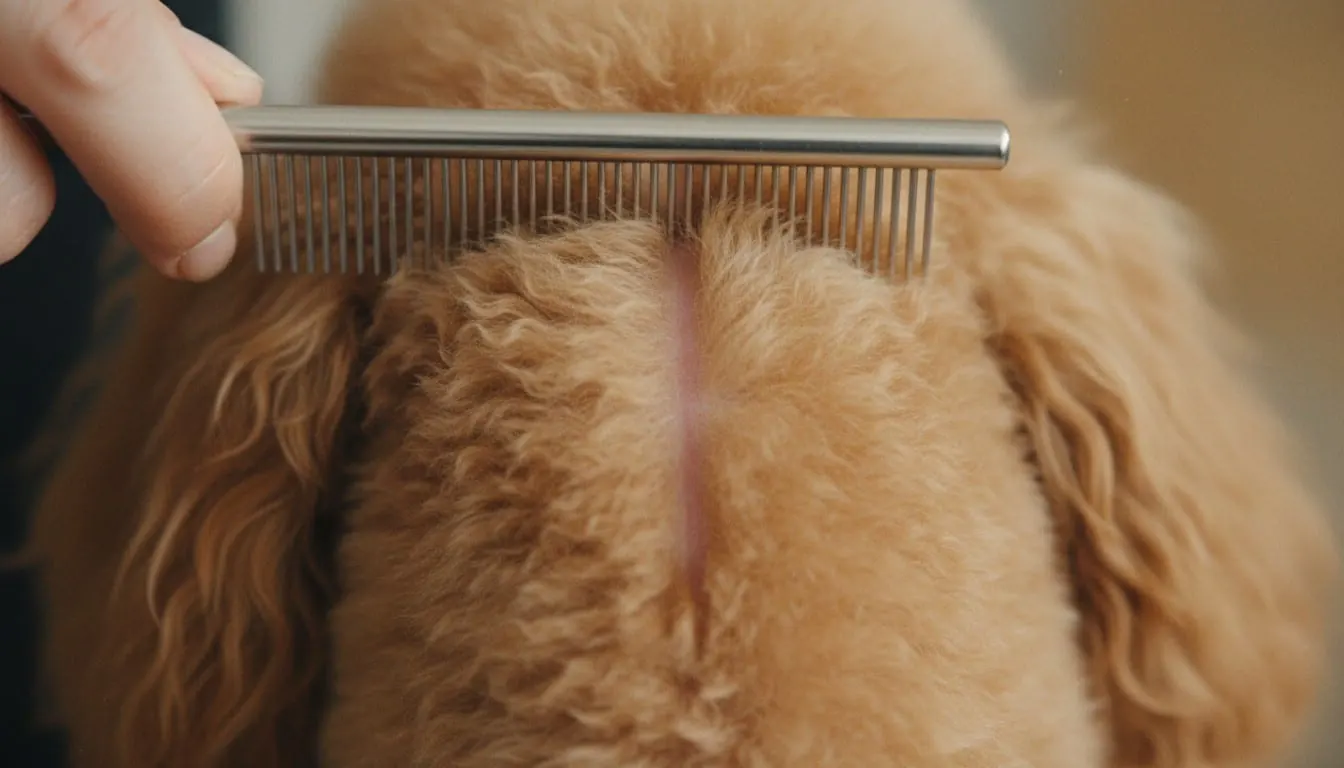
Line brushing is a systematic grooming technique that involves parting the hair to the skin and brushing small sections at a time. This ensures that every individual strand is separated from the root, preventing the deep, tight mats that cause discomfort and skin irritation. Whether you have a Cockapoo, a Golden Retriever, or a Rough Collie, understanding this method is the key to professional-level coat maintenance at home.
Why Surface Brushing Isn't Enough for Your Dog
Surface brushing fails because it only reaches the guard hairs—the top layer of the coat—while the soft undercoat beneath is left to tangle undisturbed. It is the most common grooming mistake made by pet parents across Ireland. The undercoat is prone to 'weaving' together when it gets damp or dirty, and given the typical Irish weather, where rain and mud are frequent companions on daily walks, it quickly becomes a breeding ground for knots that a quick once-over will never touch.
When the undercoat isn't reached, it begins to form a solid sheet of felted hair close to the skin. This is known as pelting. Pelting is not just an aesthetic issue; it pulls painfully on the dog's skin with every movement and can trap moisture, leading to 'hot spots' or fungal infections. Because the top layer looks fluffy, owners are often shocked to find their groomer cannot get a comb through the base. Line brushing solves this by ensuring the brush penetrates all the way to the dermis, clearing out dead hair before it can fuse into a mat.
Surface brushing only touches the top layer, allowing hidden mats to form close to the skin, especially in damp climates.
The Essential Line Brushing Toolkit
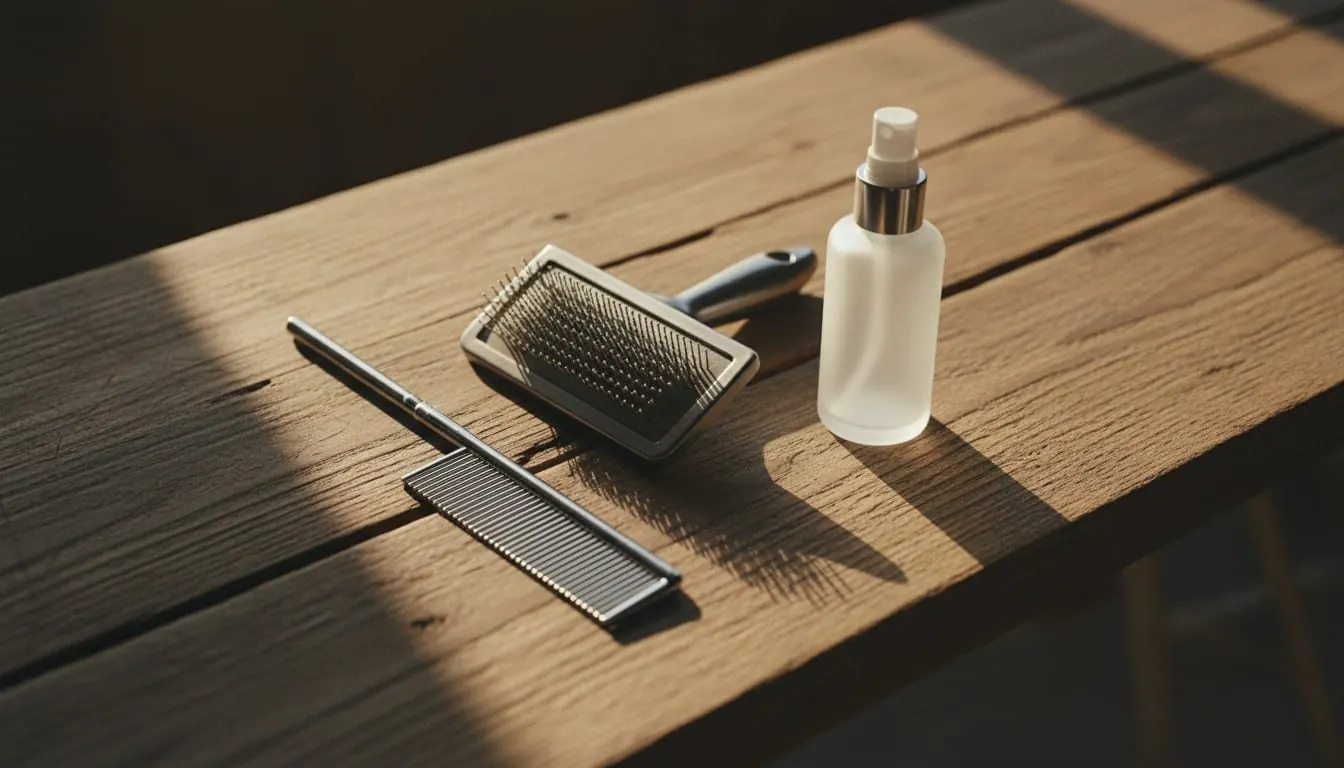
Line brushing requires exactly three tools: a long-pin slicker brush, a stainless steel greyhound comb, and a detangling spray—a standard human hairbrush or a cheap plastic comb from the supermarket will not do the job. For most long-haired breeds in Ireland, the gold standard is a high-quality 'long-pin' slicker brush, with thin, bent wire bristles that reach deep into the coat without scratching the skin. Brands like Chris Christensen or those found in specialist Irish retailers like Maxi Zoo offer professional-grade options that make the job significantly easier.
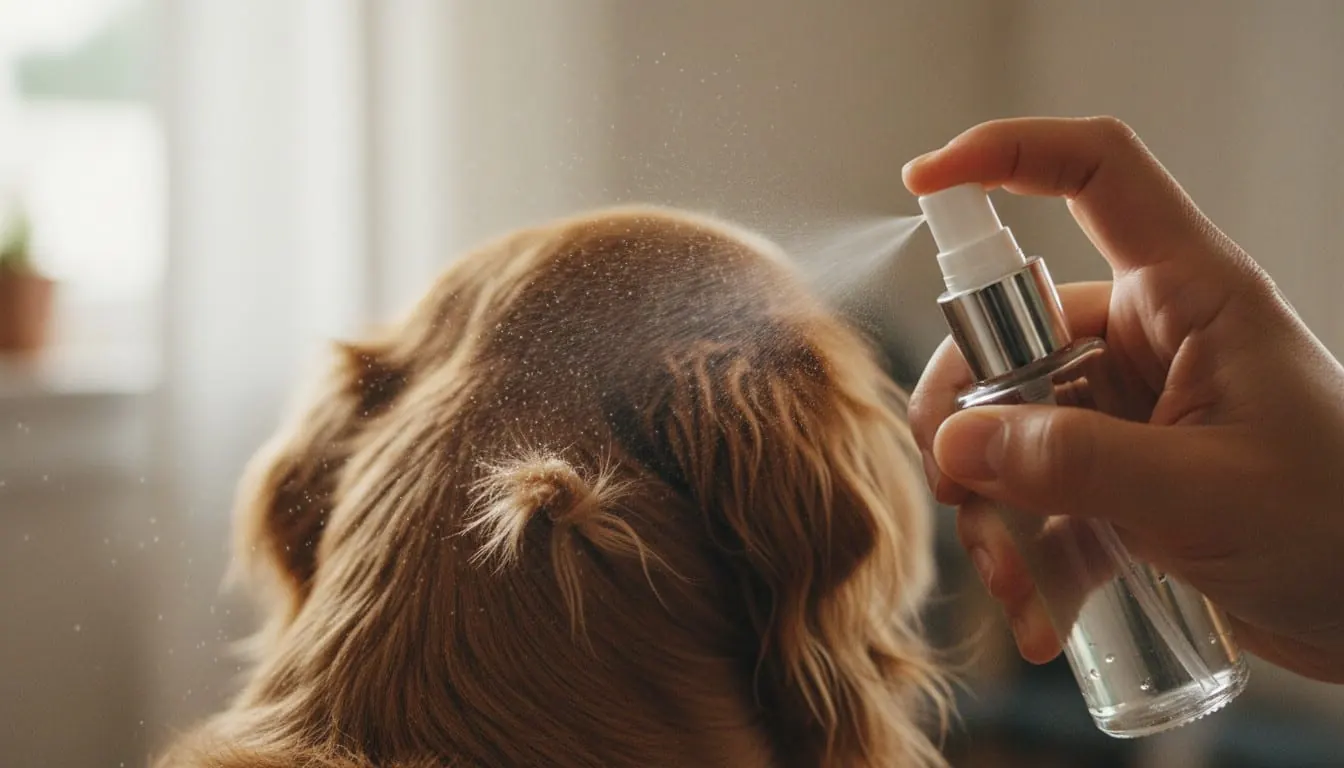
In addition to a slicker brush, you must have a stainless steel 'greyhound' comb. This tool acts as your quality control. After brushing a section, the comb should glide through from the skin to the tips without snagging. If the comb catches, there is still a knot. Finally, a detangling or conditioning spray is vital. Brushing a dry coat can cause hair breakage and static; a light misting of a product like 'Pet Head' or a simple water-and-conditioner mix protects the hair shaft and helps the brush slide through stubborn tangles more gently.
Tool
What it does
What to look for
Long-pin slicker brush
Reaches through the guard hairs and lifts dead undercoat away from the skin
Thin, flexible bent-wire pins long enough for your dog's coat depth, with a cushioned pad
Stainless steel greyhound comb
Quality control: confirms each section is knot-free from skin to tip
Solid metal with both coarse and fine teeth; it should glide through without snagging
Detangling or conditioning spray
Lubricates the hair shaft to prevent breakage and static while brushing
A light leave-in mist; even a diluted water-and-conditioner mix works well
The line brushing toolkit at a glance
Invest in a long-pin slicker brush, a metal 'greyhound' comb, and a detangling spray to prevent coat breakage and ensure deep cleaning.
Step-by-Step Guide to the Line Brushing Method
The secret to line brushing is working from the bottom up. Start at the dog’s hock (the lower back leg) or the base of the tail. Use your non-dominant hand to push the hair upward, exposing a horizontal line of skin. This is your starting point. With your dominant hand, take the slicker brush and gently brush small amounts of hair downward away from the 'line' you have created. You are essentially brushing the hair from the skin outward.
Once that small section is completely smooth, move your hand up about 2 centimetres and create a new line. Brush that new section down into the previously finished area. Repeat this process across the entire body. It is a slow, methodical process that requires patience. If your dog is restless, focus on one area per day—for example, the front legs on Monday and the hind legs on Tuesday. By working in these systematic rows, you ensure that no patch of undercoat is missed, effectively 'resetting' the coat and removing dead hair that would otherwise cause matting.
Always work from the bottom of the dog upwards, brushing small horizontal sections of hair down to the skin to ensure total coverage.
Targeting Friction Points and Troubleshooting
Certain areas of your dog’s body are 'mat magnets' due to friction. These include the area behind the ears, the 'armpits' where the legs meet the body, the belly, and the tail. These spots require extra attention during your line brushing routine. Friction from collars and harnesses can also cause rapid matting; if your dog wears a harness for walks in the park, you will likely find tight knots in the chest area. Always remove the harness and brush these areas immediately after returning home.
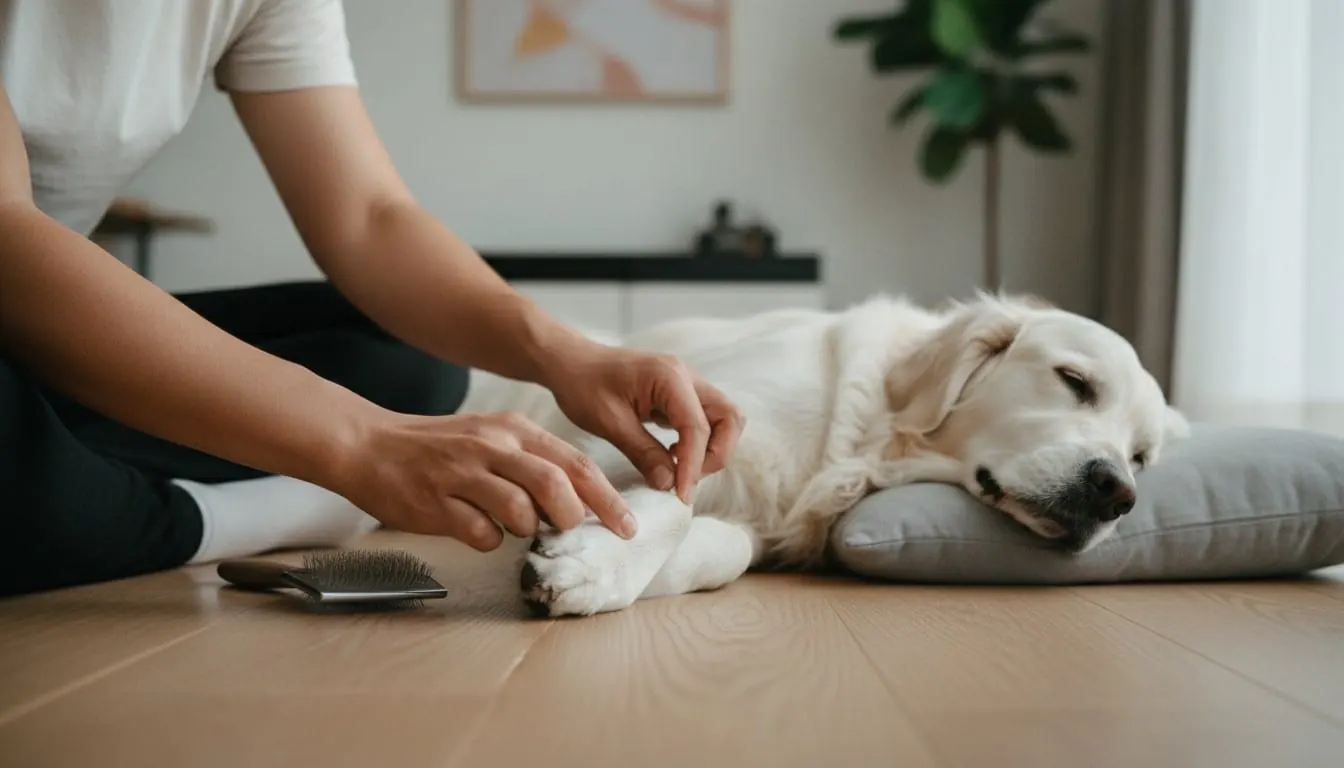
If you encounter a small knot during the process, do not simply yank the brush through it. This causes pain and will make your dog fear grooming. Instead, hold the base of the hair near the skin with your fingers to prevent pulling, then use the edge of your slicker brush or your fingers to gently tease the knot apart. If a mat is already tight and 'pelted' (hard to the touch), do not attempt to cut it out with kitchen scissors, as dog skin is incredibly thin and easy to slice. In these cases, it is safer to book an appointment with a professional groomer who can use specialised clippers to remove the mat safely.
Pay special attention to friction areas like armpits and collar lines, and never use scissors to cut out deep mats at home.
Conclusion
Mastering line brushing is a transformative skill for any dog owner in Ireland. While it requires more time and effort than a quick surface brush, the rewards are immense: a healthier skin barrier, a beautiful coat, and a much more comfortable pet. By using the right tools—specifically a slicker brush and a metal comb—and following a systematic bottom-to-top approach, you can avoid the 'dreaded shave-down' at the groomer.
Remember that grooming is also a bonding experience. Keep sessions short, use plenty of treats, and remain patient. If you find that your dog's coat has become too matted to manage safely, always consult a professional groomer. They have the expertise and equipment to reset the coat without causing injury, allowing you to start your new line brushing routine on a fresh, clean slate.
Frequently asked questions
How often should I line brush my dog?
For high-maintenance breeds like Cockapoos or Poodles, line brushing should ideally be done three to four times a week. If the coat is kept long, daily sessions may be required to prevent the undercoat from tangling. Short, frequent sessions are far more effective than one marathon session at the weekend.
Is line brushing painful for the dog?
When done correctly, it is not painful. Discomfort only arises if you pull on existing mats or brush too vigorously against the skin, which can cause 'brush burn'. Always use a detangling spray and hold the hair at the base with your fingers to minimise pulling on the skin.
Can I line brush a wet dog?
No, you should never brush a matted dog while the hair is wet. Water causes the hair shafts to swell and the knots to tighten, making them nearly impossible to remove. Always brush the coat thoroughly to the skin before bathing, and dry and brush again afterwards.
Do short-haired dogs need line brushing too?
Genuine line brushing is only necessary for dogs with long, curly, or double coats that can mat, such as Cockapoos, Collies, and Golden Retrievers. Short, smooth-coated breeds like Beagles or Staffies cannot pelt, so a weekly once-over with a rubber curry brush or grooming mitt to lift dead hair is enough.
References & Sources
This article was researched using the following sources:
Stop guessing your pet's meals. Learn how to calculate pet calories using the RER formula to prevent obesity and ensure your dog or cat thrives in the Irish climate.
Explore the biology of decompression walks. Learn why prioritising olfactory stimulation over distance is essential for your dog’s mental health and stress regulation.