Decompression Walks: Why Sniffing Is Better Than Distance for Dogs
Explore the biology of decompression walks. Learn why prioritising olfactory stimulation over distance is essential for your dog’s mental health and stress regulation.
For many dog owners in Ireland, the daily walk is often viewed as a mission to cover as much ground as possible. We lace up our boots, head to the local park, and encourage our dogs to keep a brisk pace. However, recent canine behavioural science suggests we might be missing the most important part of the journey. Enter decompression walks—a style of exercise where the dog's nose, not the owner’s pedometer, dictates the pace. While physical exercise is vital, the biological necessity of sniffing for a dog’s mental regulation is often overlooked. By allowing our dogs to engage deeply with their environment through scent, we provide a level of mental enrichment that a standard 'heel' walk simply cannot match. This article explores why prioritising your dog's olfactory system is the key to a calmer, happier pet.
The Biological Power of the Canine Nose
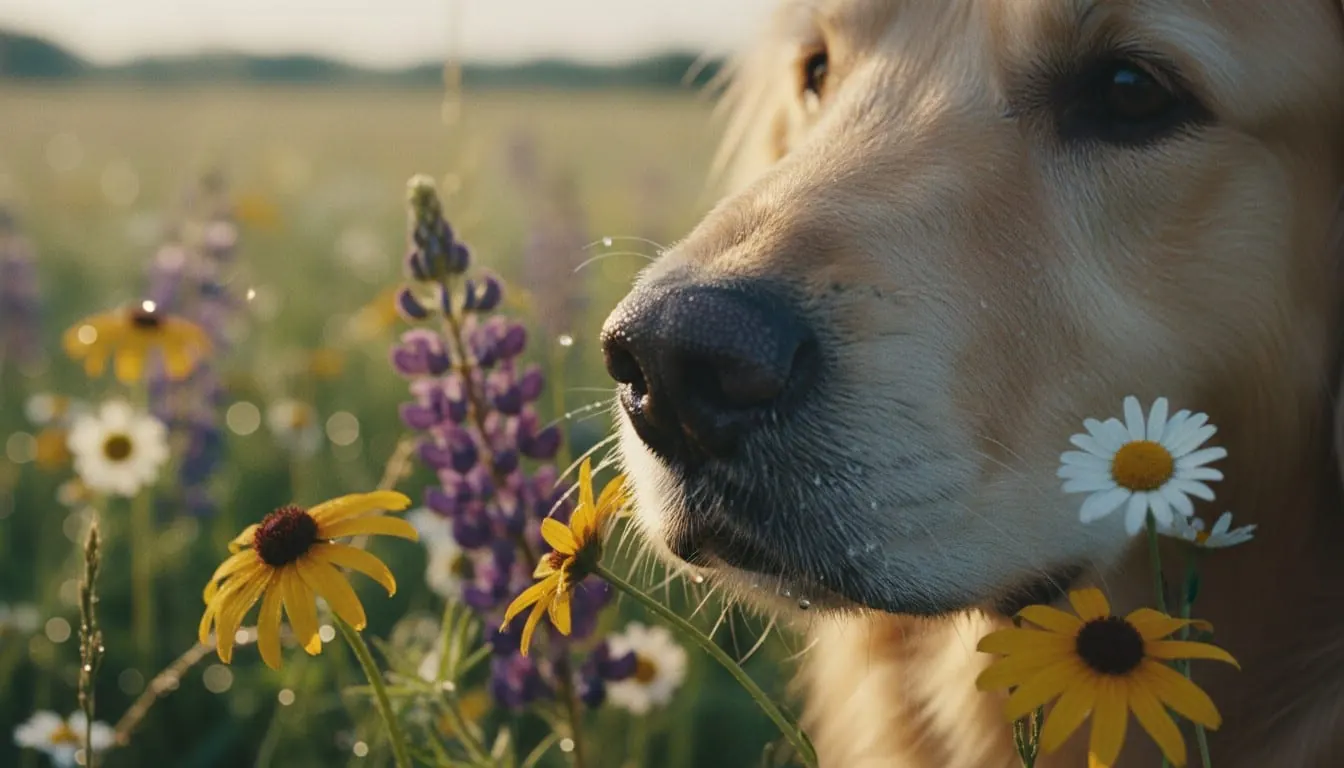
The canine nose is extraordinary: where humans have about six million scent receptors, dogs possess up to 300 million, and the part of their brain dedicated to analysing smells is proportionally about 40 times greater than ours. This is why sniffing carries so much weight on a walk. When a dog investigates a lamp post on a rainy Dublin street, they aren't just 'smelling'; they are gathering a complex data set about every animal that has passed by in the last 48 hours.
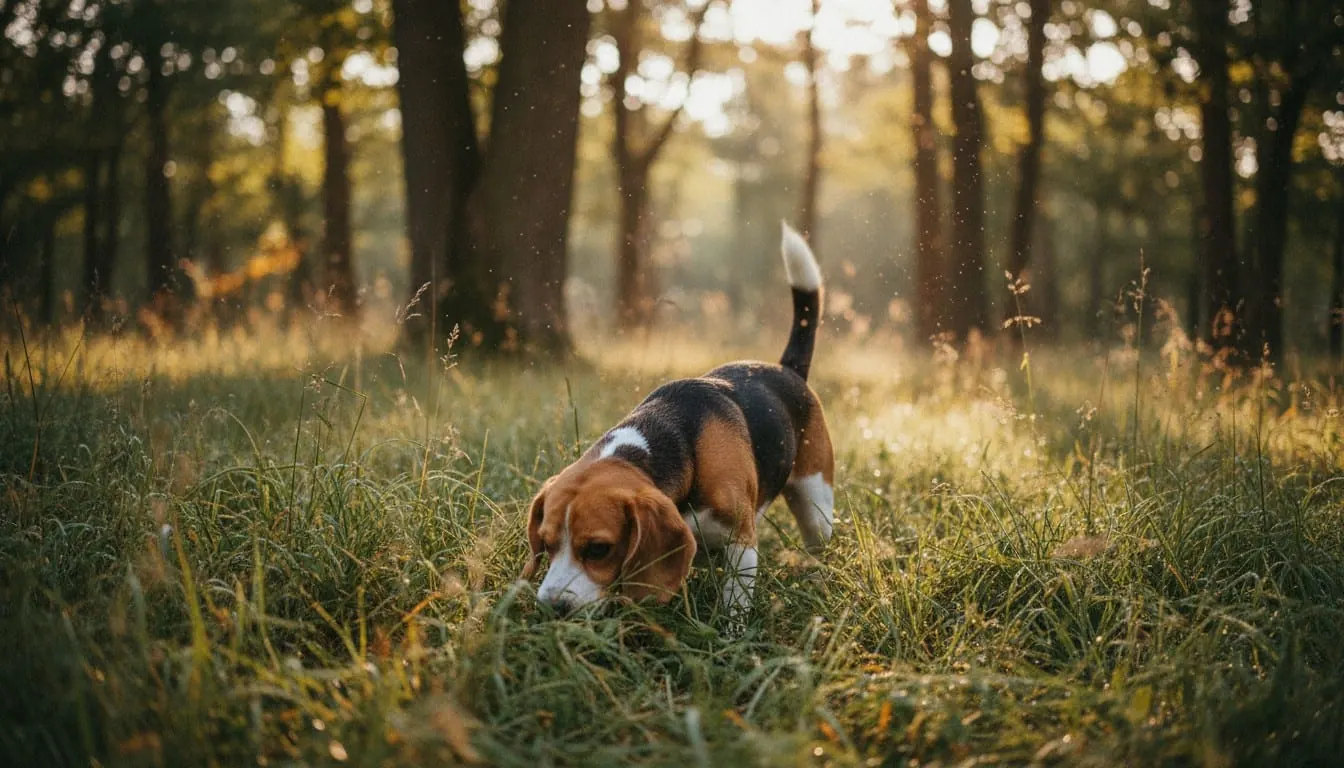
This process of 'scent-processing' is metabolically expensive. It requires significant cognitive effort, which is why a dog can often be more exhausted after twenty minutes of intensive sniffing than after a five-kilometre run along a greenway. The olfactory bulb has direct connections to the limbic system, the area of the brain associated with emotion and memory. This means that sniffing isn't just a physical act; it is a direct line to emotional regulation and stress reduction. When we deny a dog the chance to sniff, we are essentially asking them to walk through an art gallery with a blindfold on.
A dog's brain is biologically wired to process the world through scent, making olfactory stimulation more mentally taxing than pure physical movement.
Lowering Cortisol Through Scent-Work
Sniffing lowers a dog's heart rate and reduces cortisol, the main stress hormone, which is why a sniff-led walk leaves most dogs calmer than a fast-paced one. Traditional walks focus on obedience, such as maintaining a perfect 'heel' or ignoring distractions, and while those skills are useful for safety they can actually raise a dog's arousal, especially in busy urban environments. Research has shown that dogs allowed to sniff more frequently during their walks have lower pulse rates than those kept on a tight, fast-paced lead.
In Ireland, where our weather often means shorter walks in the winter, making those walks 'high-quality' through sniffing is essential. High-arousal activities like chasing balls or running beside a bicycle can lead to a 'cortisol spike' that takes hours to subside. Sniffing, however, acts as a natural sedative. It encourages the dog to engage in 'low-and-slow' movement, which triggers the parasympathetic nervous system. This is why many trainers recommend a sniffy walk after a stressful event, such as a visit to the vet or a particularly loud thunderstorm.
Sniffing triggers the parasympathetic nervous system, effectively lowering a dog's heart rate and reducing overall stress hormones.
Structuring the Perfect Irish Decompression Walk
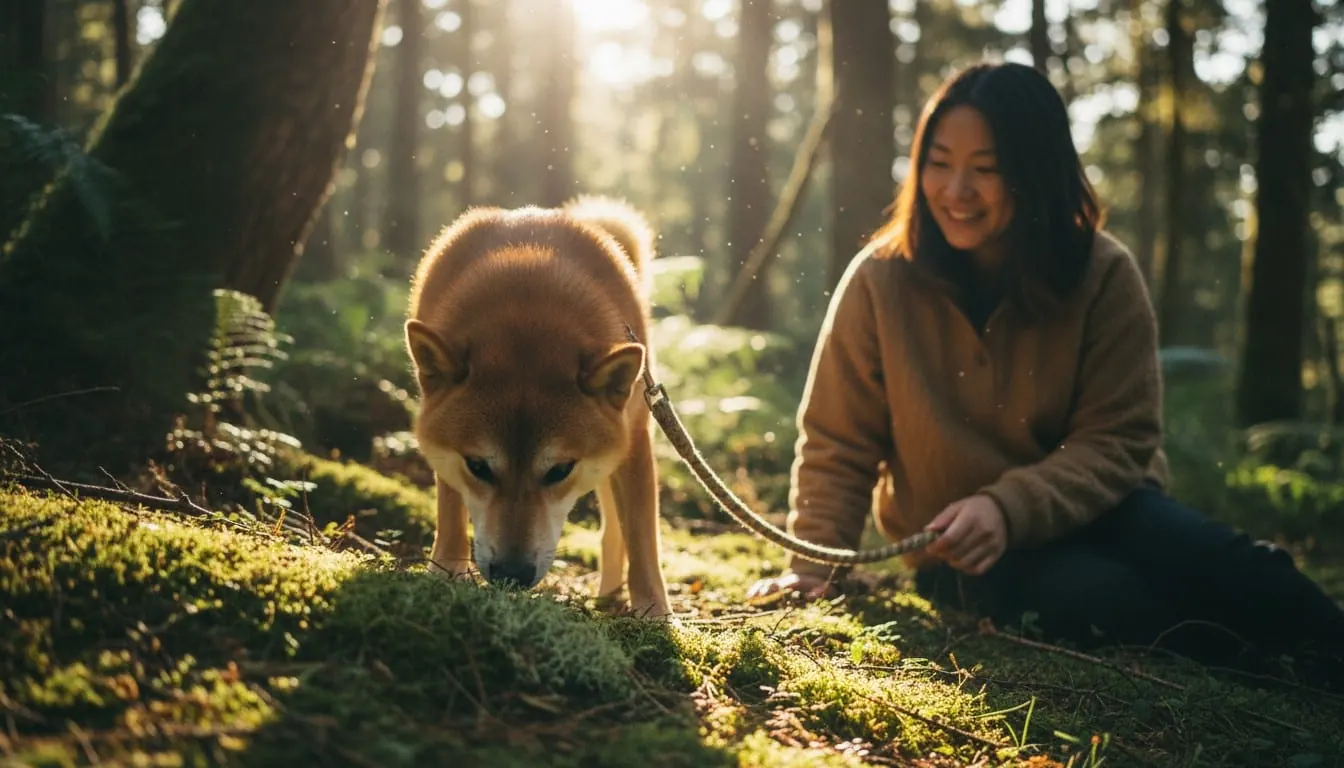
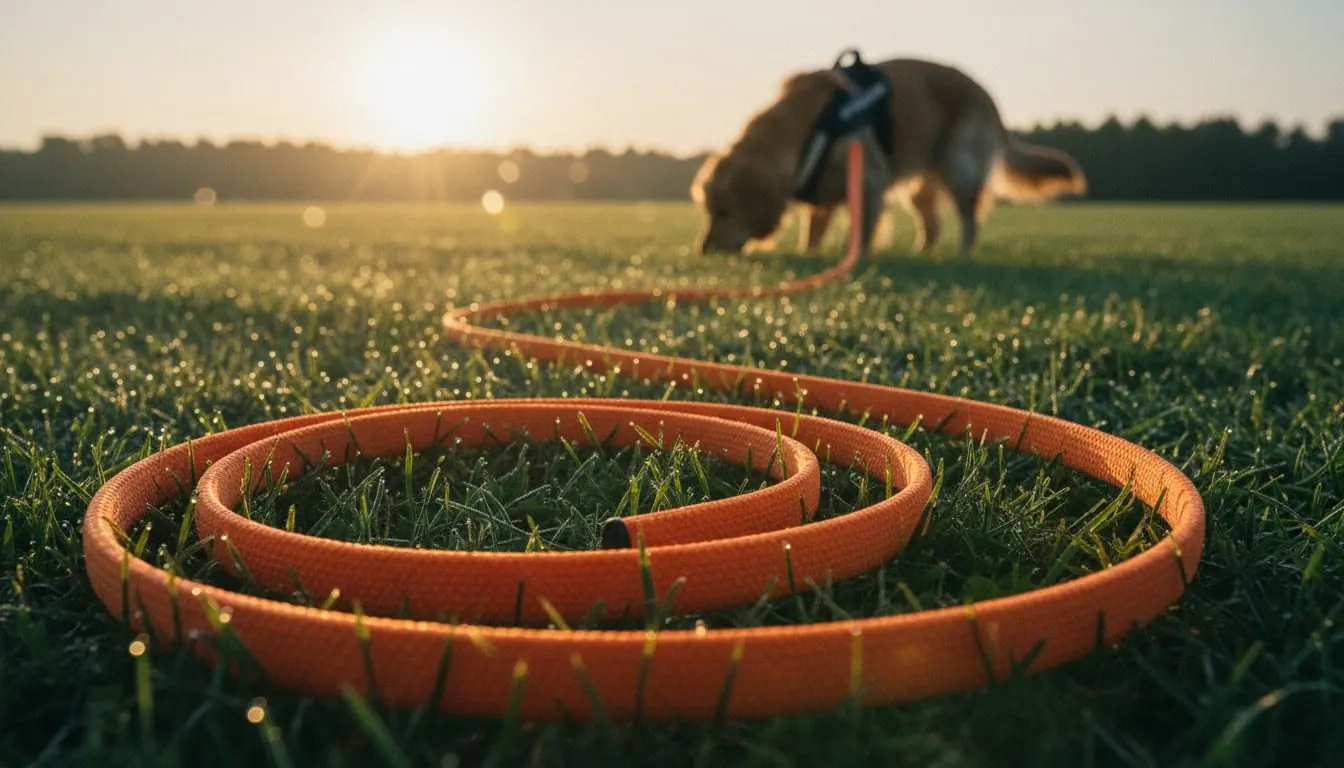
To structure a good decompression walk, clip your dog to a long line of 5 to 10 metres, head to a quiet spot, and let their nose choose the pace and direction. That single change of equipment does most of the work, giving your dog freedom to investigate interesting patches of grass without the constant tension of a short city lead. You can find high-quality long-lines at local Irish retailers like Petmania or Maxi Zoo, or order biothane versions that don't soak up the Atlantic rain.
Location choice is also paramount. You want an environment with 'low-level' distractions. Instead of a crowded city centre or a busy dog park where social pressure is high, seek out quiet beaches, forest trails, or even a large, empty football pitch. The goal is 'freedom of movement.' Let your dog choose the direction. If they want to spend five minutes sniffing a single tuft of gorse, let them. The success of the walk is measured by the quality of the sniffs, not the distance recorded on your Fitbit. By providing this 'agency,' you build your dog's confidence and reduce frustration-based behaviours.
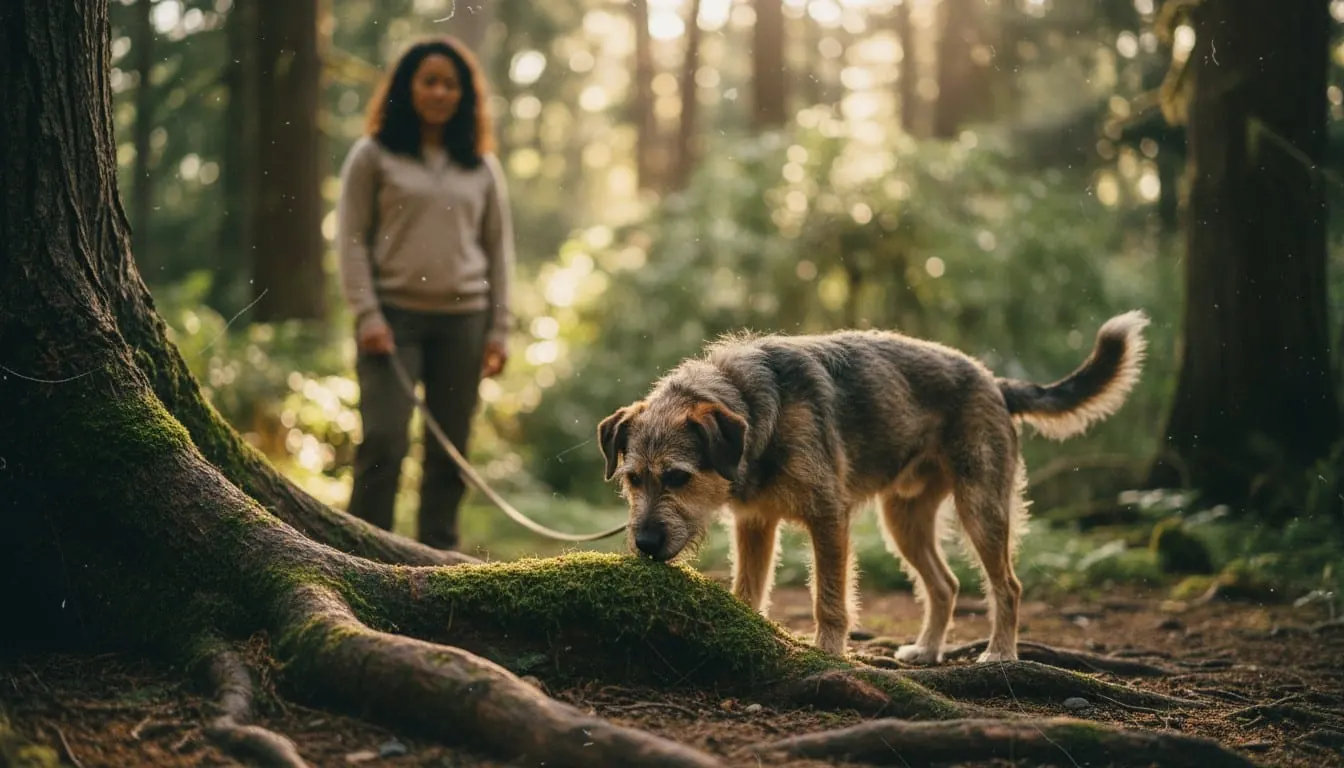
Use a long-line lead in a quiet, low-distraction environment to give your dog the agency to explore at their own pace.
Troubleshooting: When the Environment Is Too Much
If the environment is too much for your dog, scale it right down and start with short 'micro-decompression' sessions somewhere calm, such as a quiet corner of your garden or a deserted car park late in the evening. Not every dog is ready for a wide-open park, and for a reactive dog or an easily overwhelmed puppy that big open space can cause more stress than it relieves. Watch your dog's body language closely: if they are constantly scanning, hyper-vigilant, or unable to put their nose to the ground, they are over threshold.
If your dog struggles to disengage from distractions, you may need to reduce the 'environmental load' by moving further away from triggers like traffic or other dogs. For those in urban areas like Dublin or Cork, look for 'Sniffspots' or private enclosed fields that can be rented for a small fee (usually around €10-€15 per hour). This provides a safe, secure environment where even the most nervous dog can finally put their nose down and decompress without the fear of an off-lead dog approaching them unexpectedly.
If a dog is too stressed to sniff, reduce the environmental distractions or find a private, secure space to build their confidence.
Conclusion
In conclusion, we must stop viewing the walk solely as a physical chore and start seeing it as a vital mental health tool. The biology of the canine brain proves that olfactory stimulation is not just a 'nice-to-have'—it is a fundamental requirement for a balanced dog. By incorporating decompression walks into your routine, you are honouring your dog's natural instincts and providing them with the decompression they need to navigate our human world. Remember, if your dog is sniffing, they are learning, relaxing, and regulating their emotions. Next time you head out into the Irish countryside, leave the 'heel' behind for a while, let the lead go slack, and let your dog's nose lead the way. If you notice your dog is consistently unable to relax or sniff even in quiet areas, consider consulting a certified animal behaviourist for tailored support.
Frequently asked questions
What exactly is a decompression walk?
A decompression walk is a walk where the dog is given freedom of movement in a natural environment, usually on a long-line lead. It allows them to sniff and explore at their own pace without the pressure of strict obedience or heeling. The aim is mental enrichment and stress relief rather than distance or exercise.
How often should I take my dog on a decompression walk?
Aim for at least two to three dedicated decompression walks per week. Even adding 10 to 15 minutes of unhurried 'sniffing time' to your ordinary daily walks can noticeably improve your dog's mental well-being. Consistency matters more than doing one very long session.
Can I do a decompression walk on a standard 1.5-metre lead?
It is difficult, because short leads create constant tension that can trigger frustration and stop a dog settling to sniff. A 5-metre or 10-metre long line is recommended so your dog feels free to roam while remaining safely under your control. Pair it with a well-fitted harness rather than a collar.
Is sniffing really as tiring as running?
Yes. For many dogs the cognitive effort of interpreting complex scents is more mentally exhausting than physical exertion. This 'brain work' is why a good sniffy walk leaves a dog calmer and more satisfied at home than a fast lap of the park.
Where can I find a safe space for decompression walks in Ireland?
Quiet beaches, forest trails, and empty football pitches during off-peak hours all work well. For nervous or reactive dogs, private enclosed fields such as Sniffspots can be rented by the hour, typically for around €10 to €15. These secure spaces let a dog decompress without the worry of loose dogs approaching.
References & Sources
This article was researched using the following sources:
Stop guessing your pet's meals. Learn how to calculate pet calories using the RER formula to prevent obesity and ensure your dog or cat thrives in the Irish climate.