Cue Selection and Discrimination: The Linguistic Architecture of Training
Master cue selection and discrimination to build a clear training language. Learn why pets process visual signals faster and how to choose distinct verbal commands.
Effective cue selection and discrimination forms the backbone of any successful pet training program, yet it is often the most overlooked component for Canadian pet owners. Whether you are training a new puppy in the middle of a snowy Ontario winter or refining an older dog's skills at a local park, the way you communicate determines how quickly your pet learns. Many owners struggle because their commands are phonetically similar or their physical signals are inconsistent. By understanding the linguistic architecture behind cues, you can move beyond simple 'tricks' and develop a sophisticated, reliable dialogue with your pet that works regardless of the distractions around you. This guide explores the science of canine and feline perception, ensuring your pet is not just guessing based on the context of the kitchen or the treat bag, but is actually discriminating between your specific instructions.
The Biological Hierarchy: Why Visual Signals Outperform Verbal Cues
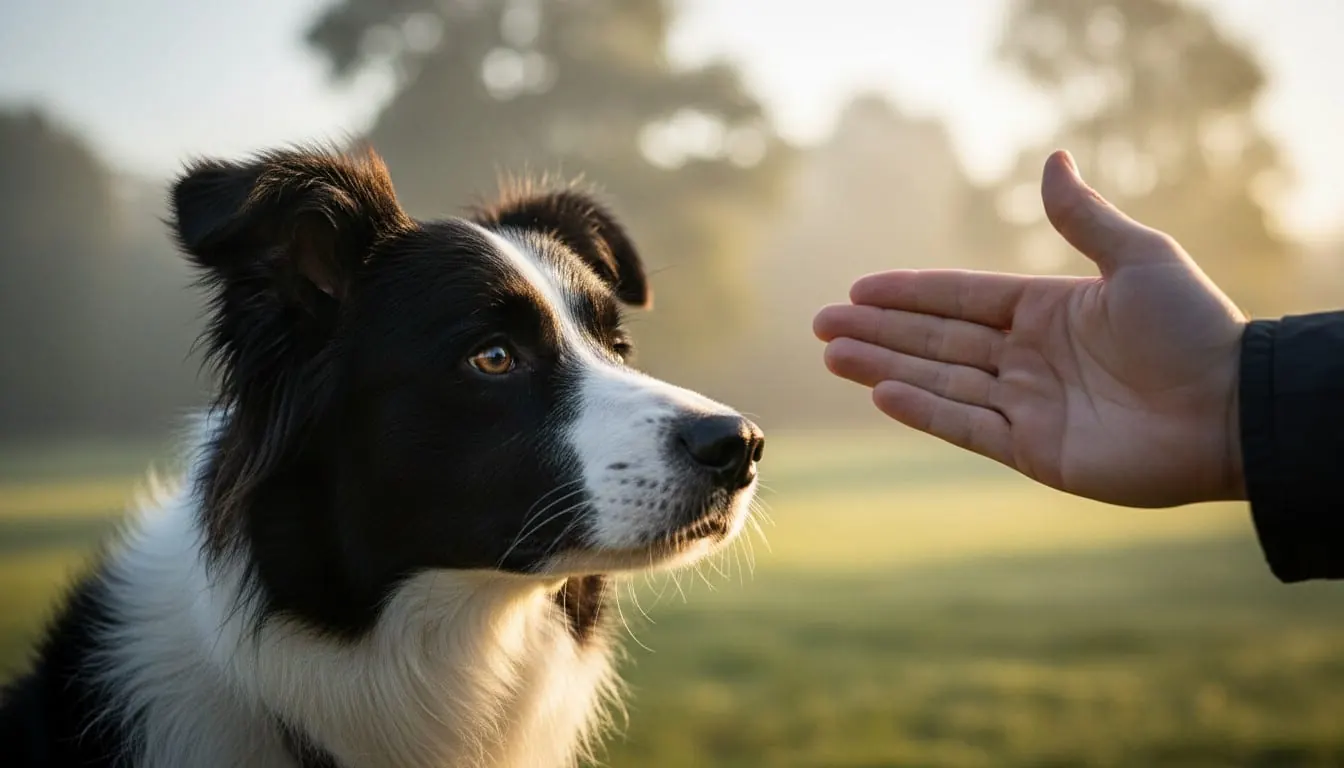
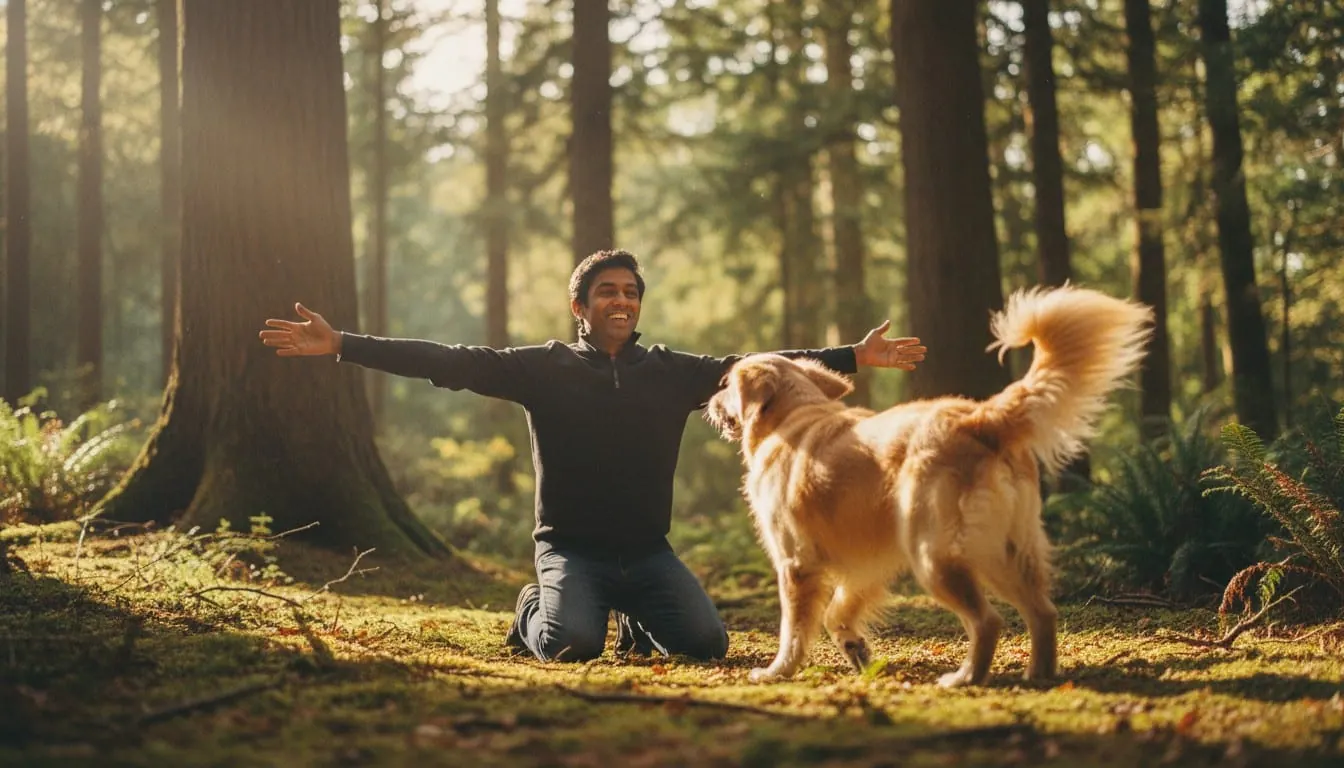
Visual signals outperform verbal cues because dogs and cats are biologically visually oriented, processing a hand signal or body shift much faster than a spoken word. In the wild, body language and subtle physical shifts communicate far more than vocalizations, and that hierarchy carries straight into the training yard. Research indicates that when a verbal command and a hand signal are given simultaneously, the pet almost always focuses on the visual signal first, a phenomenon trainers call 'overshadowing.'
For a Canadian owner, this means that your physical posture while wearing a bulky winter parka from Canadian Tire might actually change the 'meaning' of a cue for your dog. If your 'Sit' signal involves a hand motion that is obscured by your heavy sleeves, your pet may become confused. To build a robust training architecture, you should always introduce a visual signal before or alongside a verbal one, eventually fading the physical movement as the pet learns to discriminate the sound. Clarity in your physical movement—ensuring your body is 'quiet' and your signals are distinct—is the first step in reducing frustration for both parties. Avoid 'muddy' signals where your hands are fidgeting with treats or a leash, as this creates background noise that distracts from the intended cue.
Cue type
Response accuracy
Best use
Hand signal alone
~99%
New behaviours, distance work, noisy environments
Verbal cue alone
~82%
Hands-full moments once the behaviour is already reliable
Verbal and hand signal together
Defaults to hand signal
Transitioning a cue from visual to verbal
How dogs respond to hand signals versus verbal commands in controlled testing
Pets are biologically primed to prioritise visual body language over auditory verbal commands.
Phonetic Strategy: Choosing Distinct Verbal Cues
The specific sounds you choose matter immensely, because pets do not understand English or French the way humans do; instead they recognise the rhythm, pitch, and phonetic structure of a word. A common mistake in training is choosing words that sound too similar to one another or to common household phrases. For instance, 'Stay' and 'Okay' share a similar vowel ending, which can lead to a dog breaking a stay prematurely because they misheard a casual conversation.
To create a 'clean' linguistic map, choose words with hard consonants and distinct syllabic counts. 'Sit' (one syllable, sharp 't') is very different from 'Over' (two syllables, soft vowels). In a bilingual country like Canada, many owners find success using a mix of languages to ensure distinctiveness—perhaps using English for basic obedience and French or German for more complex tasks. This prevents the pet from being triggered by common words used in everyday Canadian English. Furthermore, consider the 'tonality' of your cues. A cue should be a neutral piece of information, not an emotional plea. Using a consistent, cheerful, but firm tone helps the pet identify the cue as a specific instruction rather than background chatter.
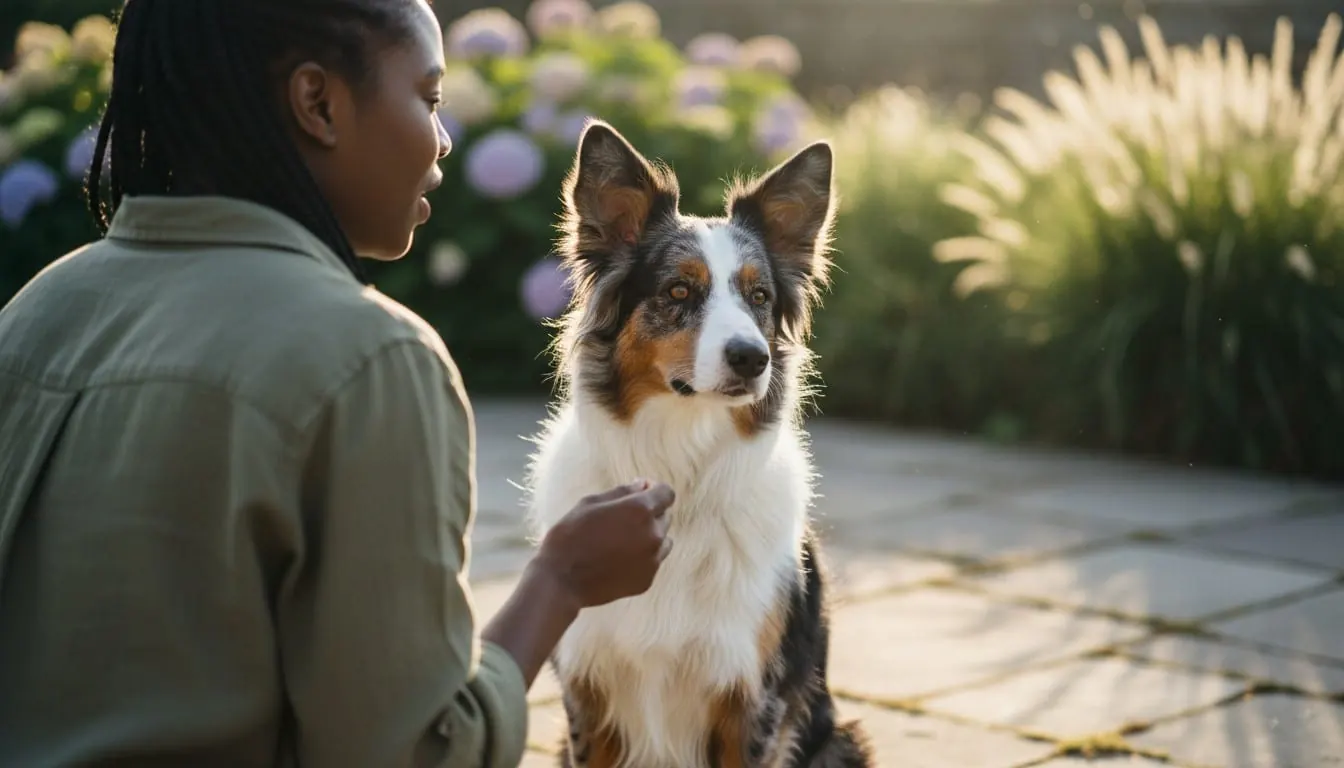
Select verbal cues with distinct phonetic structures and hard consonants to prevent auditory confusion.
The Architecture of Hand Signals and Micro-Cues
Hand signals need their own architecture, just like your words, with each movement occupying a distinct 'space' around your body so the pet isn't guessing between two nearly identical gestures. A common error is using signals that look almost the same from the pet's perspective. If your signal for 'Down' is a downward pointing finger and your signal for 'Stay' is a flat palm that also moves slightly downward, your pet is likely guessing based on your proximity or the presence of a treat rather than truly discriminating the two cues.
Effective visual signals should be economical yet clear. Large, sweeping gestures are great for long-distance work—essential if you are training in a large park or on a rural Canadian property—but for close-up work, micro-cues are more efficient. A micro-cue might be a simple flick of the wrist or a slight tilt of the head. The goal is to move from 'luring' (leading the pet's nose with food) to 'signalling' (using a gesture that represents the action). If you find your pet only performs when they see a treat in your hand, you haven't yet achieved stimulus control; they are responding to the treat, not the cue. To fix this, practice with empty hands and reward from a pouch or a nearby table, such as one you might find at a local park bench.
Ensure hand signals are spatially distinct and transition from food lures to neutral gestures early in training.
Testing for True Discrimination and Contextual Guessing
The ultimate test of true discrimination is whether your pet obeys a cue away from the room and posture where they first learned it, since many pets exhibit 'situational' obedience instead of real understanding. For example, they might sit perfectly in your living room in Calgary but seem to 'forget' everything when visiting a busy Shoppers Drug Mart parking lot. This isn't usually defiance; it's a failure of generalisation, because the pet has associated the cue 'Sit' only with the specific context of your rug and a specific treat bag.
Try giving a 'Sit' cue while you are sitting in a chair, lying on the floor, or with your back turned. If the pet fails, they were likely relying on 'contextual cues'—like your upright posture or eye contact—rather than the word itself. In Canada, weather changes provide a unique opportunity for proofing. A dog that knows 'Down' on a warm summer lawn might refuse to do it on a cold, damp pavement in November. Discriminating the cue means understanding that the command applies regardless of the substrate or the handler's position. Gradually increase the 'distraction' level by practicing near busy streets or around other animals, ensuring the pet listens to the cue rather than reacting to the environment.
Proof your cues by changing your body position and the environment to ensure the pet isn't just guessing based on context.
Troubleshooting: Cleaning Up 'Poisoned' or Muddy Cues
A pet that has started ignoring a specific command is usually dealing with a 'poisoned cue,' meaning it has been repeatedly associated with something negative or given so many times without a response that it has lost its meaning (learned irrelevance). For example, if you constantly yell 'Come!' when it is time to leave the park and end the fun, the word 'Come' becomes a signal for the end of a good time. In these cases, it is often faster to choose an entirely new cue rather than trying to fix the old one.
To clean up a muddy cue, start from scratch with a new word or signal. If 'Come' is poisoned, try 'Here' or 'Touch.' Ensure that the new cue is always followed by a high-value reward, especially during the first few weeks of training. If your pet seems to be confusing two existing cues, such as 'Lay Down' and 'Stay,' it usually means the physical signals are too similar or you are moving too fast. Go back to basics: separate the two cues in your training sessions and focus on one until the pet can discriminate it with 90% accuracy before reintroducing the other. If problems persist despite these adjustments, it may be time to consult a professional trainer to identify subtle 'leakage' in your body language that might be confusing your pet.
Replace 'poisoned' cues with entirely new words and signals to bypass learned irrelevance and negative associations.
Conclusion
Mastering cue selection and discrimination is an ongoing process that requires patience, observation, and a bit of linguistic creativity. By choosing distinct sounds, keeping your body language clear, and proofing your cues against the diverse Canadian landscape, you build a relationship based on clear communication rather than guesswork. Remember that training is a dialogue, not a monologue. If your pet is struggling, it is usually a sign that the 'linguistic architecture' of your training needs a minor adjustment rather than a lack of intelligence on their part. Always prioritize positive reinforcement and keep sessions short—especially during our freezing winters or humid summers. If you find yourself stuck or if your pet shows signs of distress or aggression during training, please reach out to a certified professional trainer who uses science-based, force-free methods to help you refine your communication strategy.
Frequently asked questions
Can I use the same word for two different behaviours if the hand signal is different?
It is not recommended. While pets prioritise visual cues, using the same verbal word creates 'cue competition' in the brain, which slows down processing time. To ensure the fastest response, every unique behaviour should have its own unique verbal and visual signal.
How do I know if my dog is actually discriminating the word 'Sit'?
Test this by saying the word 'Sit' while standing perfectly still with your hands behind your back, or while looking at a different object. If the dog sits without you moving a muscle or using a hand signal, they have successfully discriminated the verbal cue.
Why does my pet respond better to my partner than to me?
This is often due to 'signal clarity.' Your partner may be more consistent with their body language or use a more distinct tone. Film yourselves both giving the cue and look for subtle differences in posture or timing that might be confusing the pet.
Is it better to use English or French cues in Canada?
It doesn't matter to the pet. What matters is that the sounds are distinct from the words you use in everyday conversation. Some people use French commands specifically so their dog doesn't get confused by the English 'chatter' they hear in the house or at the cafe.
How long does it take a dog to fully discriminate a new cue?
Most dogs can reach 80 to 90 percent reliability on a single cue within one to two weeks of short daily sessions, though true discrimination across new locations and distractions can take several months to proof properly. Consistency in wording and hand position matters more than session length.
References & Sources
This article was researched using the following sources:
Unlock the benefits of decompression walks for your dog. Learn why olfactory stimulation is more effective than physical distance for mental health and stress reduction.
Navigate developmental fear periods in your young pet with expert advice on identifying fear windows and implementing the 'jolly routine' without coddling.