Dog Car Restraint Safety: Evaluating Physics Over Brand Marketing
Master the physics of dog car restraint safety. Learn how tensile strength, rotational force, and energy absorption protect your dog better than marketing labels.
G'day, fellow travellers. Whether you are packing the ute for a weekend in the Blue Mountains or just nipping down to Bunnings with your kelpie, dog car restraint safety is likely on your mind. However, the pet industry is currently flooded with 'crash-tested' labels that mean very little in a real-world collision. In Australia, unlike child car seats, there are no mandatory government safety standards for pet restraints. This leaves owners to navigate a sea of marketing jargon without a compass. To truly protect our mates, we must look past the glossy packaging and evaluate gear through the lens of impact physics. Understanding how dynamic loads, rotational forces, and material science interact during a crash is the only way to ensure your dog survives an accident. This guide provides a technical deep dive into the engineering principles of canine vehicle safety, empowering you to make informed choices based on first principles rather than brand promises.
The Maths of Momentum: Understanding Tensile Strength and Force
Tensile strength is the maximum load a restraint can support without breaking, and in a 50km/h collision an unrestrained dog becomes a projectile carrying roughly 30 to 60 times its body weight. For a 30kg Labrador, that is an impact force of nearly 900 kilograms, which is the number every buckle, strap, and stitch in the system must survive. This all flows from the basic relationship between mass, acceleration, and force (F=ma): the faster the deceleration and the heavier the dog, the greater the load placed on the weakest component.
Many entry-level restraints found at Kmart Australia or local pet shops use plastic buckles or thin nylon webbing that might look sturdy during a walk but will shear instantly under a 900kg load. When inspecting gear, look for mountaineering-grade carabiners or heavy-duty steel hardware. The 'tensile strength' should be rated in kilonewtons (kN); for a medium to large dog, you want a system rated for at least 15kN to account for the dynamic shock of an impact. Remember, it is not just about holding the dog back; it is about the hardware surviving the peak force of the deceleration curve without catastrophic failure.
In a 50km/h crash, a dog's weight is effectively multiplied by 30, requiring hardware with high kilonewton-rated tensile strength.
Rotational Mechanics: The Hidden Danger of Long Tethers
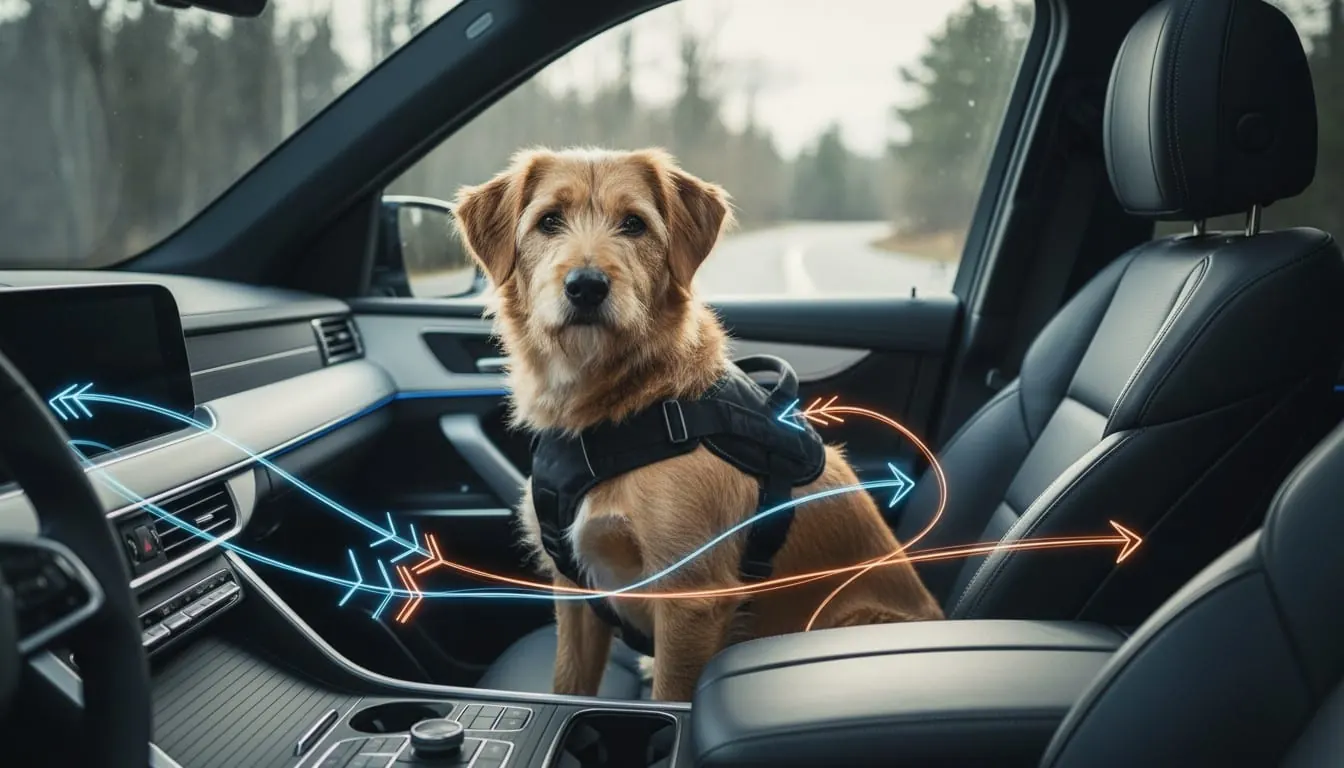
Long tethers are dangerous because they act as the radius of a circle: the longer the tether, the larger the 'arc of excursion' the dog travels during a crash. If a dog is attached to a long lead in the back seat, even if the harness holds, the dog's body will rotate violently around the attachment point, likely striking the back of the front seats or the side pillars. This rotational force is one of the most overlooked aspects of dog car restraint safety, and it is entirely separate from whether the hardware itself survives the impact.
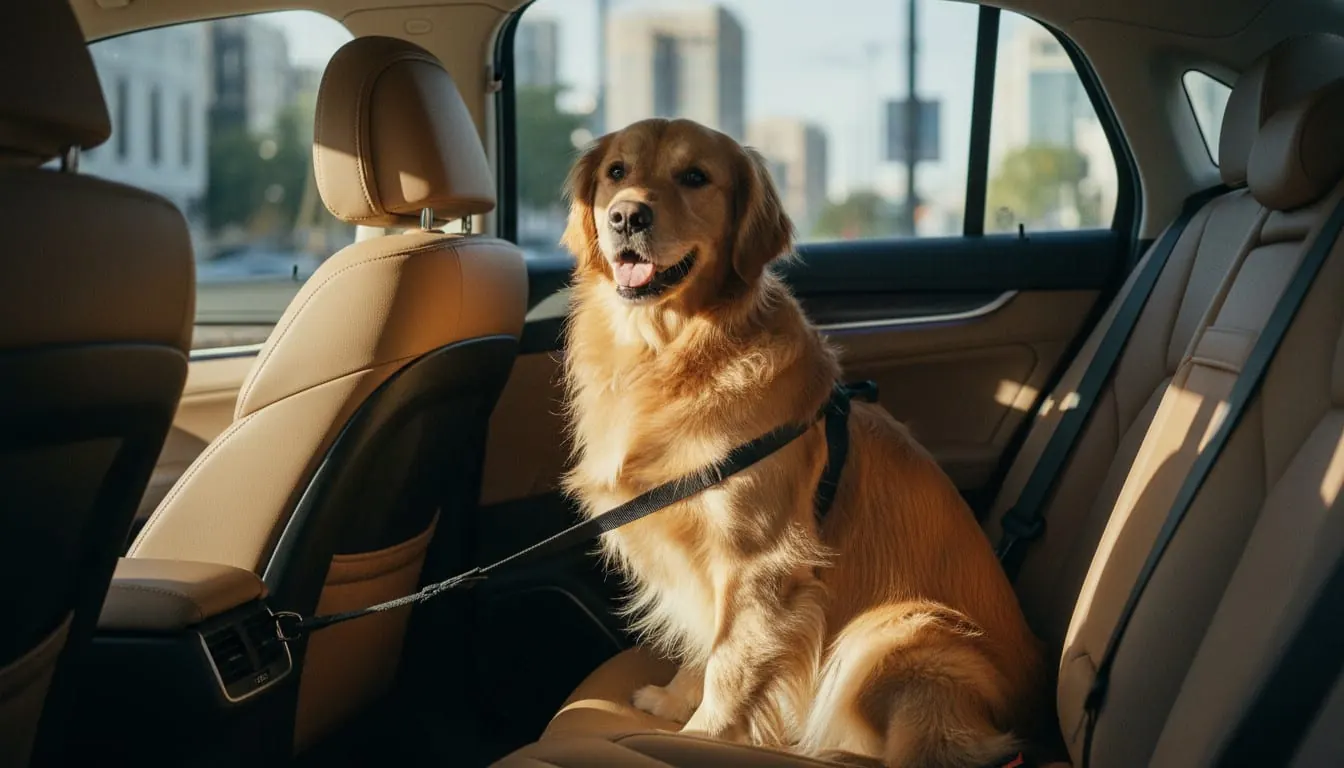
Ideally, a restraint should keep the dog's centre of gravity as stable as possible. High-quality harnesses utilise dual-point attachments or 'isofix' style connections that limit this rotation. If you are using a single-point tether, it must be as short as possible while still allowing the dog to sit or lie down comfortably. Engineering-wise, a shorter radius reduces the angular momentum, significantly lowering the risk of secondary impacts within the vehicle cabin. This is particularly vital in Australian utes where a dog in the tray—even if tethered—can be thrown over the side if the tether is long enough to reach the edge.
Short tethers are essential to minimise rotational forces and prevent the dog from striking the vehicle interior during an accident.
Crumple Zones for Canines: Energy Absorption and Deceleration
The safest restraints work like a car's crumple zones: they absorb kinetic energy so the dog decelerates gradually instead of stopping dead. A restraint that is too rigid, such as a thick steel chain or unyielding heavy plastic, can cause internal organ damage by stopping the dog too abruptly. Conversely, many 'bungee' style leashes sold for cars are dangerously elastic, leading to a 'trampoline effect' where the dog is snapped back into the seat with equal force after the initial impact.
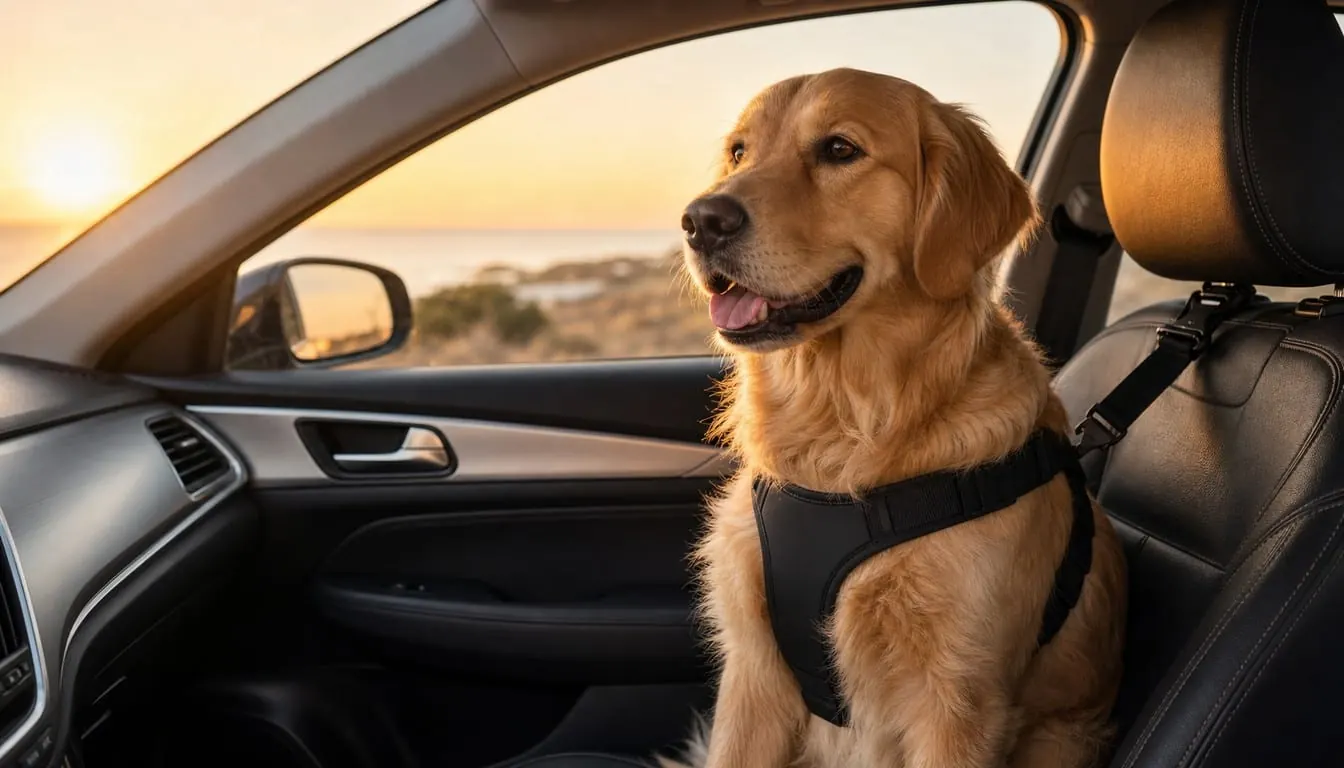
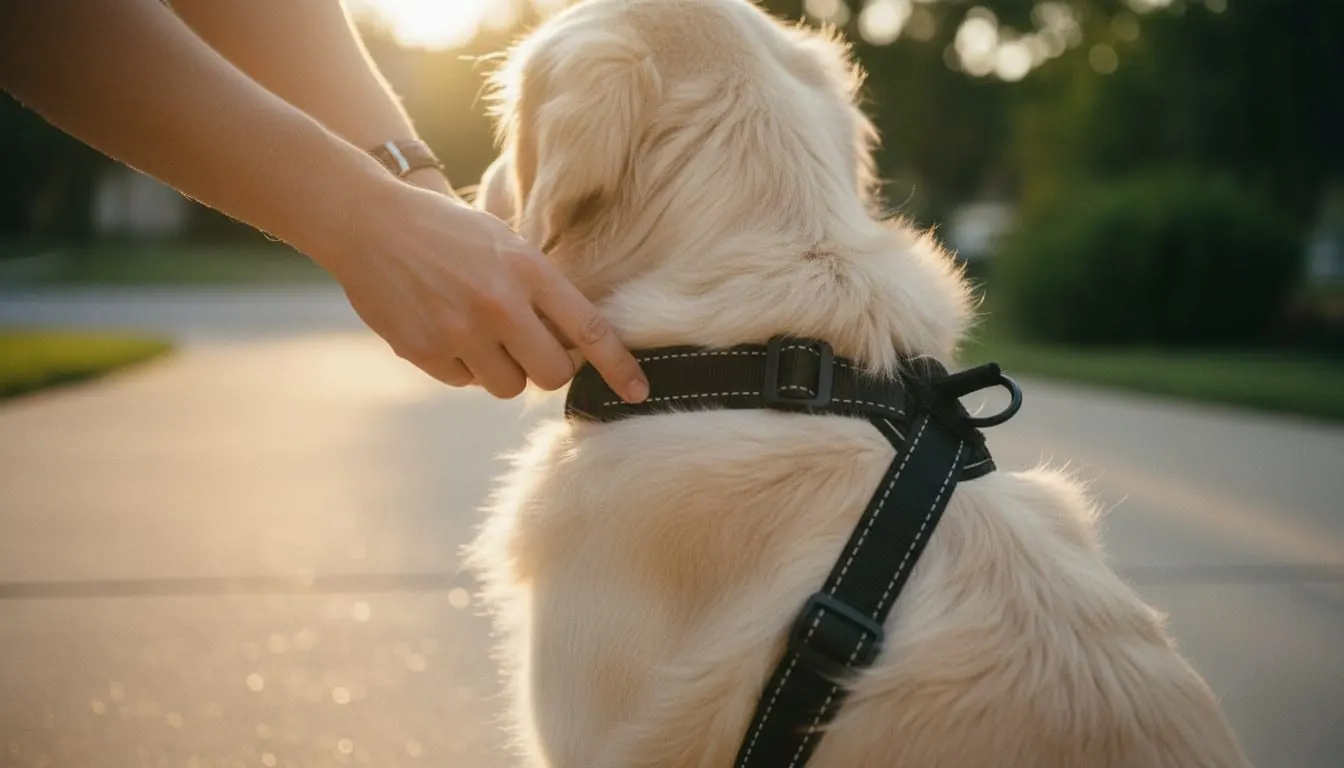
The gold standard is specialized 'energy-absorbing' webbing, similar to the material used in human seatbelts. This material is designed to stretch slightly under extreme load—just enough to dissipate energy and lower the peak G-forces felt by the dog, but not so much that they hit the dashboard. When choosing a harness, look for wide, padded chest plates. This distributes the force across the ribcage and sternum rather than concentrating it on the soft tissue of the neck or throat. In the Australian summer heat, ensure these materials are also breathable to prevent overheating during long drives to the coast.
Effective restraints use energy-absorbing materials to slow deceleration and wide chest plates to distribute impact forces safely.
Hardware Integrity: Forged Steel vs Zinc Castings
Forged steel hardware is vastly stronger than die-cast zinc, and the difference is usually the 'weakest link' in dog car restraint safety. Most pet products use die-cast zinc clips, which are created by pouring molten metal into a mould; while inexpensive, these clips often contain microscopic air bubbles or 'voids' that make them brittle, and under the sudden, violent load of a car crash they snap like dry twigs. Forged steel, on the other hand, is hammered into shape, aligning the grain of the metal for vastly superior strength.
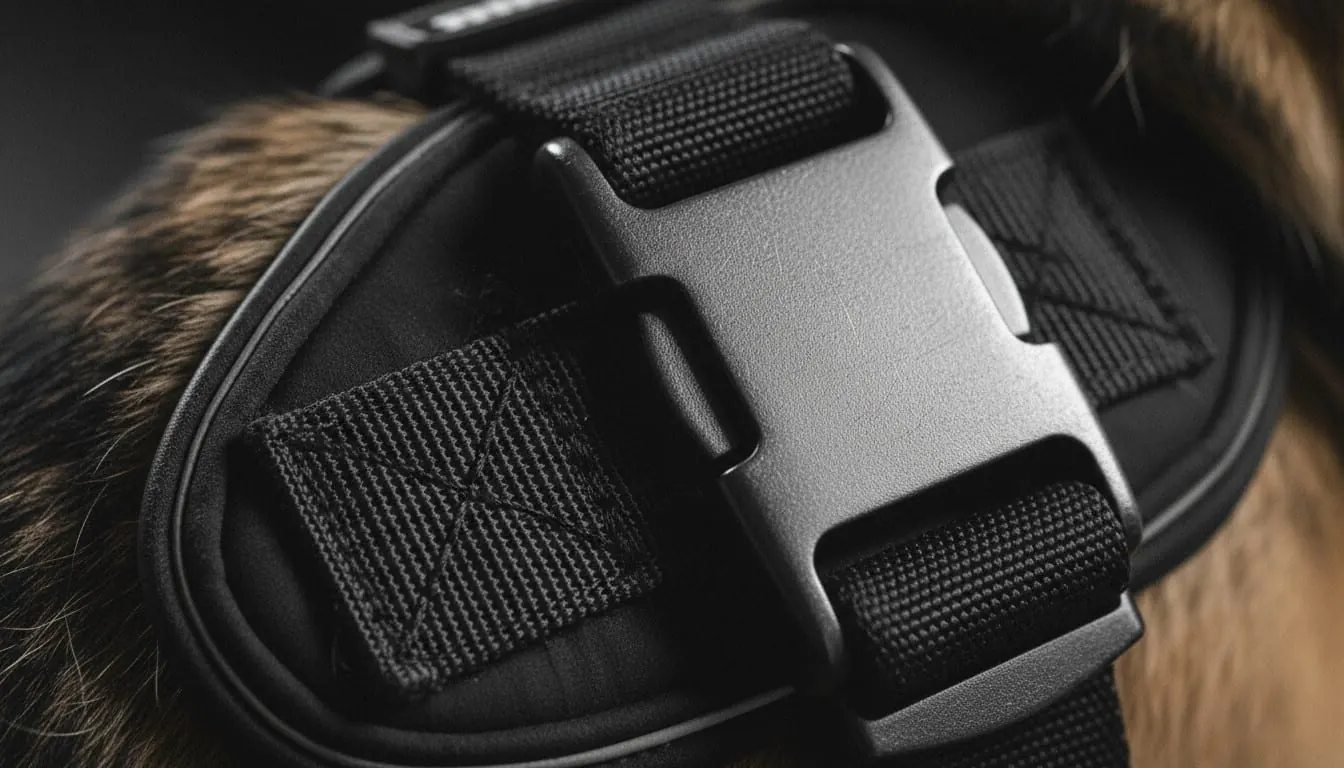
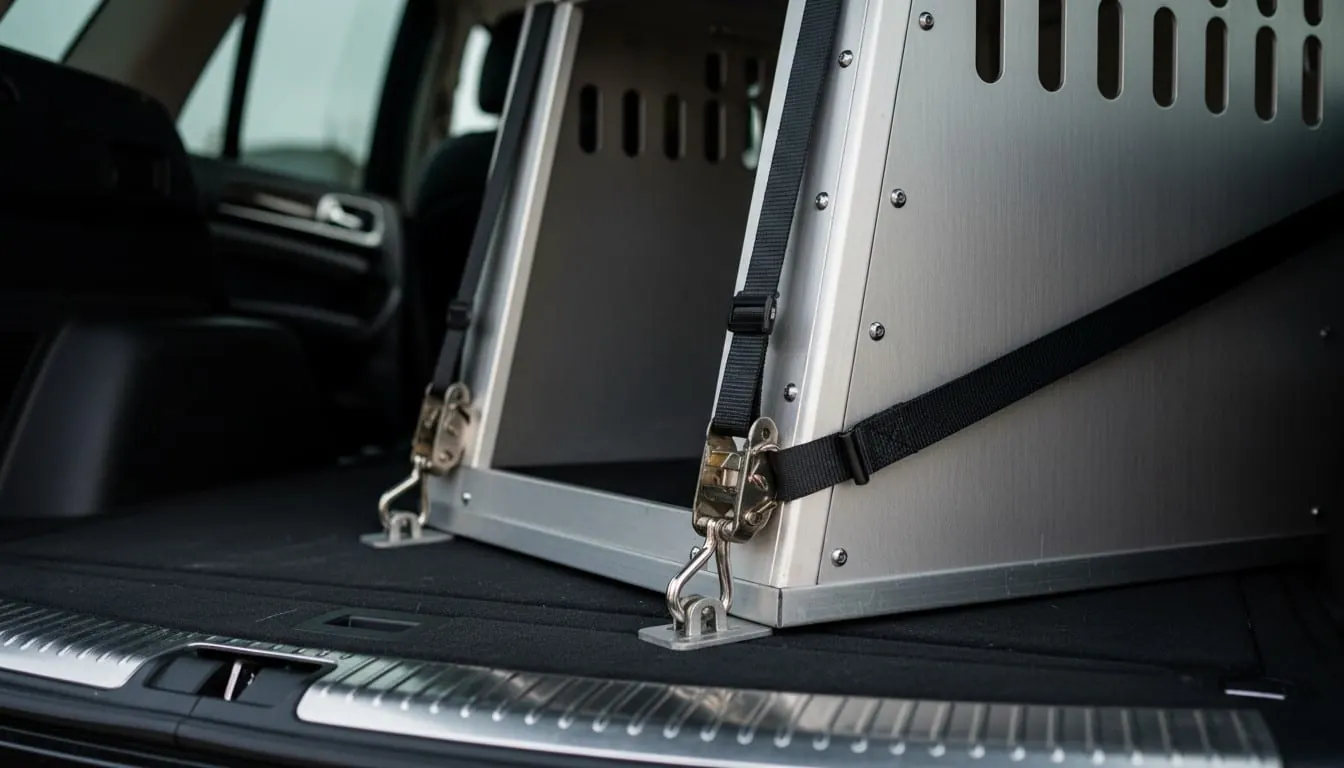
Experts recommend looking for 'All-Metal' construction. Avoid any restraint that uses plastic side-release buckles as the primary load-bearing component. Even 'heavy-duty' plastic is prone to 'creep' and deformation under heat—a major concern in Australia where cabin temperatures can exceed 60 Celsius in a parked car. Instead, seek out 'nesting' buckles (metal plates that slot together) or 'Cobra' style buckles. These mechanical locks are designed to remain closed even under extreme tension, ensuring the dog stays secured to the vehicle's anchor points regardless of the impact angle.
Hardware type
Crash behaviour
Verdict for car restraints
Plastic side-release buckle
Shears under sudden load and deforms in hot cabins above 60 degrees Celsius
Avoid as the primary load-bearing component
Die-cast zinc clip
Brittle due to casting voids; snaps under peak deceleration forces
Avoid for medium and large dogs
Forged steel carabiner
Aligned metal grain survives dynamic shock loads of 15kN and above
Recommended for tether and anchor points
Nesting or Cobra-style metal buckle
Stays locked under extreme tension from any impact angle
Recommended as the primary buckle
How common restraint hardware materials behave under crash loads
Always choose forged steel or nesting metal buckles over plastic or die-cast zinc hardware to ensure structural integrity during a crash.
Troubleshooting and Fitment: When to Seek Professional Advice
Even the best-engineered restraint will fail if it is fitted incorrectly. A common mistake among Australian dog owners is fitting the harness too loosely to ensure the dog is 'comfortable'. However, any slack in the system allows the dog to gain momentum before the restraint engages, significantly increasing the force of the impact. You should only be able to fit two fingers between the harness and your dog's body. If the harness slides or rotates when you pull on it, it is not secure.
Signs that you need to adjust your approach or seek professional help include: your dog constantly getting tangled in the tether, the harness causing bald spots or skin irritation, or your dog being able to 'back out' of the restraint. If you have a highly reactive dog or a dog with a unique body shape (like a Greyhound), a standard harness may not suffice. In these cases, consulting a professional dog trainer or an automotive safety engineer can help you customise a solution that integrates with your vehicle's specific anchor points (ISOFIX or cargo tie-downs). Never compromise on fitment; a poorly fitted high-end harness is often less effective than a cheaper one that fits perfectly.
Correct fitment is as important as material quality; ensure the harness is snug and seek expert advice for unique breeds or behaviours.
Conclusion
Evaluating dog car restraint safety requires us to think like engineers rather than consumers. By prioritising tensile strength, minimising rotational arcs, and ensuring hardware is made from forged metals rather than brittle castings, you can provide your dog with a genuine chance of survival in an accident. Don't be swayed by a 'crash tested' sticker alone—look for the data, check the kilonewton ratings, and ensure the fit is impeccable. As we head out on our next great Australian adventure, let's make sure our best mates are as safe as the rest of the family. If you're ever unsure about the integrity of your setup, reach out to a professional to ensure your car's safety features and your pet's gear are working in perfect harmony.
Frequently asked questions
Does Australia have a legal requirement for dog car restraints?
While there is no specific national 'pet seatbelt law', all Australian states have laws regarding unrestrained loads and distracted driving. If a dog is in a position that interferes with the driver or is likely to be injured or cause injury in a crash, you can face significant fines and demerit points under the Australian Road Rules. Dogs on ute trays must be restrained or caged in every state.
Is a car crate safer than a harness?
A crash-tested, metal-reinforced crate secured to the vehicle's cargo tie-down points is generally considered the safest option. It provides a contained 'safety cell' and eliminates the risk of rotational forces found in tethers. However, a high-quality crash-tested harness is a more practical and very effective secondary option for most passenger vehicles.
Can I use a regular walking harness as a car restraint?
Most walking harnesses are not designed for car safety; they lack the reinforced stitching, metal buckles, and energy-absorbing webbing required to survive a high-speed impact. Only use harnesses specifically labelled and independently verified for vehicle use, as walking gear will likely fail under the dynamic loads of a collision.
Where is the safest place for a dog to travel in the car?
The back seat or the cargo area of a wagon is safest, well away from the front airbags that can seriously injure a dog in a crash. Attach the restraint to the vehicle's ISOFIX points or seatbelt receiver rather than a headrest post, and keep the tether short so the dog cannot reach the front seats or window edges.
How often should I replace my dog's car restraint?
Replace a restraint immediately after any collision, even a minor one, because webbing and stitching can be invisibly weakened. Otherwise, inspect the harness every few months for frayed stitching, UV-faded webbing, and corroded or sticky buckles, and expect to retire heavily used gear every two to three years in the harsh Australian sun.
References & Sources
This article was researched using the following sources:
Stop guessing with generic pet food charts. Learn how calculating resting energy requirements (RER) provides the precise caloric intake your Aussie pet needs to thrive.
Master cue selection and discrimination to stop your pet from guessing. Learn why visual signals beat verbal commands and how to clean up 'muddy' training.