Socialization as Neutrality: The Secret to a Calm, Focused Dog
Stop forcing your puppy to meet everyone. Learn why socialization as neutrality is the real key to preventing reactivity and building a focused, well-behaved companion.
When you bring home a new puppy, the first piece of advice you likely hear is to "socialize them with everything." Most owners interpret this as an invitation for their dog to meet every person and pet on the block. However, this approach often backfires, creating dogs that are overstimulated, frustrated, or reactive. True socialization as neutrality is the missing piece of the puzzle for modern pet owners. Instead of teaching your dog that every stranger is a best friend, you should teach them that the world is a place to be observed calmly while staying focused on you. This shift in perspective transforms your walks from chaotic pulling matches into peaceful bonding experiences, ensuring your dog can handle the hustle and bustle of American life without losing their cool.
The Myth of Socialization vs. Interaction
Socialization and interaction are not the same thing, and confusing them is the myth that derails most puppy owners. Socialization is teaching your dog to feel safe and comfortable around the sights, sounds, and beings of the world, while interaction is actively engaging with them. For years, the gold standard was the '100 people in 100 days' challenge, and while the intent was good, the execution often led to 'frustrated greeters'—dogs that bark and lunge not out of aggression, but out of a desperate, learned need to reach every person they see. When we force or allow interaction with every distraction, we inadvertently teach our dogs that the environment is more exciting than the handler. This is especially problematic in busy US environments like suburban shopping centers or crowded city sidewalks.
Modern behavioral science suggests a different path. Rather than constant engagement with the outside world, we should prioritize the dog's ability to remain indifferent. Neutrality means your dog acknowledges a stimulus—be it a toddler on a scooter or a neighbor's barking Golden Retriever—and decides it is not worth their energy. This creates a psychological 'buffer' that prevents the development of leash reactivity and anxiety. By focusing on observation rather than participation, you build a dog that is reliable in diverse settings, from the aisles of Home Depot to the sidelines of a local soccer game.
Aspect
Interaction-first
Neutrality-first
Core goal
Meet and greet as many people and dogs as possible
Stay calm and focused near people and dogs
What the dog learns
The environment is the source of excitement
The handler is the source of rewards and guidance
Typical outcome
Frustrated greeters that pull, bark, and lunge
Emotionally regulated dogs that settle in public
Reactivity risk
Higher, from over-arousal and thwarted greetings
Lower, thanks to a built-in calm buffer
Interaction-first socialization vs. neutrality-first socialization
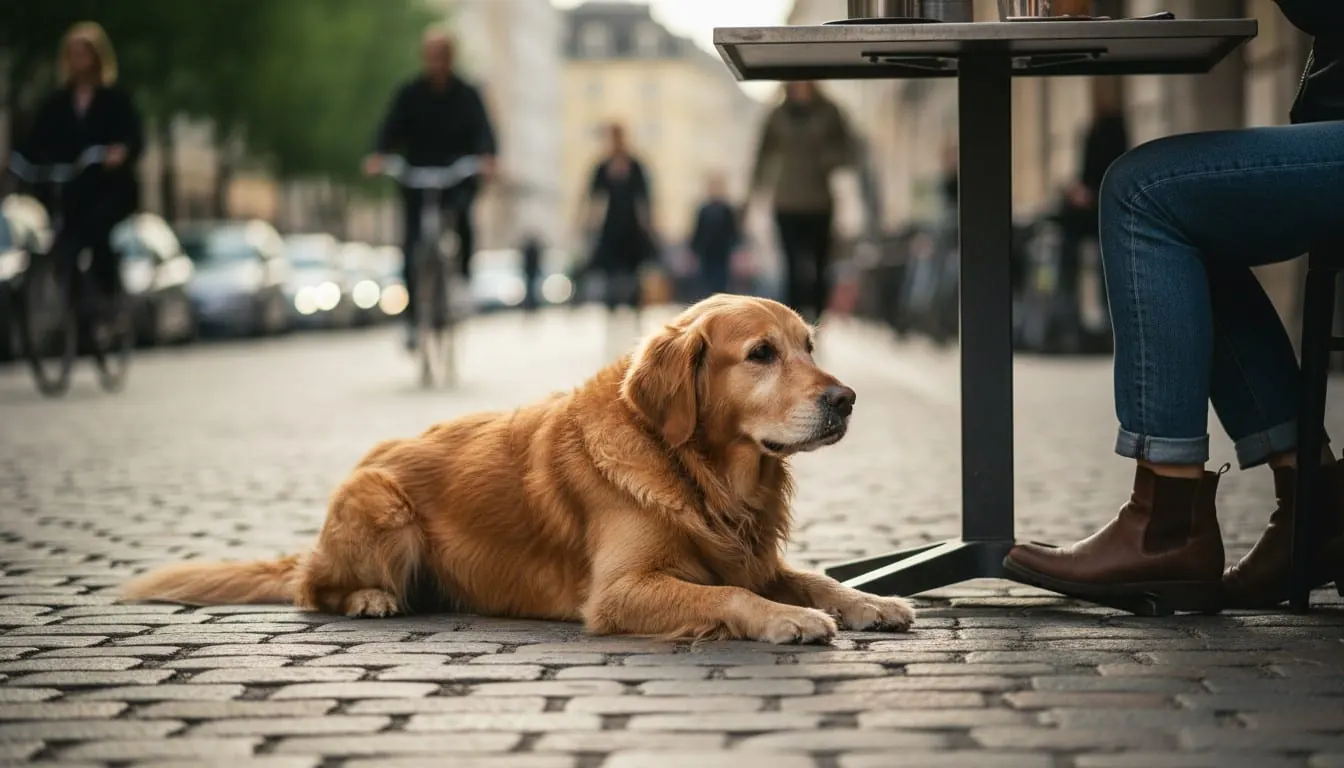
True socialization is about teaching your dog to exist calmly near distractions without the need to interact with them.
Defining Neutrality in Everyday Public Spaces
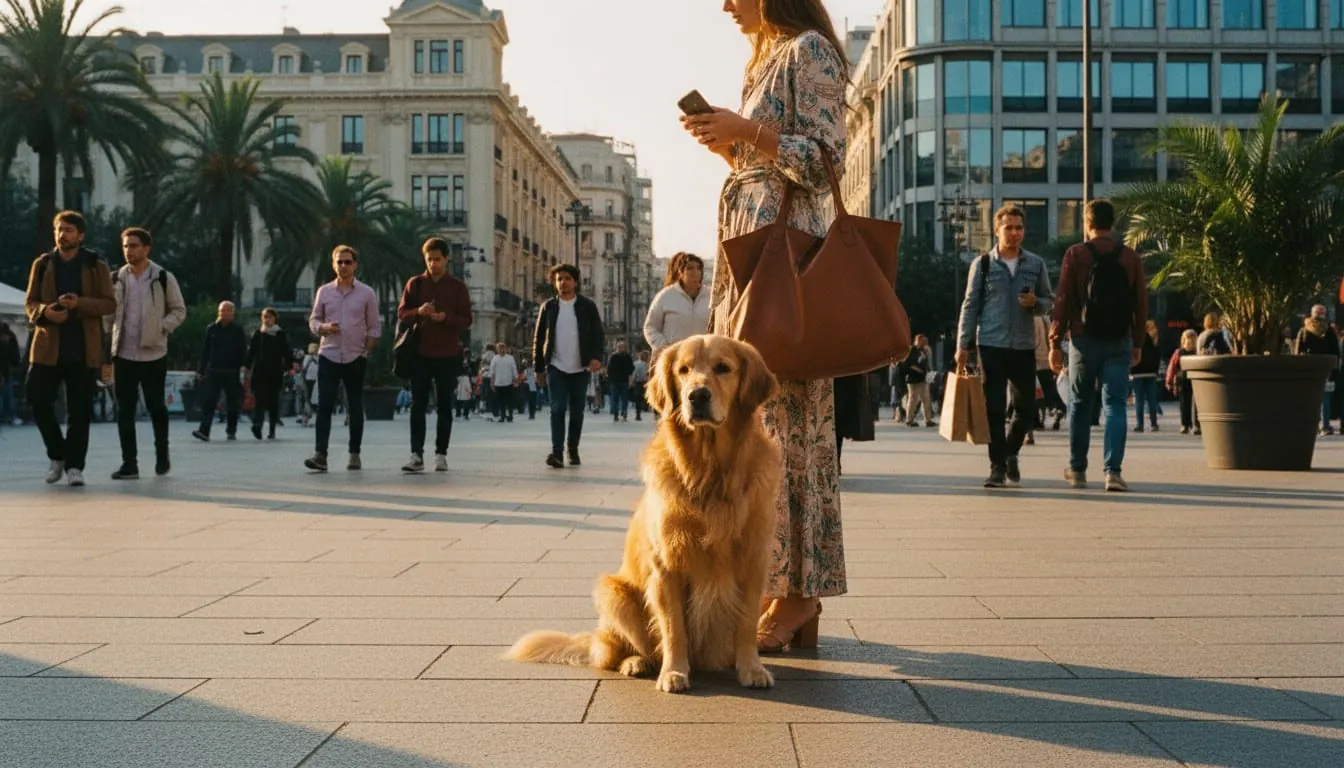
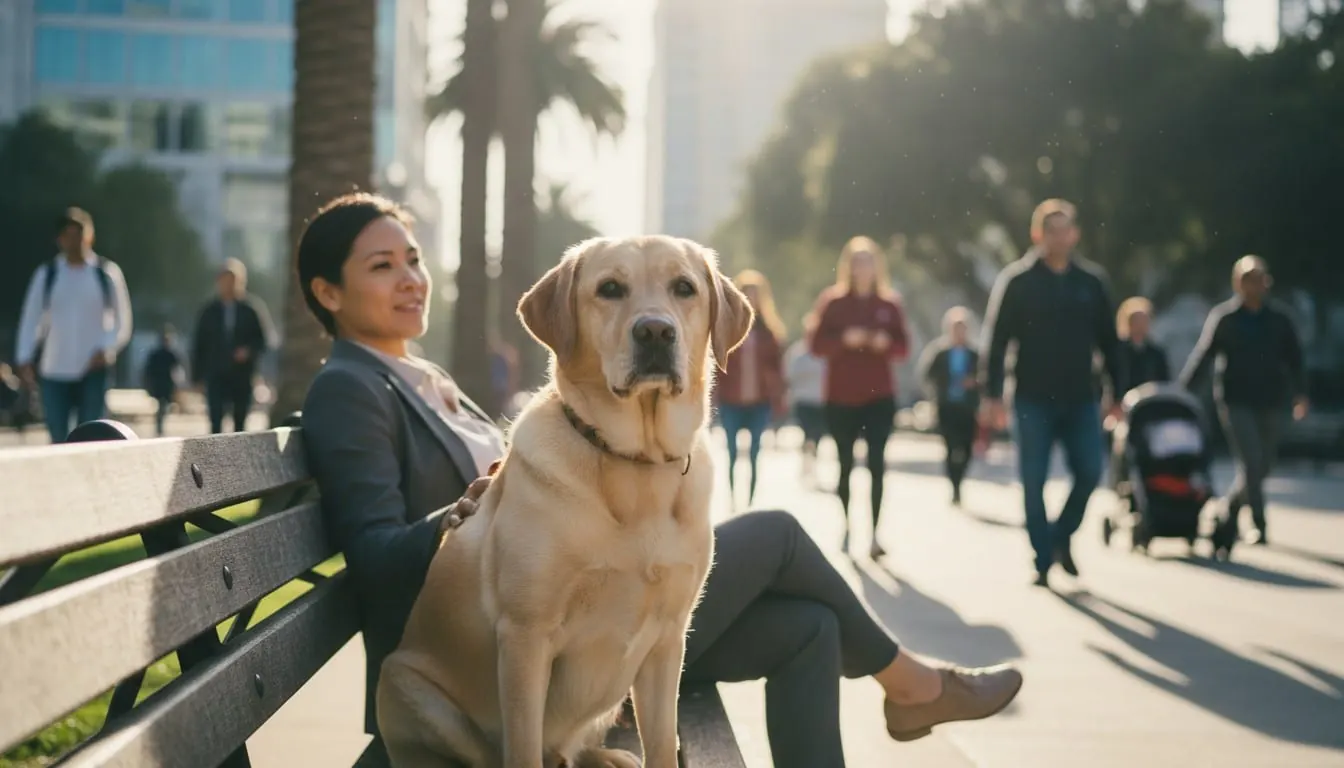
Neutrality in a public space means your dog can notice everything happening around them yet feel no urge to react to any of it. It isn't about your dog becoming a robot; it is about emotional regulation. A neutral dog can walk through a busy place like a Lowe's garden center or a crowded park during a 4th of July celebration and remain 'checked in' with their owner. They see the distractions, but they don't feel the need to engage with them. This level of focus is achieved by consistently rewarding the dog for choosing you over the environment.
To build this skill, you must start in low-stakes environments. Think about a quiet corner of a park or a suburban cul-de-sac. The goal is for your dog to keep a loose leash and offer voluntary eye contact. If your dog is constantly scanning the horizon for the next 'friend,' they aren't being socialized—they are being overstimulated. By practicing socialization as neutrality, you are essentially telling your dog, 'That person over there is interesting, but I am the source of all the best rewards.' Over time, this builds a deep-seated habit of looking to you for guidance whenever something new appears on the horizon.
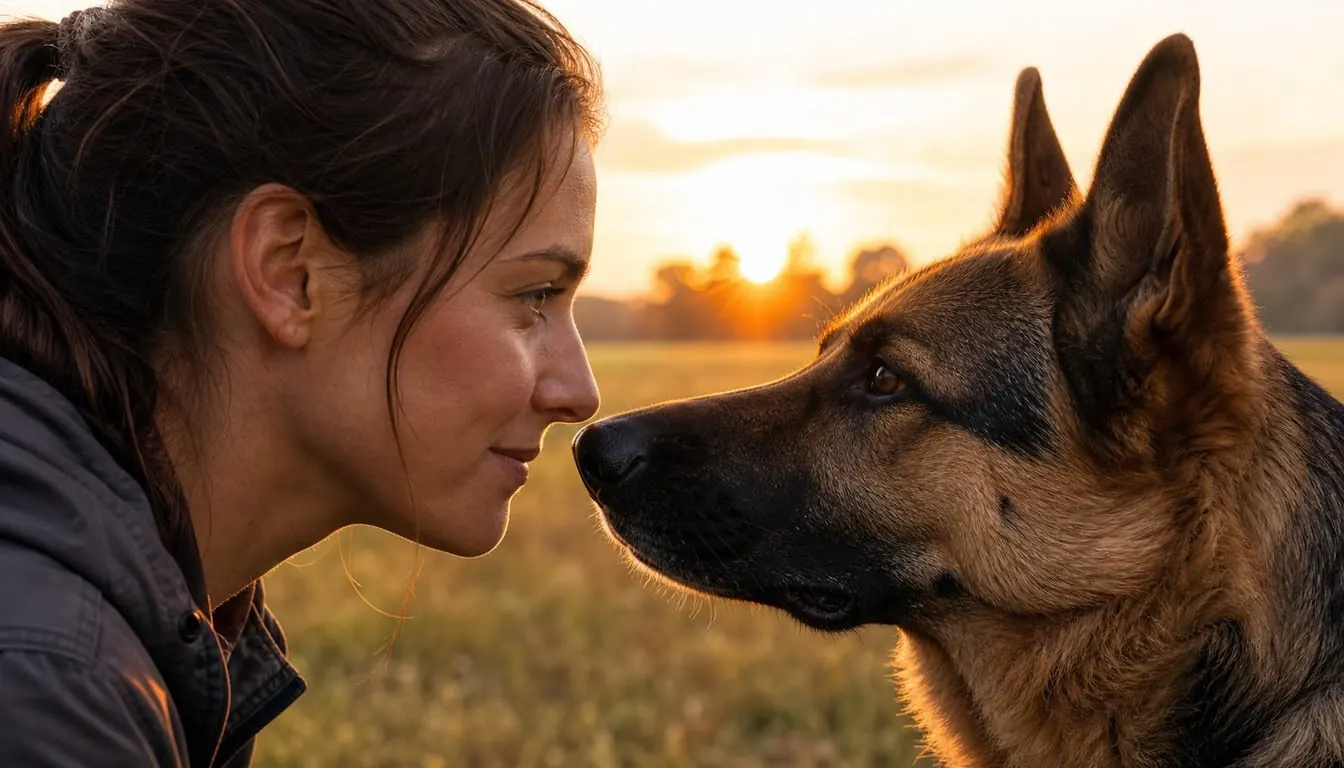
A neutral dog acknowledges the world but prioritizes their connection with the handler over external stimuli.
The Reward-for-Disengagement Protocol
The reward-for-disengagement protocol is a simple routine built on three components—distance, marking, and rewarding—that pays your dog for choosing you over a trigger. Start by finding your dog's 'threshold,' the distance at which they can see a distraction without pulling or barking. For many puppies, this might be 50 feet away from a busy Target entrance. Use a high-value treat, like small pieces of plain chicken or a specialized training treat, to mark the exact moment they look at a distraction and then look back at you. As your dog gets better at this, you can slowly decrease the distance, and in practice each repetition follows the same three steps:
Your dog notices a distraction, such as a squirrel, another dog, or a loud truck.
You wait for a split second of calm or a voluntary glance back toward you.
You mark that choice with a 'Yes!' or a clicker and reward generously.
This creates a 'conditioned emotional response' where the sight of a distraction becomes a cue to check in with the owner. You aren't just ignoring the environment; you are actively rewarding the choice to remain neutral. This is far more effective than trying to manage a dog that has already reached its breaking point.
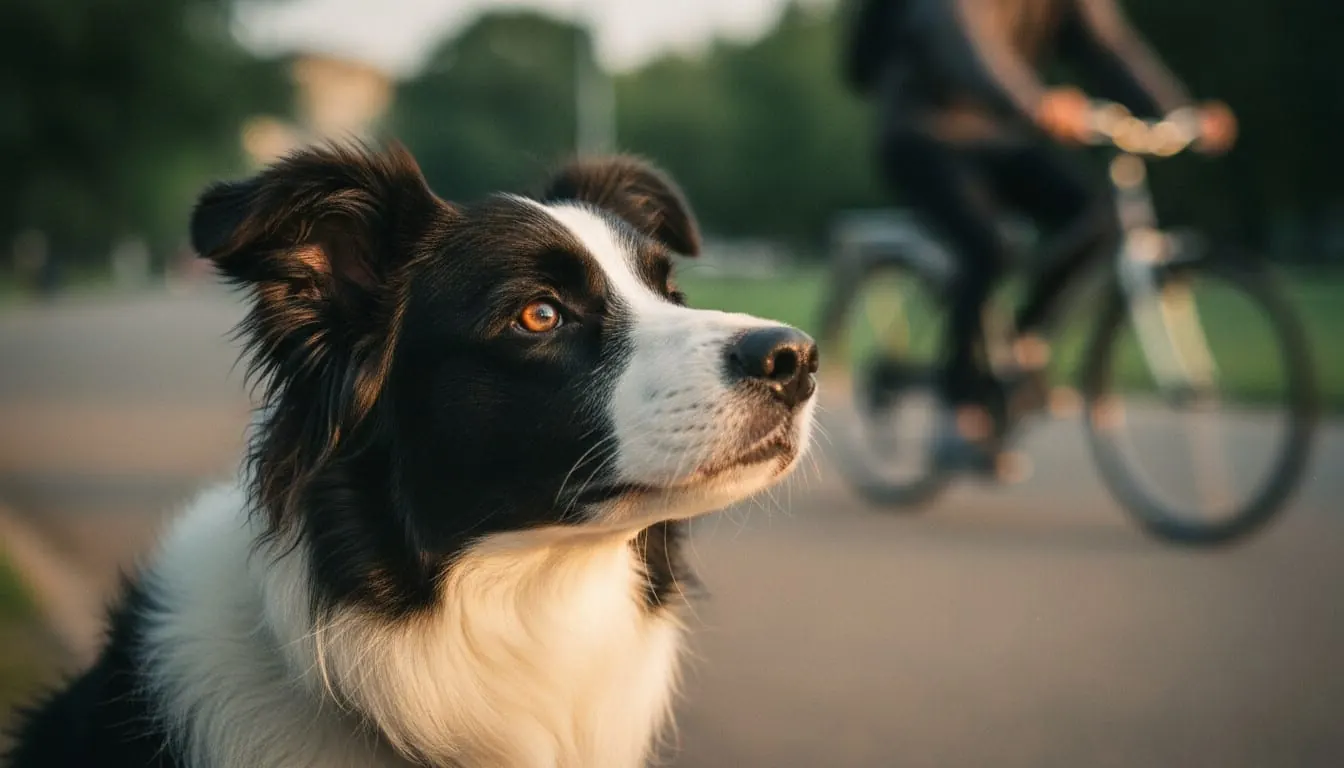
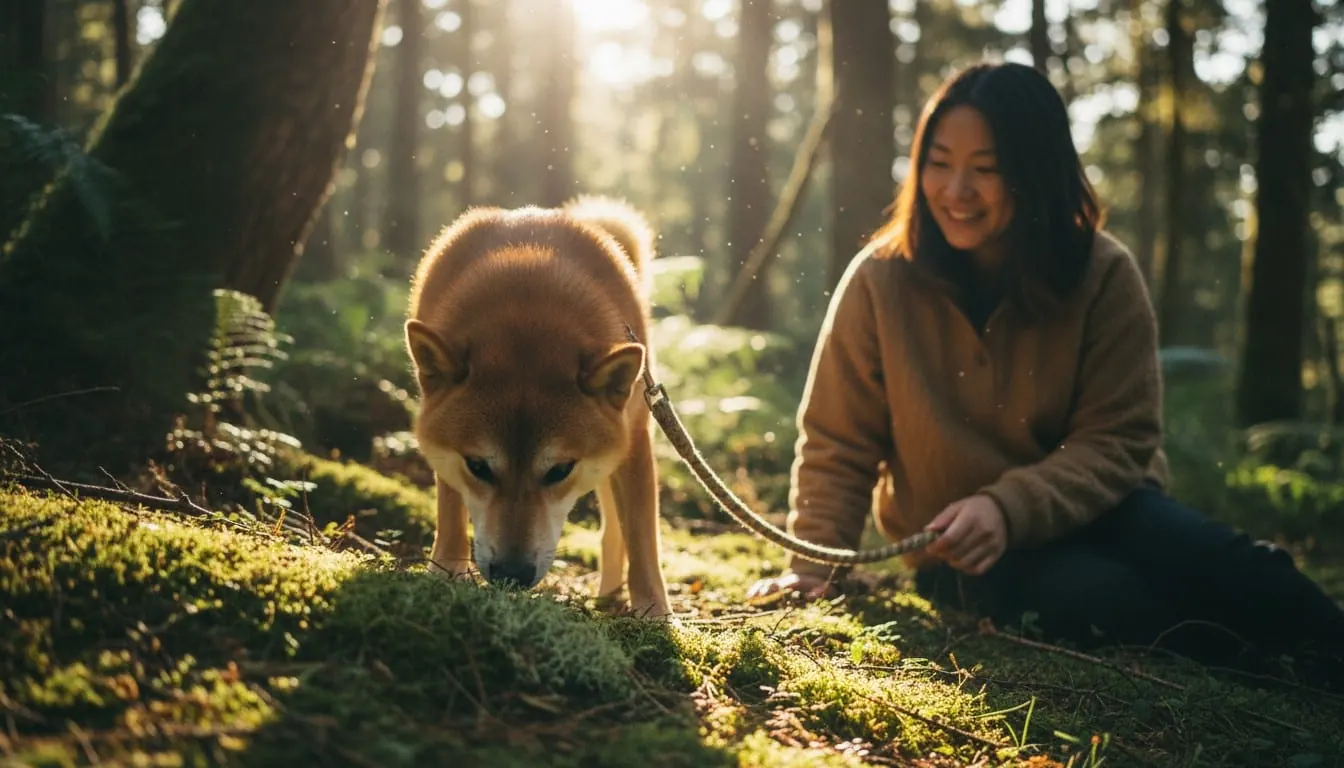
Use a mark-and-reward system to turn the sight of distractions into a cue for your dog to check in with you.
Troubleshooting: When Your Dog Loses Focus
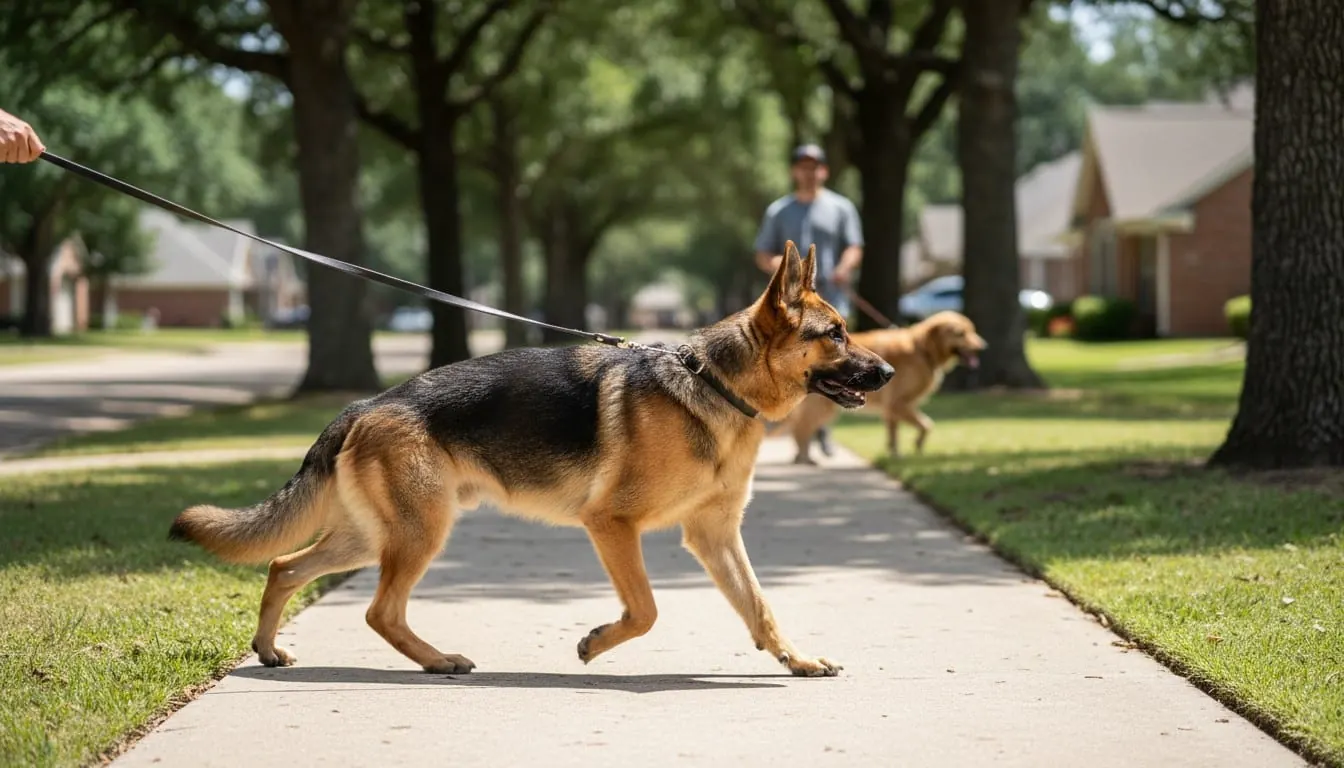
When your dog loses focus and starts lunging or fixating on a neighbor's dog, it almost always means you are too close to the trigger, so calmly create distance until they can re-engage with you. Training isn't linear, and there will be days when your dog seems to forget everything, which is common during 'fear periods' or the 'teenage' phase of canine development. At those moments the environment is providing more 'sensory input' than the dog's brain can process. When this happens, do not scold the dog. Instead, turn around and walk 20 feet in the opposite direction until your dog can focus again, then resume at that easier distance.
Another common hurdle is the 'Can I pet your dog?' trap. In American culture, many people feel entitled to approach any dog they see. To protect your training, it is perfectly okay to say, 'Sorry, we're in training right now!' or 'He's learning to be calm today.' Allowing an over-excited stranger to rush your dog during a neutrality session can set your progress back by weeks. If you find your dog is consistently failing, simplify the environment. Move from the front of the grocery store back to your own driveway until their success rate improves to 80% or higher.
If your dog reacts, you are too close; calmly increase distance and advocate for your dog's space with strangers.
Conclusion
Socialization as neutrality is about more than just 'ignoring the environment'; it's about building a partnership based on trust and focus. By shifting your goal from 'maximum interaction' to 'maximum calm,' you set your dog up for a lifetime of success in the human world. Whether you are navigating a busy airport, a local park, or a family Thanksgiving dinner, a neutral dog is a happy, low-stress companion. Remember to be patient, keep your training sessions short, and always advocate for your dog's space. If you find yourself struggling with persistent behavioral issues or intense fear, don't hesitate to reach out to a professional trainer certified through the CCPDT or IAABC to ensure you and your dog stay on the right track.
Frequently asked questions
Does socialization as neutrality mean my dog can't have friends?
Not at all. Neutrality simply teaches your dog that interaction is a privilege rather than a requirement, so greetings and play happen on your terms instead of on every walk. Because a neutral dog is not stuck in a state of high arousal or frustration before play even begins, they usually become a better, calmer playmate.
What is the best age to start neutrality training?
You can start the moment you bring your puppy home, often around 8 weeks of age. The American Veterinary Society of Animal Behavior identifies a puppy's first three months as the primary socialization window, when sociability outweighs fear, making it the ideal time to teach calm observation. Introducing new sights and sounds while rewarding a relaxed response is far more valuable than pushing your puppy to greet everyone.
How do I handle a dog that is already reactive on the leash?
If your dog already barks or lunges at triggers, you can still apply neutrality principles, but you must work at a much greater distance where they can notice the trigger without losing their focus. Use the engage-disengage approach of marking and rewarding every glance back at you, and increase distance the moment your dog can no longer take a treat. If the behavior involves intense aggression or fear, consult a certified professional trainer or veterinary behaviorist.
Can I use neutrality training with an older rescue dog?
Yes, neutrality training is highly effective for adult rescue dogs who may feel overwhelmed by a new home and neighborhood. It builds their confidence by showing them that they never have to interact with every scary or exciting thing they encounter. Because rescue dogs often arrive with unknown histories, start at generous distances and let their success rate guide how quickly you close the gap.
How long does it take to build neutrality?
Most dogs need weeks to months of short, consistent sessions rather than a few big outings, because neutrality is a habit that forms through repeated calm exposures. Progress is not linear, and setbacks are normal during fear periods or the adolescent phase. A practical benchmark is to keep an environment in your routine only once your dog succeeds there roughly 80 percent of the time.
References & Sources
This article was researched using the following sources:
Stop guessing with vague feeding charts. Learn the veterinary math for calculating resting energy requirements to ensure your pet stays lean and healthy.
Discover why decompression walks are the ultimate mental health tool for your dog. Learn the biology of sniffing and how to prioritize scent over physical distance.