If you have ever spent an hour grooming your dog only to have your professional groomer tell you they need to be shaved due to matting, you are not alone. Many dedicated pet owners are diligent about daily grooming, but they are often only performing 'surface brushing.' To truly maintain the coat of a long-haired or double-coated breed, you must master the art of line brushing. Line brushing is a systematic, professional technique that involves parting the hair all the way to the skin to ensure every layer of the coat is free of tangles and dead undercoat. Without this method, dead hair remains trapped against the skin, eventually leading to a thick, felted layer of mats that are impossible to brush out safely.
The Difference Between Surface Brushing and Real Line Brushing
The difference comes down to depth. Surface brushing only smooths the visible top layer of fur, while line brushing works in parted rows that reach all the way down to the skin. Most pet owners simply run a brush over the top of their dog's coat, which makes the dog look fluffy and well-kept but leaves the hair closest to the skin untouched. For breeds like Doodles, Poodles, and Old English Sheepdogs, that is exactly where the problem starts. Over time, moisture from rain or humidity causes the deep-seated hair to twist and knot, creating 'pelting,' a condition where mats grow so dense they form a solid shield against the skin that traps moisture and can restrict circulation.
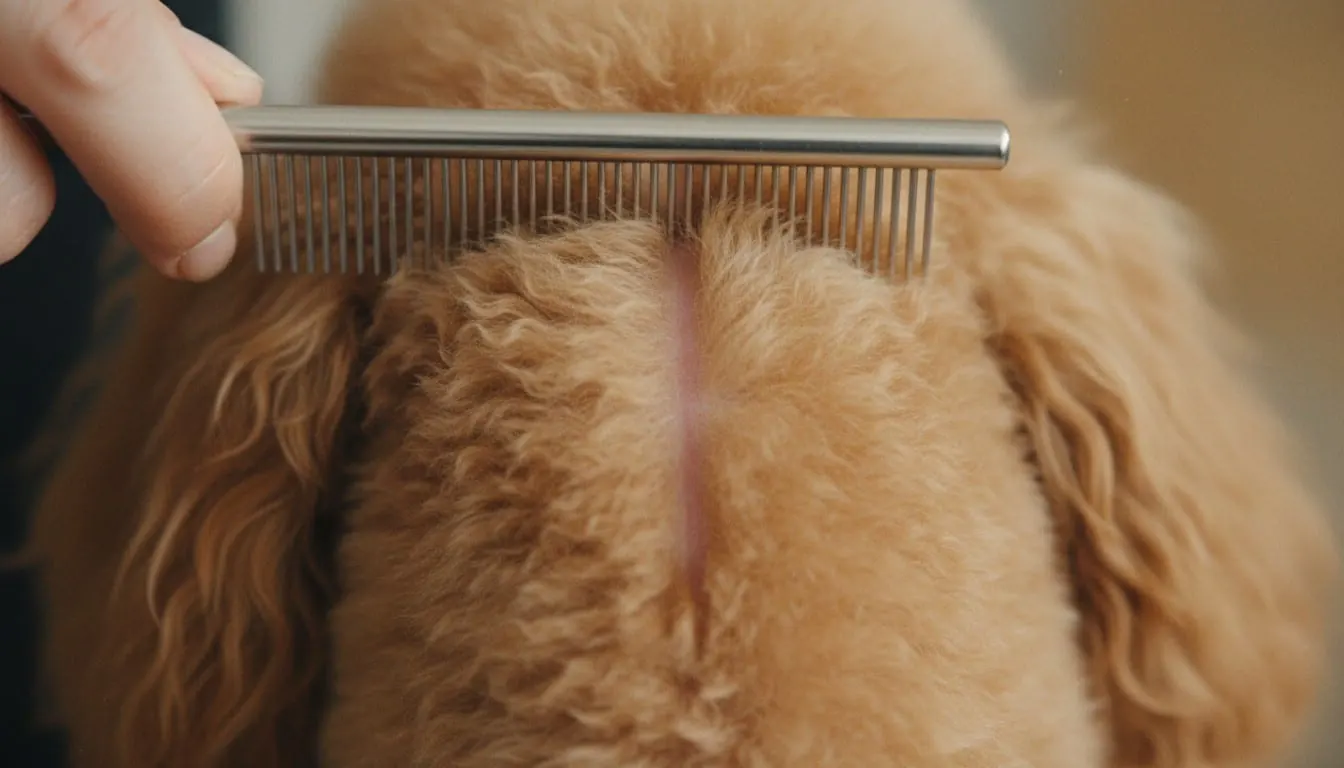
Line brushing solves this by ensuring that the brush actually reaches the skin. Instead of sweeping across the back of the dog, you focus on small, horizontal rows. This allows you to see the skin as you work, confirming that no knots are hiding at the base of the hair shaft. It is the gold standard for maintaining a long coat between professional appointments at your local grooming salon.
Factor
Surface brushing
Line brushing
Depth reached
Top coat only
Parted rows down to the skin
Undercoat
Left largely in place
Dead undercoat cleared out
Mat prevention
Hides mats forming at the root
Catches knots before they pelt
Tools
Any brush over the top
Slicker brush plus metal comb
Surface brushing versus line brushing at a glance
Surface brushing only addresses the top layer of fur, while line brushing reaches the skin to prevent painful pelting.
Essential Tools for the American Home Groomer
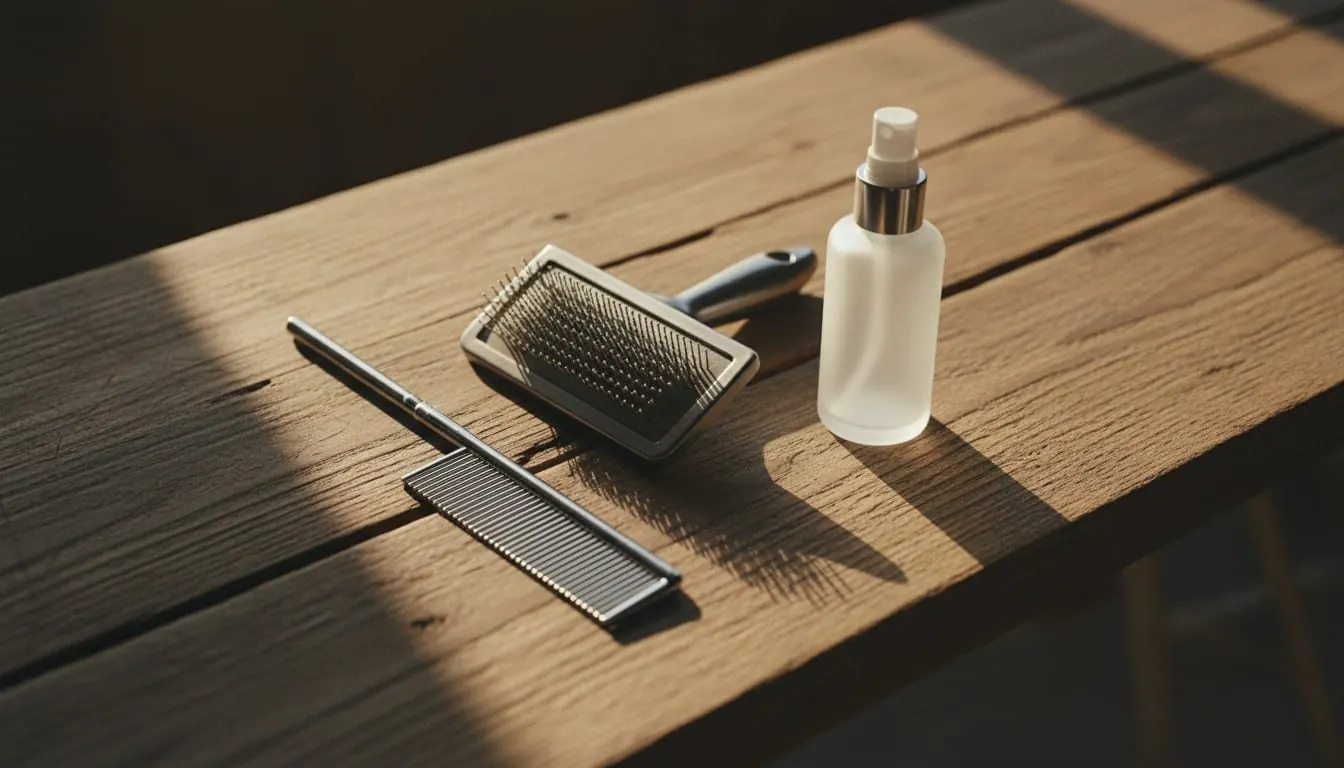
Line brushing needs only two core tools: a high-quality slicker brush and a metal finishing comb, often called a 'Greyhound comb' in the United States. The slicker brush has fine, angled wire bristles that grab dead hair without scratching the skin, and the comb is what confirms your work is actually done. Because the bristles need to penetrate the coat all the way down to the skin, a flimsy brush that only skims the surface will leave the undercoat matting no matter how long you work. Brands like Chris Christensen, or comparable tools from major retailers like PetSmart, are popular choices for their durability.
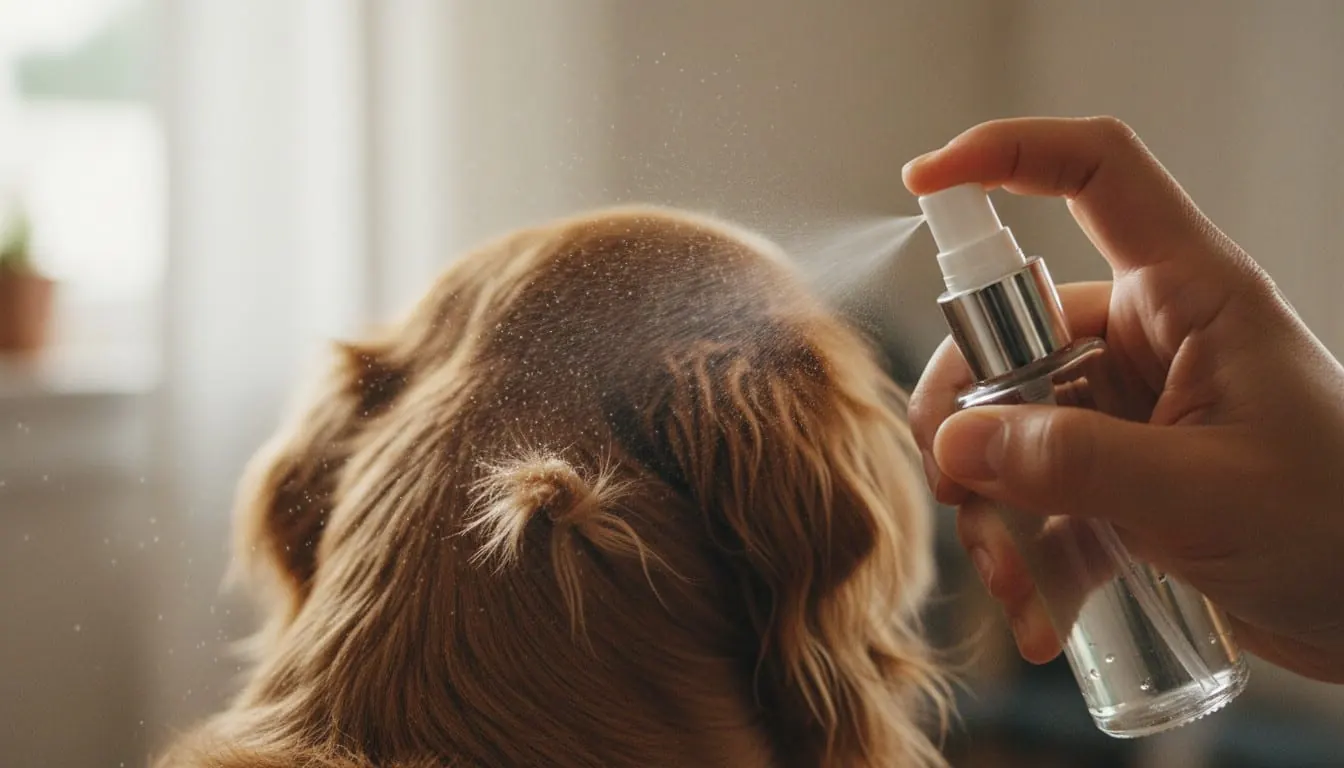
In addition to the brushes, a detangling spray is a life-saver. Products like 'The Stuff' or 'Cowboy Magic' (commonly found at Tractor Supply or online) provide the necessary 'slip' to help the brush glide through the coat. Never brush a completely dry, dirty coat, as this can lead to hair breakage and discomfort. Spritzing the section lightly before you begin protects the hair cuticle and makes the process much faster for both you and your pet.
Invest in a high-quality slicker brush, a metal Greyhound comb, and a detangling spray to make line brushing effective and comfortable.
A Step-by-Step Guide to the Line Brushing Method
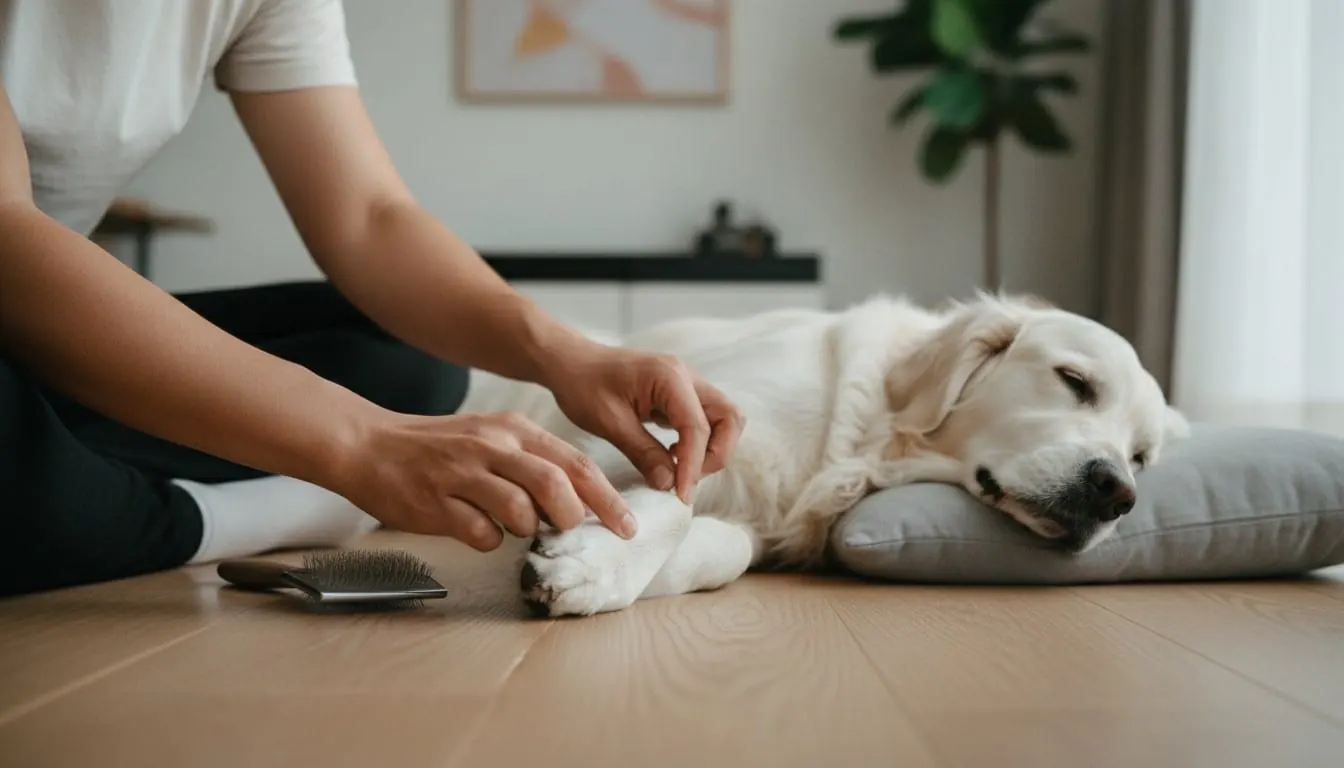
To line brush correctly, start at the bottom of the dog—usually the back legs—and work your way up in horizontal rows. Use one hand to pull the hair upward, exposing a horizontal line of skin. With your other hand, use the slicker brush to pull a small amount of that hair down from your hand, brushing it out away from the skin. Repeat this motion, moving across the body in a straight line. Once that 'line' is completely smooth and you can see the skin clearly, move your hand up about an inch and start a new line.
The final and most critical step is the 'Comb Test.' After you have finished a section with the slicker brush, take your metal comb and run it through the same area from the skin outward. If the comb catches on anything, there is still a small mat present. You must go back with the slicker brush until the comb slides through like a knife through butter. This ensures that the undercoat is entirely clear of the dead hair that causes matting.
Work from the bottom up in small horizontal sections, always finishing with a metal comb to verify that the coat is tangle-free to the skin.
Troubleshooting Common Brushing Challenges
The two most common line-brushing problems are brush burn and mats that are too tight to work out. Brush burn happens when an owner presses too hard or lingers in one spot, letting the wire bristles irritate the dog's skin. To avoid it, keep the brush moving and use light, flicking motions rather than heavy pressure. If the skin looks red or the dog flinches, stop immediately and allow the area to rest.
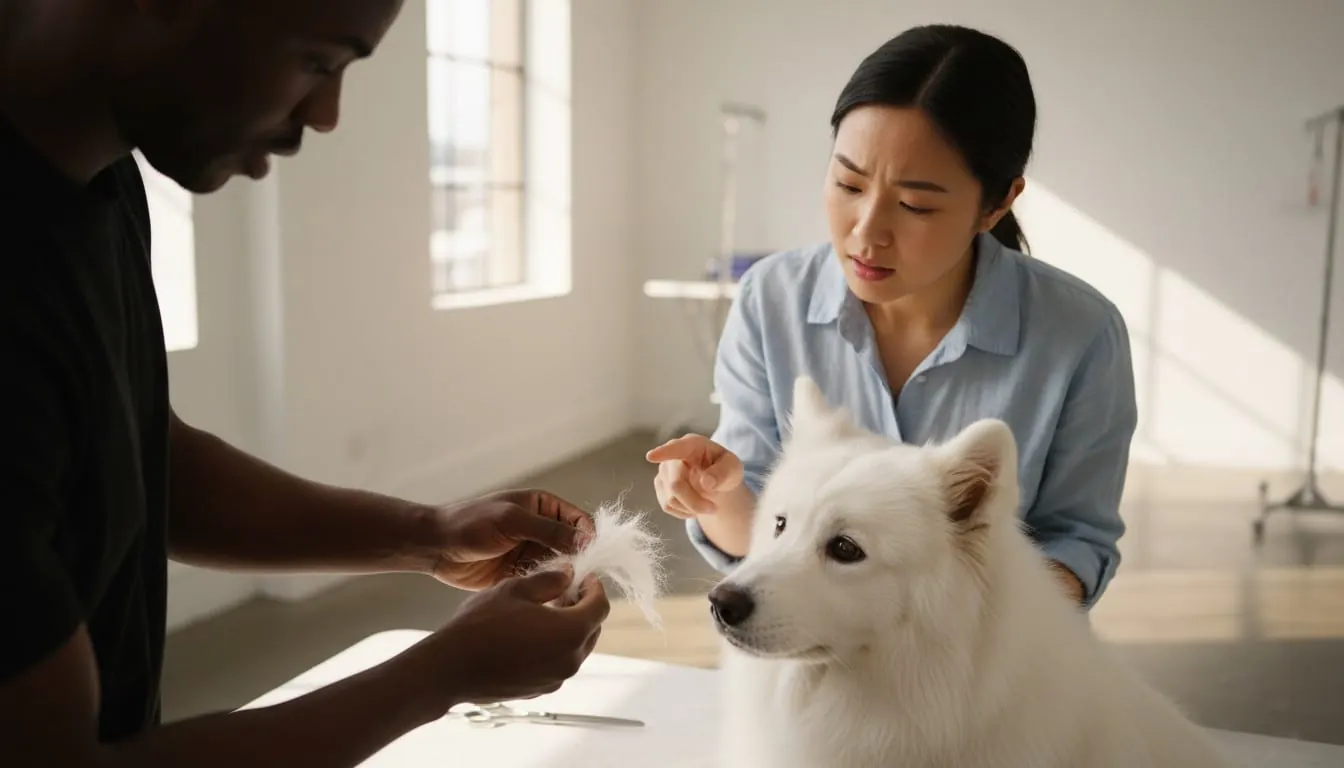
Another common hurdle is encountering a mat that is too tight to brush out. If you find a knot that won't budge after a few gentle passes with the slicker brush and detangler, do not pull harder. This causes pain and will make your dog hate grooming. Instead, you can try to carefully split the mat vertically with blunt-nosed scissors or a dematting tool. However, if the mat is tight against the skin (closer than the width of a pencil), it is safer to leave it for a professional or carefully shave that specific spot to avoid cutting the skin.
Avoid brush burn by using light motions, and never force a brush through a tight mat that is close to the skin.
Safety and When to Call a Professional Groomer
Call a professional the moment your dog becomes 'pelted'—when the mats have joined into a hard shell against the skin—because trying to brush that out at home is inhumane and can tear the skin. Professional groomers have the high-velocity dryers and specialized clippers needed to remove a pelt safely. In the United States, most groomers work under a 'comfort over vanity' standard, meaning they will shave a severely matted dog rather than subject it to hours of painful dematting.
Additionally, be mindful of your dog's behavior. If grooming sessions become a source of extreme stress, growling, or snapping, seek help from a professional who can use safe handling techniques or suggest a fear-free approach. Regular professional appointments every 4-6 weeks, combined with your at-home line brushing, will keep your dog's coat in top condition and prevent the need for drastic 'short' haircuts in the future.
Prioritize your dog's comfort; if matting is severe or the dog is highly stressed, consult a professional groomer immediately.
Conclusion
Mastering the line brushing technique is the single most important skill for an owner of a long-haired dog. By moving away from surface-level grooming and focusing on a systematic, skin-to-tip approach, you can eliminate the pain and frustration of deep mats and pelting. Remember to use the right tools, work in small sections, and always perform the 'comb test' to ensure success. While it takes more time than a quick once-over, the result is a happier dog, a healthier skin barrier, and a beautiful, long coat that your groomer will praise. If you encounter severe matting or your dog shows signs of distress, always prioritize their safety and consult a professional groomer to get back on the right track.
Frequently asked questions
How often should I perform line brushing on my dog?
For long-haired or high-maintenance breeds like Goldendoodles and Bernedoodles, line brush at least two to three times a week. Dogs that are active outdoors or wear a harness regularly may need a short daily session to prevent friction mats behind the ears, under the collar, and in the armpits. Consistency matters more than the length of any single session, because a few minutes done often keeps the undercoat from ever felting.
Can I line brush a wet dog after a bath?
You should never brush a wet or damp dog before drying the coat, because water causes existing tangles to tighten and shrink into harder knots. Always line brush the coat completely before a bath, then dry it with a high-velocity or warm dryer while brushing so the hair dries straight instead of curling against the skin. If you must work through a slightly damp coat, use a leave-in conditioner or detangling spray for extra slip.
What is the best brush for line brushing a thick undercoat?
A long-pin slicker brush paired with a metal Greyhound comb is the best combination for a thick undercoat. The longer pins reach deeper into the dense fur to clear the dead hair sitting closest to the skin, and the comb then verifies that nothing was missed. Match the pin length to your dog's coat, since pins that are too short will only skim the surface and leave the base matting.
Does line brushing hurt my dog?
Line brushing should not hurt when it is done correctly. Use light, flicking motions and keep the brush moving so the wire bristles never dig into the skin, which is what causes 'brush burn.' If your dog flinches, the skin looks red, or you hit a mat that will not release after a couple of gentle passes, stop and either soften the spot with detangler or leave a tight mat for a professional.
References & Sources
This article was researched using the following sources:
Stop guessing with vague feeding charts. Learn the veterinary math for calculating resting energy requirements to ensure your pet stays lean and healthy.
Discover why decompression walks are the ultimate mental health tool for your dog. Learn the biology of sniffing and how to prioritize scent over physical distance.