Dog Car Restraints: The Physics of Impact and Crash Safety
Move beyond marketing labels to understand the physics of dog car restraints. Learn about tensile strength, rotational forces, and how to choose safe gear.
Every year, thousands of American families pack their SUVs for road trips to places like the Grand Canyon or the Florida coast. While we buckle ourselves in without a second thought, our furry passengers are often left vulnerable. The market is flooded with dog car restraints claiming to be 'crash-tested,' but without federal standards in the United States, these labels can be misleading. To truly protect your pet, you must look past the flashy packaging at Target or Petco and understand the fundamental physics of impact. When a vehicle traveling at 30 miles per hour comes to a sudden halt, a 50-pound dog becomes a 1,500-pound projectile. Understanding how dog car restraints manage this massive transfer of kinetic energy is the only way to ensure your pet’s safety.
Newton’s Second Law and the Projectile Effect
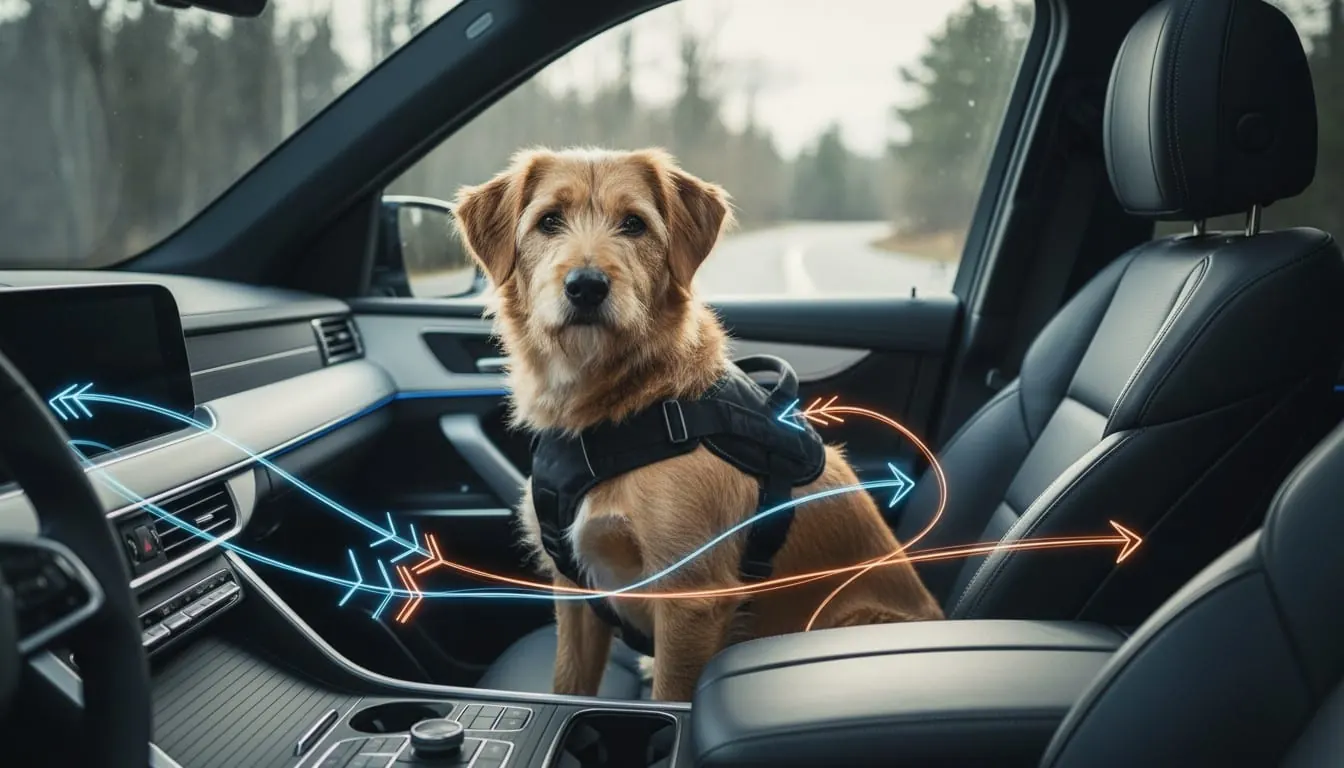
An unrestrained dog becomes a projectile because, in a collision, it keeps moving at the car's original speed until something abruptly stops it. This is Newton’s Second Law of Motion in action: Force equals Mass times Acceleration (F=ma), where the 'acceleration' is really a violent deceleration. If your car is moving at 35 mph and hits a stationary object, the vehicle stops almost instantly, but any unrestrained object inside continues to move at 35 mph until it hits something—the dashboard, the windshield, or a human passenger.
For a dog, this means their weight is effectively multiplied by the speed of the crash. A small 10-pound terrier in a sudden stop at 35 mph exerts roughly 350 pounds of force. In the United States, most pet products are tested for 'static' strength—how much weight they can hold while hanging still—but this is irrelevant in a 'dynamic' crash scenario. You need to look for restraints that have been dynamically tested in a laboratory setting using crash-test dogs that simulate real-world weight distribution and momentum.
A dog's effective weight in a crash is their mass multiplied by the deceleration force, making even small dogs dangerous projectiles.
Tensile Strength: Why Hardware Integrity Matters
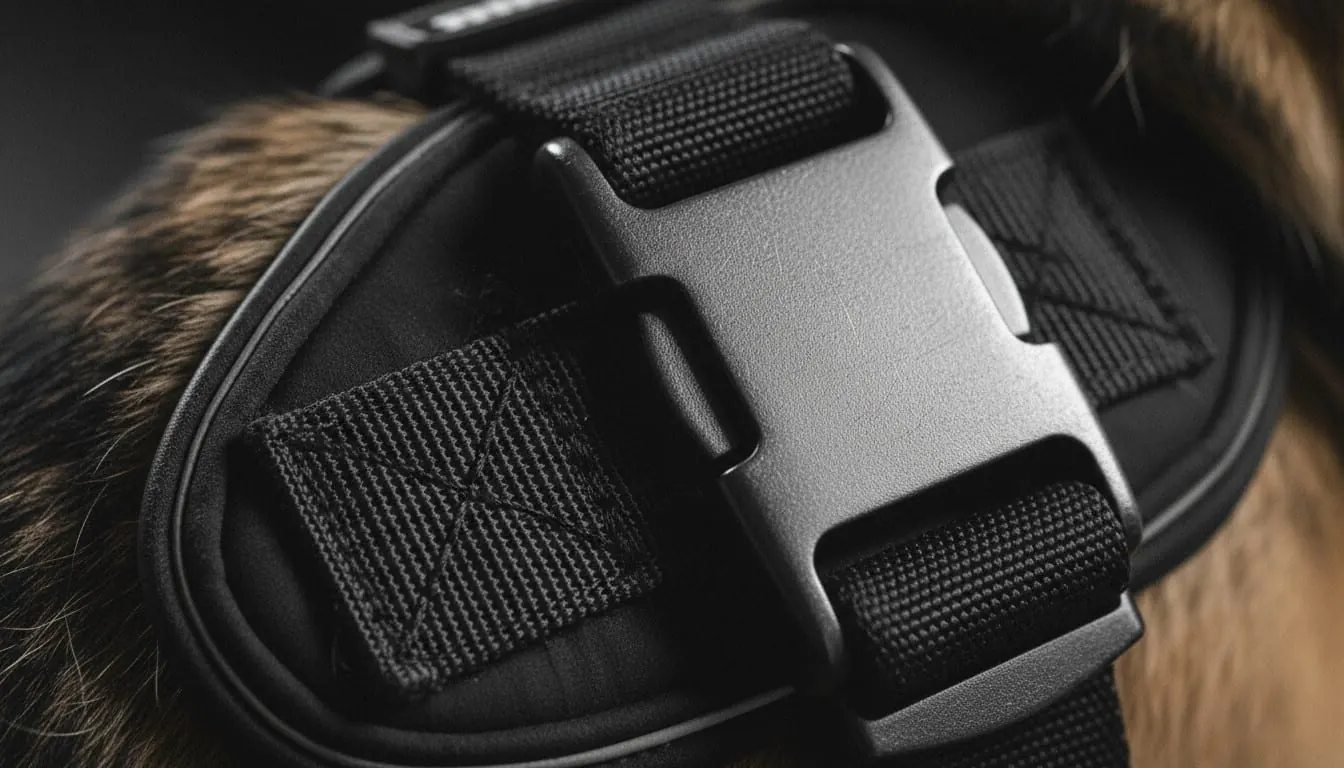
Hardware integrity matters because dog car restraints almost always fail at their connectors—the buckles, the D-rings, and the clips—rather than along the webbing itself. Tensile strength refers to the maximum load that a material can support without fracture when being stretched, so a restraint is only as strong as its weakest piece of hardware. Many budget harnesses sold at big-box retailers use plastic 'side-release' buckles. While these are fine for a walk in a suburban park, they are catastrophic in a car accident. Under the high-G loads of a collision, plastic buckles can shatter instantly, releasing the dog.
High-quality restraints utilize rock-climbing grade carabiners or 'nesting' metal buckles that distribute force across a larger surface area. When researching a product, look for specifications regarding the hardware’s break strength. Ideally, the metal components should be made of forged steel or high-grade aluminum. Furthermore, the stitching (typically a 'box-X' pattern) must be reinforced with heavy-duty nylon thread to prevent the webbing from ripping away from the hardware at the moment of impact.
Look for metal nesting buckles and forged steel hardware, as standard plastic buckles often shatter under dynamic crash loads.
Rotational Forces and the Fulcrum Effect
A long tether or 'zip-line' style restraint is dangerous because the more slack it allows, the more speed a dog gathers before the restraint suddenly stops it. Physics dictates that the longer the tether, the greater this 'excursion.' If a dog has three feet of slack, they will accelerate through that space before the harness jerks them back. This sudden 'snap' can cause severe spinal trauma or internal organ damage.
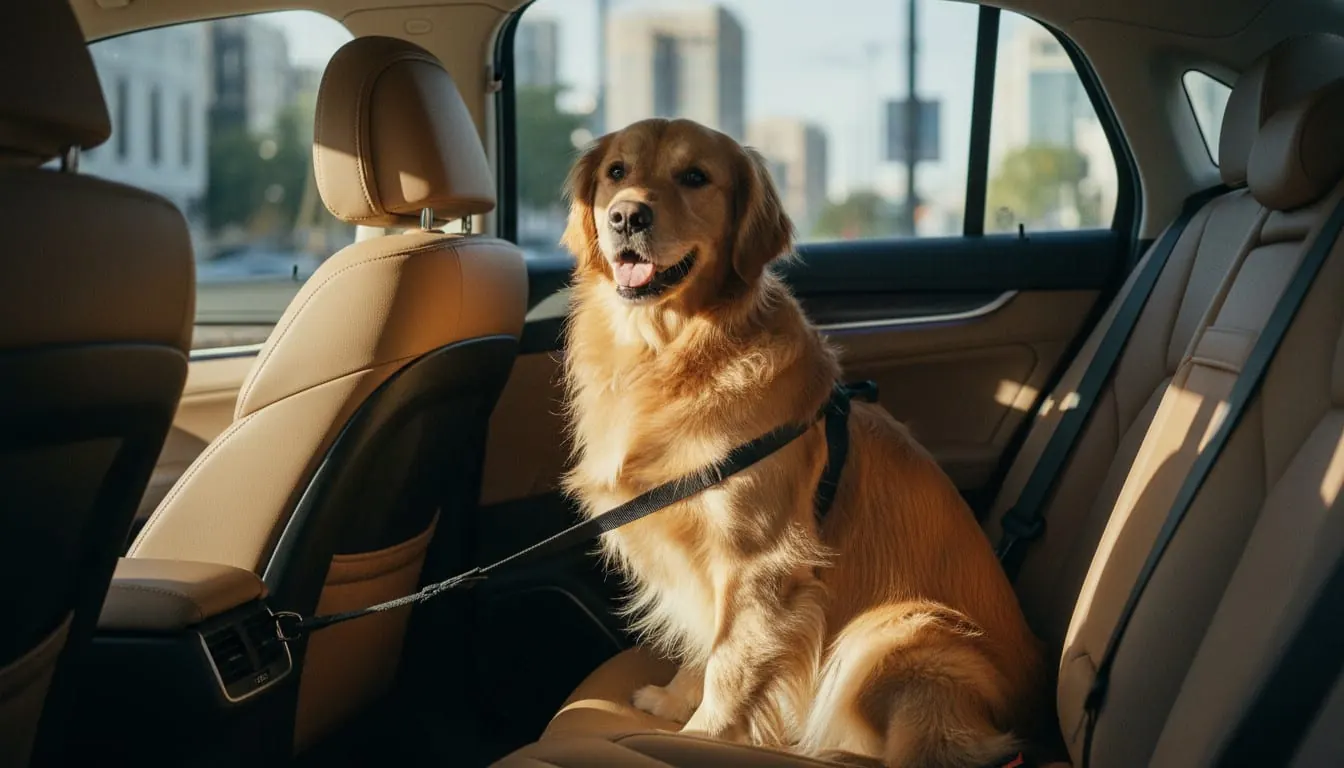
Additionally, if the restraint is attached only to a single point on the dog's back, it can create a fulcrum effect. During a crash, the dog’s body will rotate around that attachment point, causing the head and limbs to whip forward with extreme velocity. This rotational force is why the most effective dog car restraints are designed to be used with the car's existing seatbelt system, which is engineered to lock and absorb energy. By threading the seatbelt directly through the harness, you minimize the 'launch distance' and keep the dog’s center of gravity stable against the seat back.
Long tethers increase impact velocity and rotational force; threading the car's seatbelt directly through the harness is significantly safer.
Energy Absorption and Webbing Dynamics
Energy absorption protects a dog by spreading the impact over a longer stretch of time, which sharply lowers the peak force driven into the chest and organs. Modern human seatbelts are designed with a specific amount of 'give' or elongation for exactly this reason; it isn't a defect, it's a deliberate feature. By stretching slightly, the belt increases the amount of time it takes for the body to stop, which dramatically lowers the peak force exerted on the ribcage and internal organs. The same principle applies to dog car restraints: if a harness is made of completely rigid, inelastic material, the impact on the dog's chest is much sharper and more likely to cause bone fractures.
Top-tier engineering in pet safety involves 'energy-absorbing' webbing. This material is designed to deform slightly under extreme load, soaking up the kinetic energy of the crash. Furthermore, the chest plate of the harness should be broad and padded. A narrow strap will concentrate all the crash force into a small area (like a knife edge), whereas a wide, padded plate distributes that force across the entire ribcage, utilizing the dog's natural skeletal structure to protect the vital organs within.
Wide, padded chest plates and energy-absorbing webbing reduce peak impact forces by distributing weight and allowing for controlled deceleration.
Troubleshooting: Fit and Material Fatigue
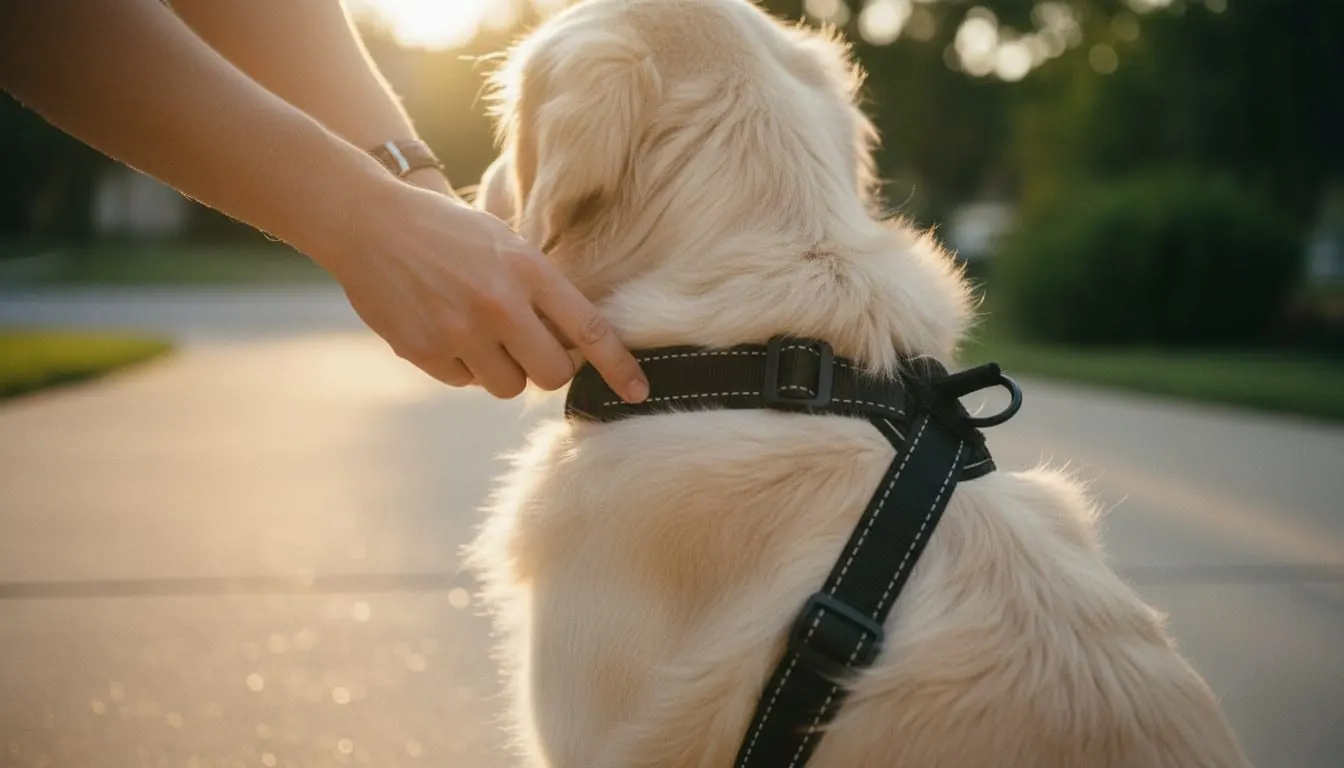
Even the best-engineered dog car restraint will fail if it is fitted too loosely or has reached the end of its lifespan, so fit and material condition deserve as much attention as the hardware itself. The most common issue is the 'too loose' fit, often done for the dog's comfort. However, a loose harness allows the dog to slide inside the fabric during an impact, leading to friction burns or the dog slipping out entirely. You should only be able to fit two fingers between the harness and your dog's body. If the harness slides easily from side to side, it is not tight enough to provide protection during a 30-G impact.
Owners should also be aware of material fatigue. Nylon webbing is susceptible to UV degradation if left in a hot car in states like Arizona or Texas. Over time, the sun's rays break down the fibers, significantly reducing the tensile strength. If you notice any fraying, 'fuzziness' on the straps, or if the colors have faded significantly, the integrity of the restraint is compromised. Similarly, if the harness has been involved in even a minor 'fender bender,' it should be replaced immediately, as the fibers may have stretched beyond their recovery point.
Ensure a snug two-finger fit and replace any harness that shows signs of UV damage, fraying, or has been involved in a previous collision.
Critical Inspection: Beyond the Marketing Label
You can separate a real safety claim from marketing by demanding independent, third-party certification, because in the United States no government agency like the NHTSA regulates pet travel gear. This means 'crash-tested' can mean anything from a high-speed lab test to a simple drop-test in a backyard. Organizations like the Center for Pet Safety (CPS) provide independent, non-profit testing built on rigorous standards modeled after the FMVSS 213 protocol used for child safety seats. If a manufacturer cannot provide a video of their crash test or a detailed engineering report, you should treat their 'safety' claims with skepticism.
When inspecting gear at a store like Costco or Amazon, check the weight ratings carefully. A harness rated for a 75-pound dog should ideally have been tested with a 75-pound crash dummy at 30+ mph. If the packaging only mentions 'strength tested' without specifying 'dynamic' or 'crash' testing, it likely only refers to static weight. Always prioritize brands that are transparent about their testing facility, the speed of the tests, and the specific failure points discovered during engineering.
Verify 'crash-tested' claims by looking for independent third-party certification and actual crash-test video footage from the manufacturer.
Restraint type
Crash performance
Best suited for
Crash-tested harness, seatbelt-threaded
Strong when independently certified; keeps the dog on the seat and limits forward excursion.
Dogs riding on the back seat who tolerate a fitted harness.
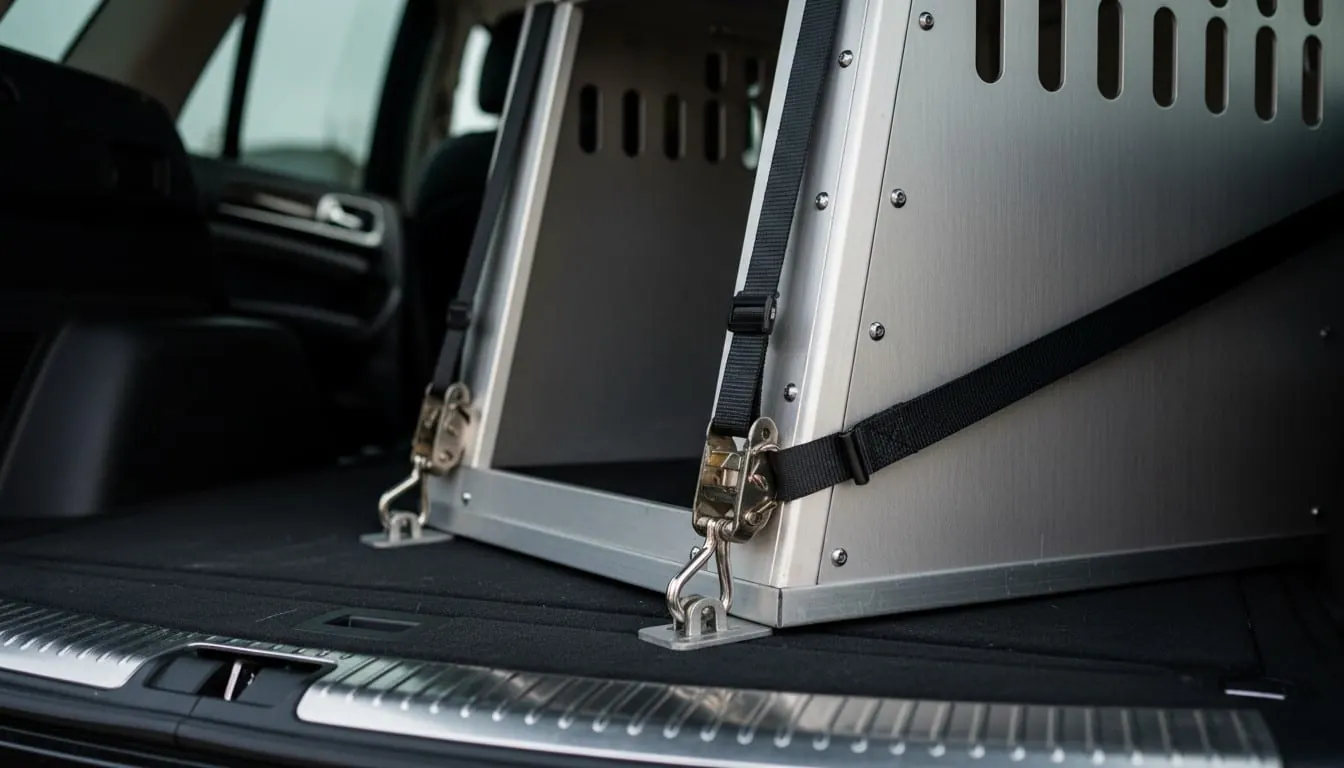
Crash-tested crate or carrier, anchored
Strong when the crate is certified and strapped down; it contains the dog and absorbs impact.
Small to medium dogs, cargo areas, and anxious travelers.
Booster or car seat
Weak; built for visibility and comfort rather than absorbing high-speed impact forces.
Calm, low-speed local trips, never as primary crash protection.
Zip-line or long tether
Poor; the slack lets the dog accelerate before a violent, injury-causing stop.
Brief restraint against distraction, not collision protection.
How common dog car restraint types compare on crash protection
Conclusion
Choosing the right dog car restraints is a decision that should be rooted in physics, not just brand loyalty. By focusing on tensile strength, energy absorption, and the elimination of rotational forces, you can provide your pet with the same level of protection we expect for ourselves. Remember that a restraint is a technical piece of safety equipment; it requires proper fit, regular inspection for UV damage, and immediate replacement after any accident. If you are unsure about the fit or the quality of your current gear, consult with a certified professional dog trainer or a vehicle safety expert. Investing in high-quality, dynamically tested gear today ensures that your next American road trip is a safe one for every member of the family.
Frequently asked questions
What does 'crash-tested' actually mean for dog car restraints?
Because there are no US federal regulations for pet restraints, 'crash-tested' is a marketing phrase rather than a certified standard. The meaningful distinction is whether the test was dynamic, using a moving sled and a weighted crash-test dog, or merely static, pulling on the harness until it breaks. Only dynamic testing at 30 mph or faster, ideally verified by an independent group like the Center for Pet Safety, reflects real crash conditions.
Is a car seat or a harness safer for a small dog?
A crash-tested harness or a certified crate is safer than a typical booster or 'car seat' for a small dog. Most booster seats are designed for visibility and comfort and lack the reinforced attachment points and energy-absorbing structure needed to survive a high-speed impact. If you prefer a contained option, choose a crate or carrier that has passed independent crash testing and anchor it firmly to the vehicle.
Can I use a regular walking harness as a car restraint?
No, a standard walking harness should not be used as a car restraint. Walking harnesses are built to resist the steady pull of a leash, not the thousands of pounds of force a dog generates in a collision. They lack the reinforced box-stitching, metal hardware, and broad padded chest plate that a dedicated crash-tested harness uses to keep the dog secured and spread impact force across the ribcage.
Where in the car should my dog ride?
The back seat is the safest place for a restrained dog, since a deploying front airbag can seriously injure a pet. Secure the dog with a crash-tested harness threaded through the existing seatbelt, or use an anchored, crash-tested crate in the cargo area or footwell. Keeping the dog low and centered against the seat back limits how far it can be thrown in a sudden stop.
References & Sources
This article was researched using the following sources:
Stop guessing with vague feeding charts. Learn the veterinary math for calculating resting energy requirements to ensure your pet stays lean and healthy.
Discover why decompression walks are the ultimate mental health tool for your dog. Learn the biology of sniffing and how to prioritize scent over physical distance.