Decompression Walks for Dogs: Why Sniffing Matters More Than Distance
Discover why decompression walks are the ultimate mental health tool for your dog. Learn the biology of sniffing and how to prioritize scent over physical distance.
Every dog owner knows the routine: grab the short leash, keep your dog at a strict heel, and march around the neighborhood to burn off physical energy. While exercise is vital, many pet parents overlook a biological necessity that is far more tiring and rewarding for a dog: the decompression walk. These 'sniff-led' outings prioritize olfactory stimulation over the number of miles covered, letting your dog lead with their nose and engage their brain in a way that brisk walking never can. A 20-minute sniff session is often more satisfying for a dog than a two-mile power walk, and the reason lies in how the canine brain is built.
The Biological Power of the Canine Nose
The canine nose is powerful because a dog's brain is built around scent: the region devoted to analyzing smell is proportionally about 40 times larger than the equivalent area in humans. When a dog sniffs a fire hydrant or a patch of grass, they aren't just 'smelling'—they are reading a detailed biological story. Dogs use the vomeronasal organ (Jacobson's organ) to detect pheromones, gathering information about the age, health, and sex of the other animals that have passed by. Letting a dog investigate a single scent for a full minute is closer to letting them read a page than wasting time.
This process is cognitively calorie-dense. While humans rely on vision to map the world, dogs use scent to build a 3D, chronological picture of their environment, and engaging the olfactory system demands significant focus and mental energy. Veterinary and training sources note that when dogs are allowed to sniff at their own pace, their pulse rate tends to drop, indicating a shift from a state of arousal to one of calm processing. This is why a dog often returns from a slow, scent-heavy walk looking more settled than after a high-speed run.
A dog's brain is biologically hardwired to process scent, making sniffing a high-energy mental activity that naturally lowers their heart rate.
Sniffing vs. Sprinting: The Arousal Connection
Sniffing and sprinting pull a dog's nervous system in opposite directions: slow, scent-led walks tend to lower the pulse and encourage calm, while high-intensity activities like repetitive fetch or long-distance running tend to ramp a dog up rather than wind them down. A controlled study even found that dogs given regular nosework became measurably more optimistic than a matched group doing structured heelwork, evidence that scent-led activity supports a genuinely better emotional state. Many American owners struggle with a 'hyper' dog and assume the answer is more physical exercise, but for a dog who is already stressed or reactive, more cardio can lock them into a state of chronic high arousal. Matching the activity to the dog's emotional state matters as much as the amount of movement.
Factor
Decompression walk
Traditional power walk
Pace
Slow and dog-led
Brisk and human-led
Primary engagement
Olfactory and mental
Cardiovascular and physical
Effect on arousal
Can lower pulse and promote calm
Can heighten arousal and excitement
Best suited for
Stress relief, reactive or anxious dogs
Burning physical energy in already-settled dogs
Decompression walk versus traditional power walk
Used deliberately, a decompression walk acts as a physiological reset. By slowing the pace and increasing olfactory input, you encourage the release of dopamine while letting an over-aroused nervous system settle. This is especially valuable for dogs living in high-traffic cities like New York or Chicago, where the 'standard' walk is a barrage of triggers such as sirens, delivery trucks, and crowded sidewalks. A 'sniffari' in a quiet park or on a local trail lets the nervous system move from 'fight or flight' toward 'rest and digest,' which is why time spent in a calm setting is worth more to a dog than distance covered.
Physical exercise ramps a dog up, whereas a decompression walk helps them wind down and supports genuine emotional regulation.
How to Structure a Successful Decompression Walk
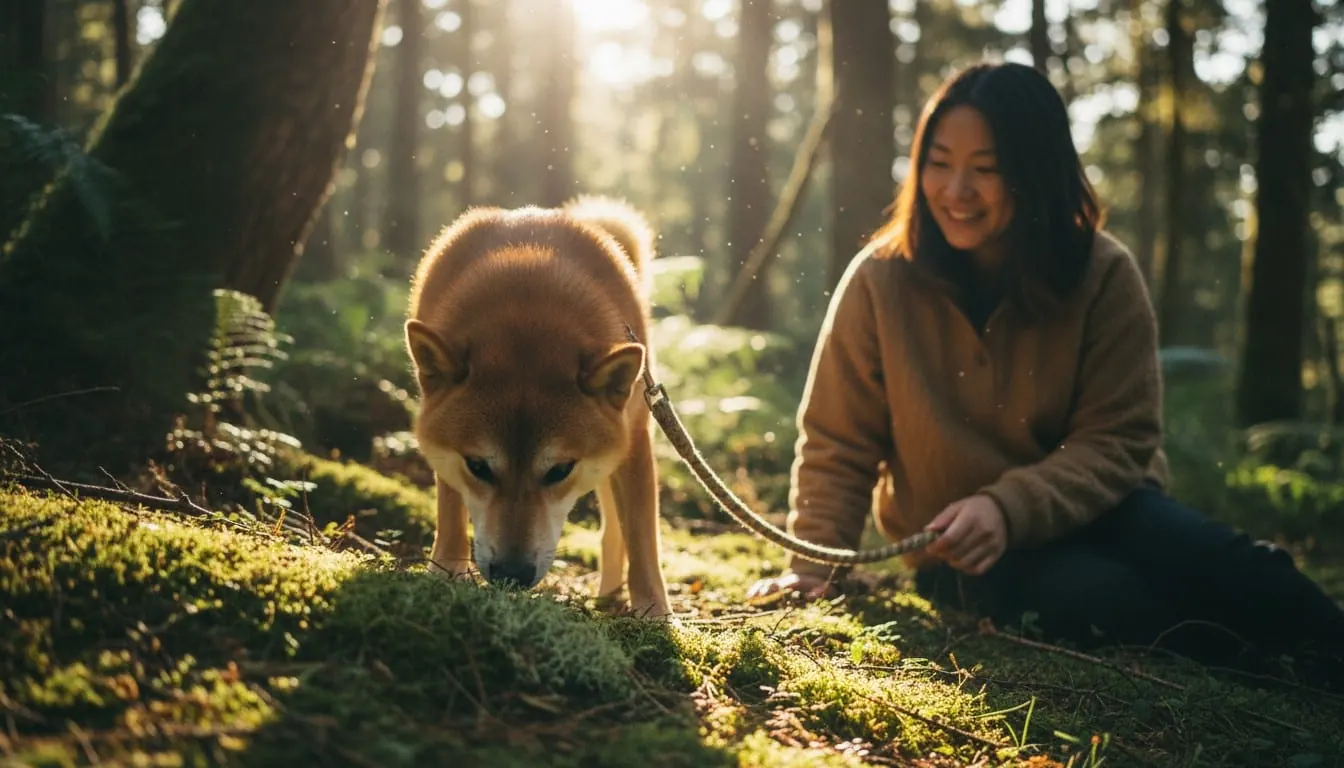
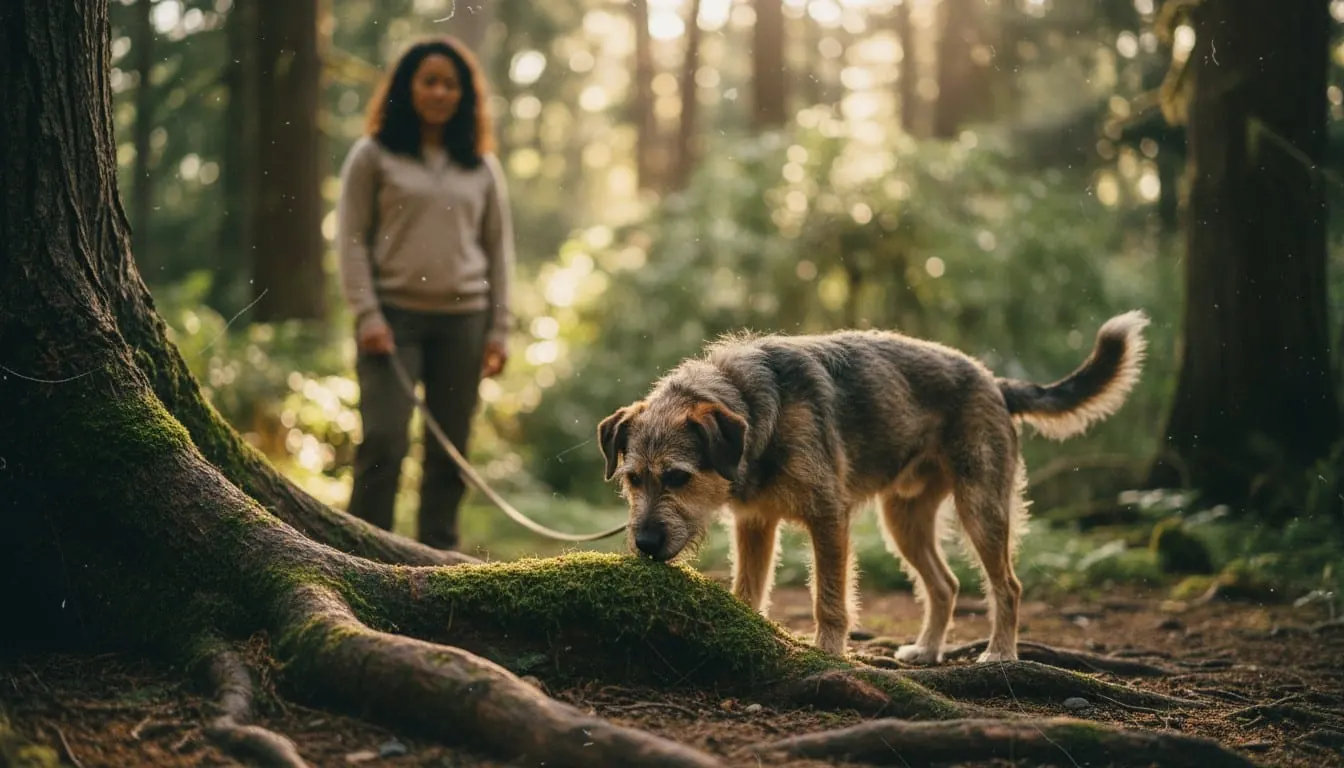
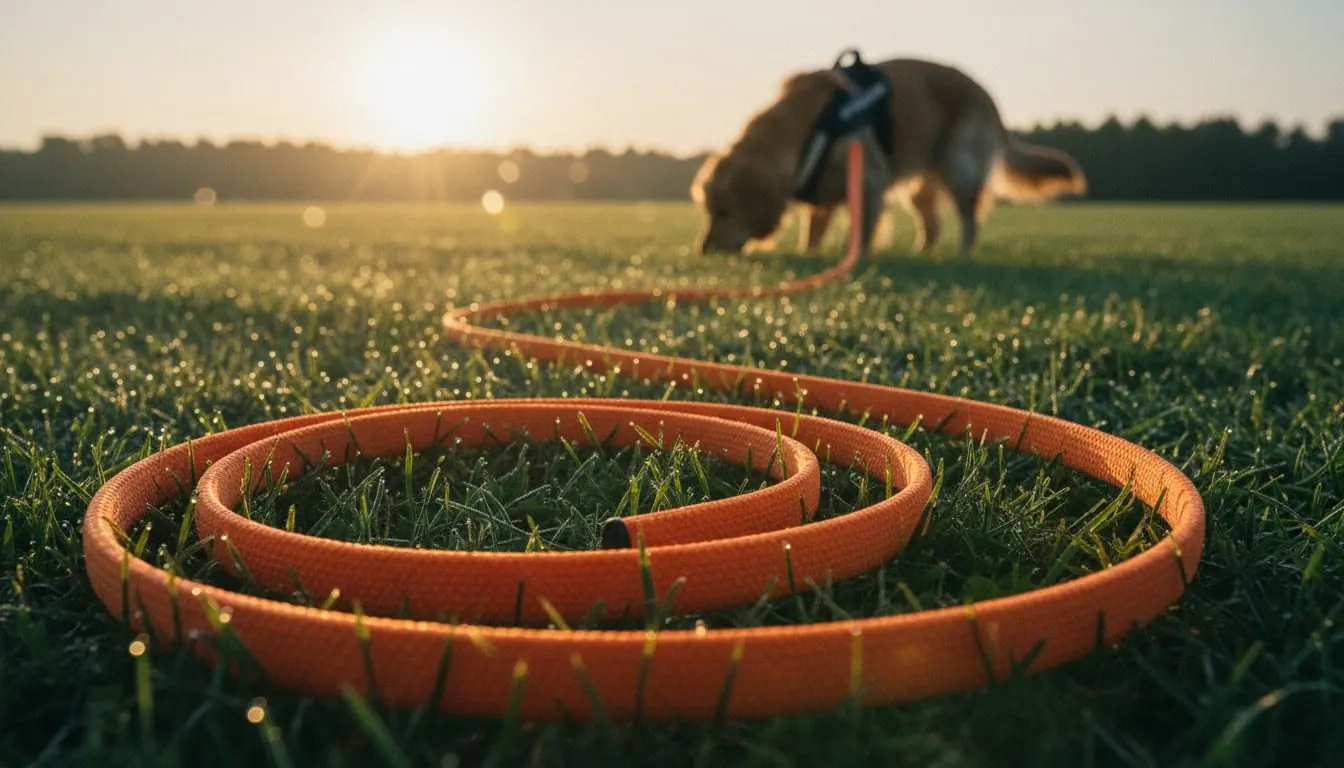
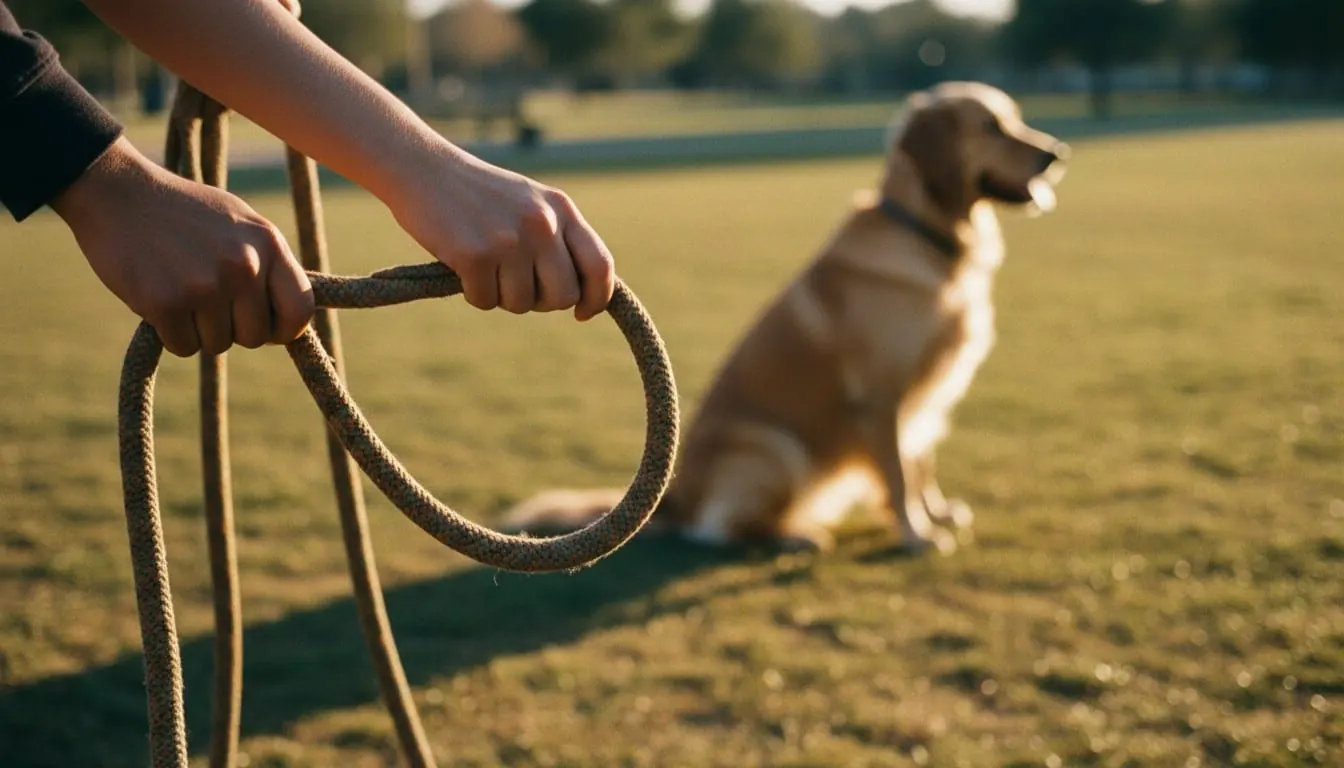
To structure a good decompression walk, pair a 10-to-15-foot long line with a well-fitted Y-front harness, choose a low-distraction location, and let your dog set the pace. You don't need a national forest; you need the right equipment and mindset. The long line is the most important tool because it lets your dog move, pause, and change direction without the constant tension of a standard 6-foot leash, and that tension is a primary driver of frustration and reactivity.
Choose a low-distraction environment for your first few sessions. This could be a local school field on a weekend, a quiet cemetery, or a hiking trail during off-peak hours. The goal is to be a 'passive passenger' and follow your dog's lead. If they want to spend five minutes sniffing a single bush, let them, and resist the urge to move them along. Your role is simply to keep them safe and to enjoy quietly observing their natural behavior. By the end of 30 minutes, most dogs will show 'the zoomies' of joy or, more commonly, go straight to their bed for a long, deep nap.
Use a 10-15 foot long line and a harness to give your dog the freedom to explore at their own pace in a low-distraction environment.
Troubleshooting: When the Environment Interferes
When the environment works against you, the fix is almost always to change the setting or add a safety tool rather than push through. The most common issue is the 'scavenger' dog who tries to eat everything they find, from discarded Target bags to organic debris. If your dog is a dedicated scavenger, a well-fitted basket muzzle allows for safe sniffing without ingestion and keeps the walk stress-free for you as well.
Another challenge is over-arousal, where the dog becomes frantic instead of calm. This often happens when an environment is too 'loud' with competing scents or sights. If your dog starts pulling wildly or ignoring you entirely, they may not be ready for that specific location. Try a quieter option like an empty cul-de-sac or a large, vacant parking lot after hours. Remember that the goal is decompression; once the dog is overstimulated, you've moved past the point of benefit, and it is perfectly fine to cut a session short and try a more secluded spot next time.
If your dog becomes overstimulated or scavenges dangerously, adjust the environment or use safety tools like a muzzle to maintain the walk's benefits.
Breed-Specific Needs and Nuanced Advice
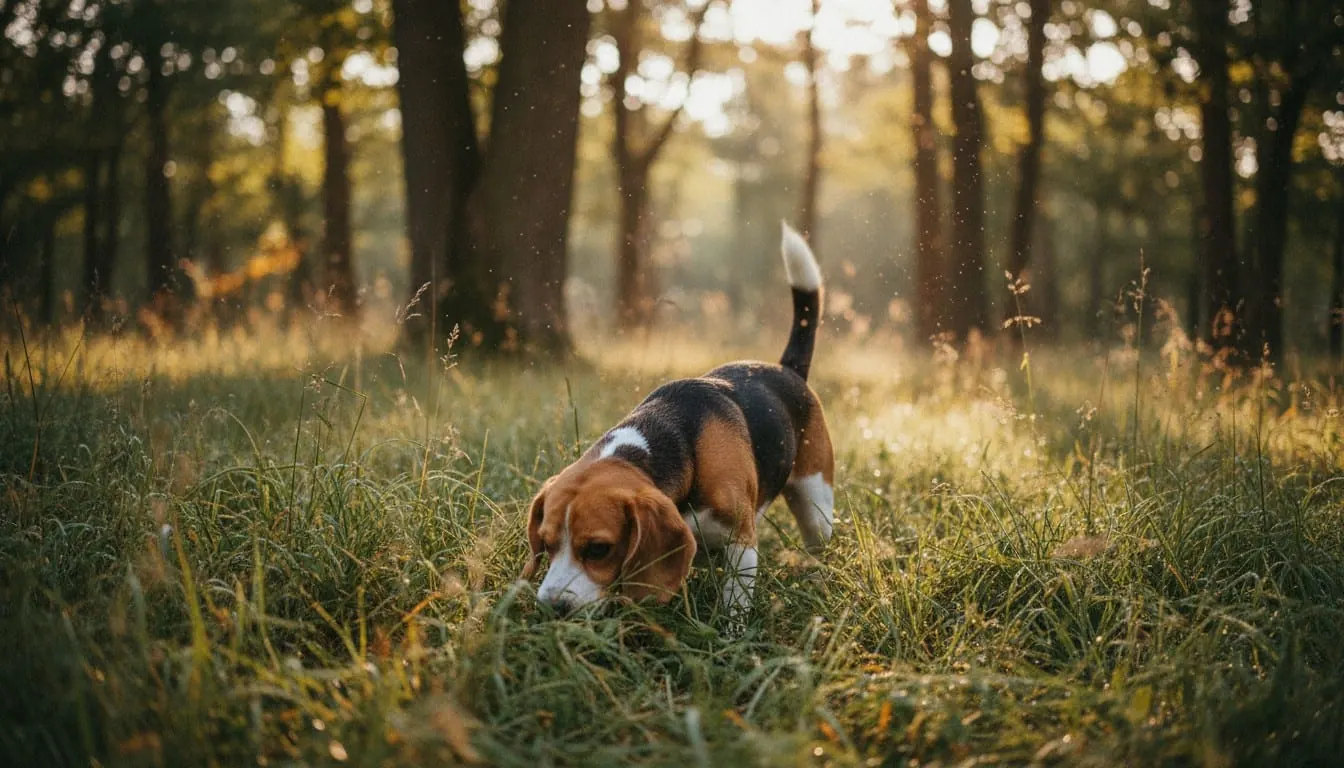
Every dog benefits from sniffing, but scent hounds and sporting breeds need it as a core part of their biological fulfillment. Breeds like Bloodhounds, Beagles, and German Shorthaired Pointers have an unusually high drive to process the world through their noses, so a walk without sniffing leaves them genuinely unfulfilled. For these dogs, a march without scent is like a human being forced to walk through an art gallery wearing a blindfold.
Nuance is required for fearful or 'velcro' dogs, however. Some dogs feel vulnerable when their head is down sniffing in a wide-open space. If your dog keeps checking in with you or seems hesitant to explore, start in your own backyard or a fenced-in tennis court. You can even create an 'indoor sniffari' by hiding treats around the house or using a snuffle mat during rainy weather. Always tailor the experience to your individual dog's confidence level, because the best decompression walk is the one where your dog feels safe enough to let their guard down and follow their nose.
High-drive breeds need sniffing for fulfillment, but fearful dogs may need smaller, more enclosed spaces to feel safe enough to explore.
Conclusion
Prioritizing the biology of your dog over the distance of your walk is a transformative shift in pet ownership. By embracing decompression walks, you aren't just walking your dog; you are providing the mental regulation they need to thrive in a human-centric world. Whether you are exploring a local trail or a quiet corner of your neighborhood, remember that every sniff is a win for their mental health.
Safety and professional guidance note: If your dog shows extreme reactivity, aggression, or anxiety during walks, consult a certified professional dog trainer (CPDT-KA) or a veterinary behaviorist. Always ensure your equipment is secure and that you are aware of local leash laws, especially when using long lines in public spaces.
Frequently asked questions
How often should I take my dog on a decompression walk?
Aim for two to three times per week as a supplement to your regular routine. Even one dedicated 'sniffari' a week can noticeably lower a dog's overall stress levels and improve their behavior at home. Dogs that are anxious or reactive tend to benefit from more frequent sessions in calm, low-distraction settings.
Does a decompression walk count as exercise?
Yes, but it is primarily mental exercise rather than cardiovascular exercise. The cognitive work of processing scents is genuinely tiring, so a sniff-led walk often leads to deeper sleep and calmer behavior than a brisk march of the same length. Many owners find it easier to settle a dog after 30 minutes of sniffing than after a fast walk.
How long should a decompression walk be?
For most dogs, 20 to 45 minutes is a good target. Because sniffing is mentally demanding, many trainers find that 20 to 30 minutes of it can leave a dog as tired as a much longer brisk walk. Quality of scent access matters more than the clock, so a slow walk through a rich, varied environment beats a longer walk down a bare sidewalk.
Can I do a decompression walk on a standard 6-foot leash?
It is difficult, because short leashes create leash tension that triggers a dog's frustration and limits their ability to follow a scent trail. A long line of 10 to 15 feet is strongly recommended so the dog feels almost off-leash while remaining safely connected to you. If a long line isn't an option, choose a very quiet, enclosed space and keep the leash as loose as possible.
Is a retractable leash the same as a long line?
No. A retractable leash keeps constant tension on the line, which teaches dogs to pull and can fail or cause injury. A fixed-length long line of 10 to 15 feet, clipped to a well-fitted harness, gives your dog the same freedom to explore without the steady pressure that undermines the goal of decompression.
References & Sources
This article was researched using the following sources:
Stop guessing with vague feeding charts. Learn the veterinary math for calculating resting energy requirements to ensure your pet stays lean and healthy.
Understand developmental fear periods in puppies and kittens. Learn to use the 'jolly routine' and avoid common socialization mistakes to prevent lifelong phobias.