When we bring a new pet home from a local shelter or an American Kennel Club breeder, we often focus on what we want them to do rather than how we ask them to do it. Successful communication relies on intentional cue selection and discrimination, the process of choosing distinct signals that your pet can easily distinguish from one another. Most owners struggle because their verbal commands sound too similar or their body language contradicts their voice. By understanding the linguistic architecture of training, you can move beyond guesswork and build a reliable, high-precision vocabulary that works in your living room or a busy park.
The Hierarchy of Senses: Why Visuals Outpace Verbs
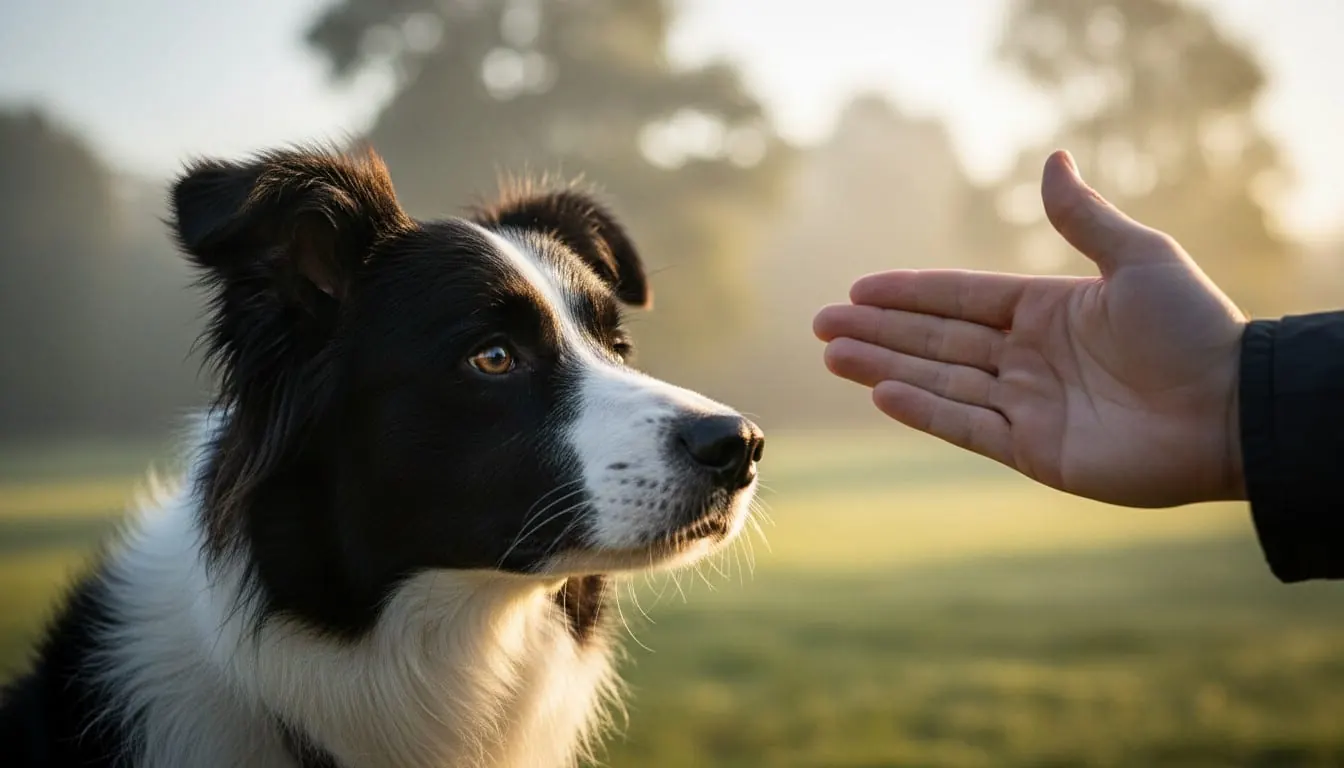
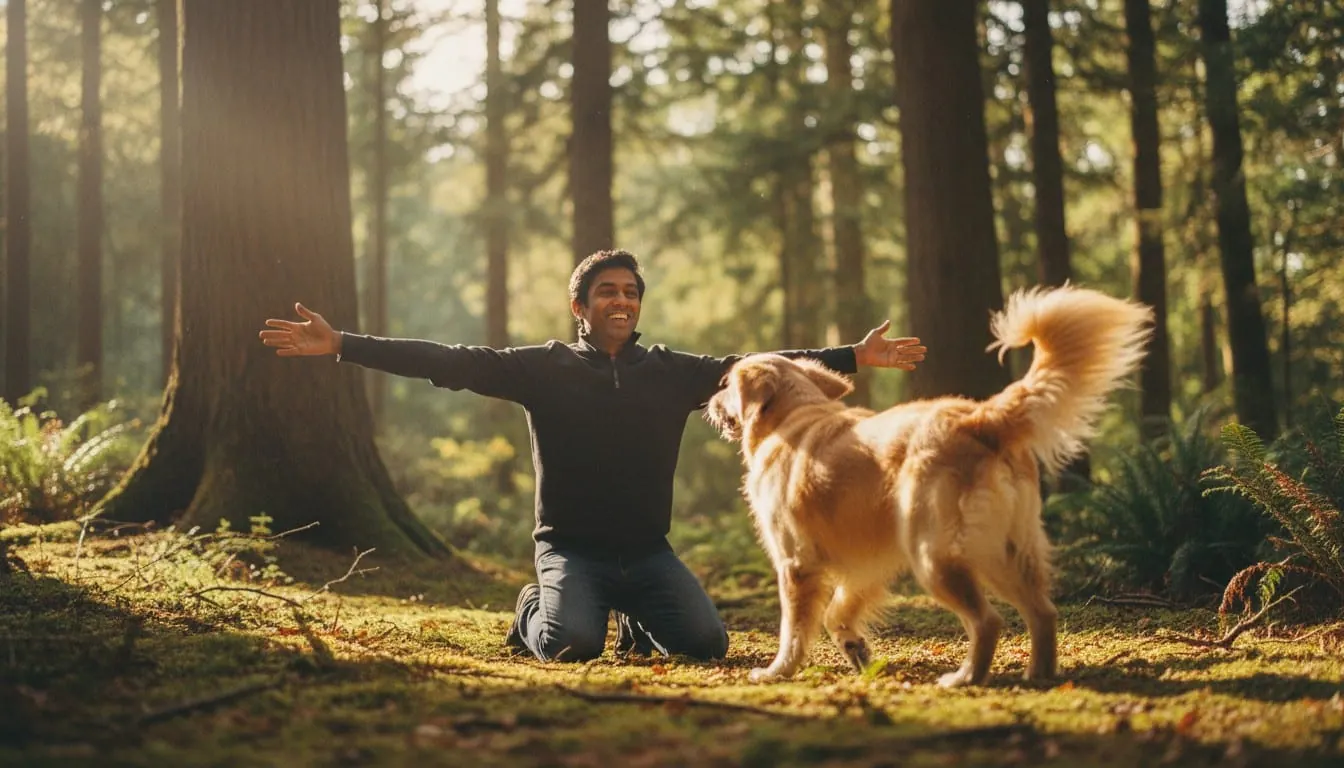
Visuals outpace verbs because dogs are visual specialists first, locating and reading people roughly three times faster through body language than through sound alone. In the world of animal behavior, not all signals are created equal, and this sensory bias means a hand signal almost always registers before a spoken word does. The tendency for the more salient gesture to mask the quieter word is known as 'overshadowing.' When you give a hand signal and a verbal command simultaneously, your pet is likely focusing on your hand and ignoring the words entirely. This is why many owners think their dog knows the word 'Sit,' only to find the dog looks confused when the owner's hands are stuffed into their pockets at a party.
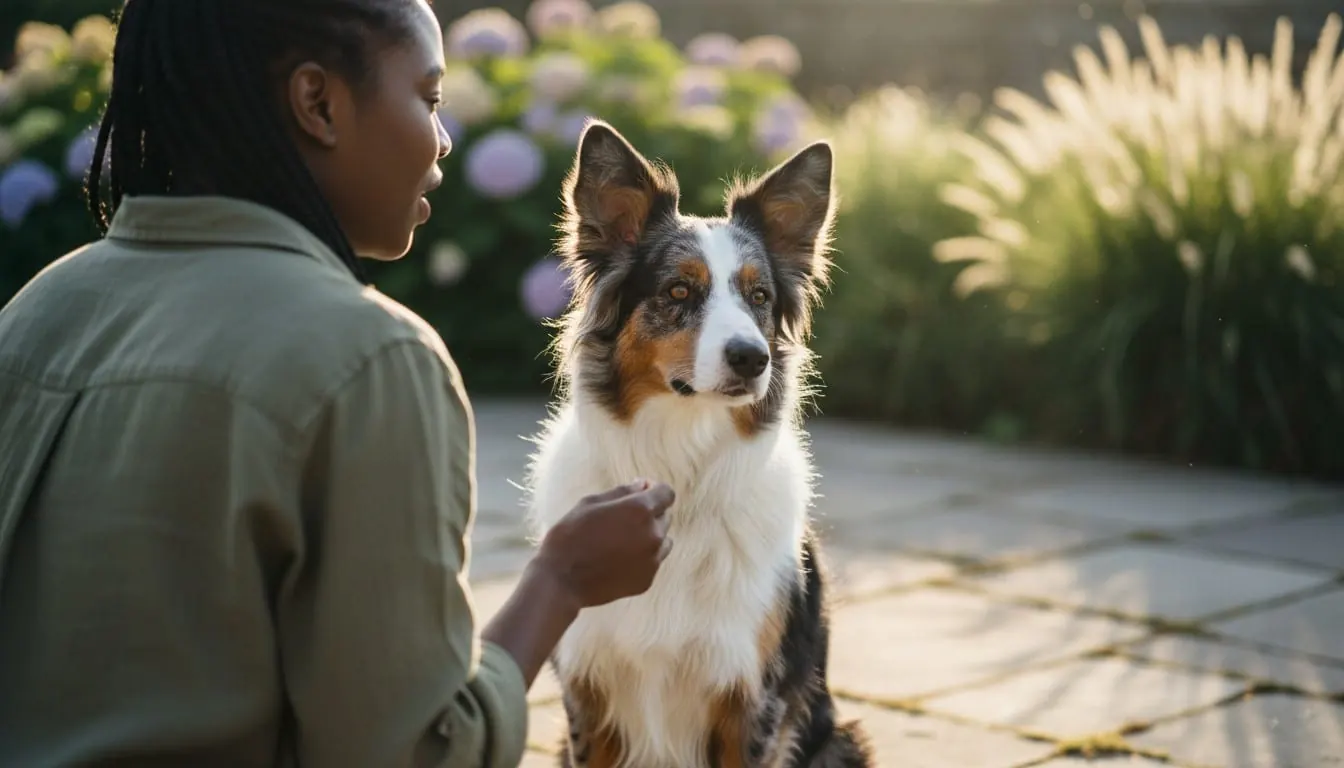
To build a robust training foundation, you must respect this sensory hierarchy. Visual signals should be crisp, distinct, and consistent. For example, a flat palm for 'Stay' should look nothing like a pointing finger for 'Place.' If your visual cues are too similar, your pet will struggle with cue discrimination, leading to hesitation or 'guessing' behaviors where they cycle through every trick they know hoping for a treat. Training sessions should initially focus on the visual signal before slowly fading in the verbal cue to ensure the pet truly understands the linguistic component of the command.
Cue type
Strengths
Watch out for
Visual / hand signals
Read fastest, obeyed with near-perfect accuracy, and cut through background noise
Useless when the dog is not looking at you or your hands are occupied
Verbal commands
Work when the dog cannot see you, in the dark, or around corners
Easily masked by a gesture through overshadowing and blurred by similar-sounding words
Both together
Most reliable while a behavior is still being learned
Give the verbal cue first, then the signal, or the word gets overshadowed
Visual versus verbal cues at a glance
Dogs prioritize visual body language over verbal commands, a concept known as overshadowing that requires distinct hand signals.
Designing Your Lexicon: Choosing Distinct Verbal Cues
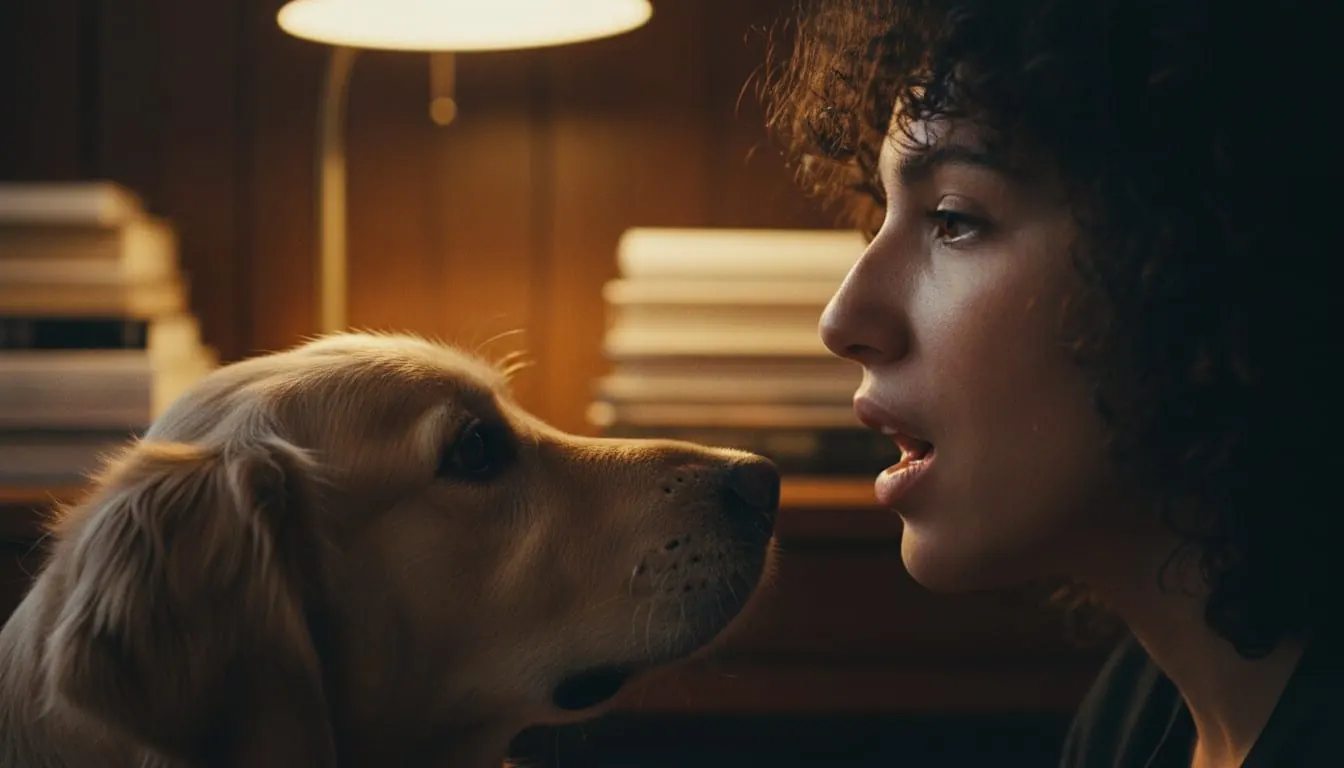
To choose distinct verbal cues, pick words with clearly different phonetic profiles so your pet can never confuse two commands. When selecting cues, think like a linguist: you want sounds that differ in consonant, vowel, and cadence to avoid 'auditory blurring.' A common mistake is using words that sound similar to the pet’s ears, such as 'Stay' and 'Okay' or 'Down' and 'Clown.' While these sound different to us, a dog might only pick up on the vowel sounds and the cadence. If you find yourself frequently repeating commands or your pet seems to confuse two specific behaviors, you likely have a cue selection problem.
Consider using unique words or even different languages for high-stakes commands. Many professional trainers in the United States use German or Dutch words for competition obedience because they provide sharp, hard-consonant sounds that cut through background noise. For a household pet, even simple changes make a difference. Instead of 'Down' (which can be confused with 'Get off the couch'), try using 'Floor' or 'Lie.' The goal is to create a library of sounds that are as different as a whistle and a foghorn—impossible to mistake for one another even in a noisy environment like a busy parking lot.
Select verbal cues with distinct phonetic sounds and hard consonants to prevent your pet from confusing similar-sounding words.
The Linguistic Architecture of 'Cleaning Up' Muddy Cues
To clean up a 'muddy' or 'poisoned' cue, you rebuild it from the ground up rather than repeating the old word louder. This kind of breakdown happens when a signal becomes associated with frustration, inconsistency, or negative outcomes, so if your pet has started ignoring a command or performing the wrong behavior, the word itself has usually lost its meaning. For instance, if you constantly yell 'Come' when it is time to leave the park and end the fun, the word 'Come' loses its value. Simply saying it more forcefully only deepens the confusion, which is why the repair has to target the association, not the volume.
Cleaning up a cue often requires 're-queuing' the behavior with an entirely new word. If 'Sit' has become sloppy, stop using it for two weeks. Switch to a new word like 'Park' or use a novel hand signal. Pair this new cue with high-value rewards—think small pieces of plain chicken or premium treats—to create a fresh, positive association. By introducing a new signal, you bypass the old, confused neural pathways and establish a clean line of communication. This process requires patience and a total commitment to never using the old, 'muddy' word until the new behavior is 100% reliable.
Fix unreliable behaviors by replacing 'poisoned' or 'muddy' cues with entirely new words and high-value rewards.
Discrimination Training: Generalization vs. Context
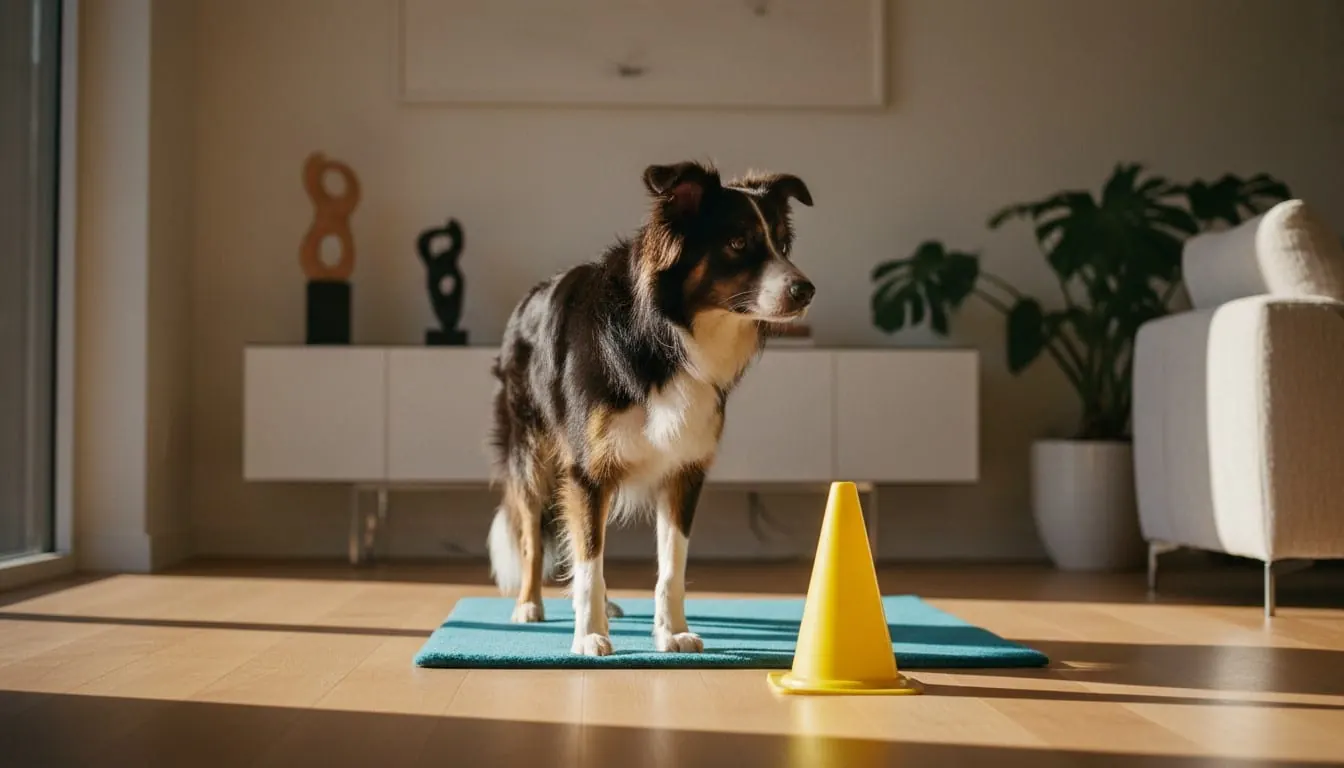
A pet that performs perfectly in your kitchen but fails on a walk isn't being stubborn; they simply haven't yet generalized the cue across different contexts, and that generalization is what discrimination training builds. Animals are highly contextual learners, so they might think 'Sit' only means 'put your butt on the tile floor near the refrigerator.' To truly master cue selection and discrimination, you must generalize the behavior by practicing in diverse locations. This is often called 'proofing' the behavior.
Start in a low-distraction environment, like your hallway, then move to the backyard, and finally to a high-distraction area like a local Home Depot (where pet-friendly policies allow for great training opportunities). If the pet fails at any level, it means the 'distraction' is too high for their current level of discrimination. Dial back the difficulty and slowly re-introduce the cue. By varying the environment, the surface they stand on, and your body position, you teach the pet that the cue is the constant, regardless of the surrounding chaos. This ensures that the linguistic connection remains strong even when a squirrel runs by or a neighbor's car honks.
Proof your training in various locations like backyards and pet-friendly stores to ensure the pet understands the cue regardless of the environment.
Troubleshooting Common Communication Breakdowns
When a pet suddenly stops responding to known cues, troubleshoot in order: rule out physical discomfort first, then check whether you are asking for too much at once. A dog with a hidden ear infection or joint pain may struggle to hear a word or physically perform a 'Down,' so health always comes before technique. If health isn't the issue, look at your 'lumping'—are you asking for too much too fast? Training should be 'split' into tiny, successful increments. If the pet 'guesses' by offering multiple behaviors, you are likely rewarding the movement instead of the finished position.
Another common issue is the 'Double Command.' If you say 'Sit, Sit, Sit,' you are teaching your pet that the cue is actually the word repeated three times. To fix this, say the cue once. If they don't respond, wait 5 seconds, then use a 'no-reward marker' like 'Oops' and reset. Walk away for a moment and then try again. This forces the pet to pay attention to the first signal given. If you find yourself consistently frustrated or if your pet shows signs of shut-down (yawning, lip licking, looking away), it is time to end the session and perhaps consult a professional behaviorist or a trainer certified by the CCPDT.
Avoid repeating commands and check for physical discomfort if a pet suddenly stops responding to previously mastered cues.
Conclusion
Building a clear linguistic architecture is the difference between a pet that 'sometimes' listens and one that is a reliable partner. By focusing on intentional cue selection and discrimination, you respect the way your pet processes information—prioritizing visual clarity and auditory distinction. Remember to keep training sessions short (5-10 minutes), use high-value rewards, and always aim for consistency. If you ever feel stuck or notice aggressive or deeply fearful reactions during training, don't hesitate to reach out to a professional trainer or animal behaviorist. With patience and clear signals, you'll find that your pet isn't just following orders—they're finally understanding the language you've built together.
Frequently asked questions
Can I use the same word for different behaviors if I use different hand signals?
It is best to avoid it. Although dogs read visual signals well, attaching one word to several actions creates linguistic confusion and slows learning. Aim for a one-to-one system where every behavior has its own distinct verbal and visual cue.
Why does my dog only listen when I have a treat in my hand?
This usually means the treat has become part of the cue itself, a problem trainers call luring. Move the food to a pocket or a pouch behind your back and only produce it after your dog responds to the verbal or hand signal alone. Over time the behavior comes from the cue rather than the sight of the food.
What makes a good verbal cue?
The best cues are short, easy for you to say the same way every time, and phonetically different from your other commands. Words built on hard consonants like K, T, and S tend to be easier for dogs to discriminate than soft, vowel-heavy words. Choosing distinct sounds up front prevents the auditory blurring that makes a dog hesitate or guess.
How long should a training session be?
Short and frequent beats long and exhausting for most dogs. Five to ten minutes at a time keeps a pet engaged and prevents the stress signals, such as yawning or lip licking, that appear when a session runs too long. Several brief sessions spread across the day build a cue faster than one marathon lesson.
References & Sources
This article was researched using the following sources:
Stop guessing with vague feeding charts. Learn the veterinary math for calculating resting energy requirements to ensure your pet stays lean and healthy.
Discover why decompression walks are the ultimate mental health tool for your dog. Learn the biology of sniffing and how to prioritize scent over physical distance.
Understand developmental fear periods in puppies and kittens. Learn to use the 'jolly routine' and avoid common socialization mistakes to prevent lifelong phobias.